Modern consumer purchasing journeys no longer follow a clean, linear path. A prospective buyer might discover a product on social media during their morning commute, compare technical reviews and pricing on a desktop browser at lunch, redeem an in-app promotional code in the afternoon, and finalize the purchase inside a physical storefront that evening. This fluid, multi-touchpoint interaction across physical and digital boundaries has reshaped consumer expectations: shoppers now expect retailers to recognize their identity across every channel, remember their previous interactions, and maintain uniform pricing and promotions enterprise-wide.
However, most brands adopting a traditional multichannel approach quickly hit operational bottlenecks caused by systemic fragmentation. Adding new sales channels without an integrated data foundation leads to fractured customer experiences: in-store sales associates have zero visibility into prior online support chats, website product availability lags behind real-time shelf counts, and marketing budgets are wasted serving ads for items the customer has already purchased. This operational friction degrades the customer experience and escalates fulfillment costs, creating an urgent necessity for an intelligent, unified retail model.
What Is AI-Powered Omnichannel Retail?
To eliminate the systemic disconnect of legacy retail, modern enterprises are moving beyond fragmented selling channels toward a unified, responsive commerce infrastructure driven by artificial intelligence.
Core Concept of Unified AI Commerce
Omnichannel retail powered by AI is an end-to-end commerce architecture where machine learning models and automated data pipelines serve as a centralized decision engine connecting all customer touchpoints and back-office systems. Rather than managing storefronts, mobile apps, e-commerce sites, and social platforms as discrete silos, an AI-powered system continuously ingests, cleanses, and contextualizes customer signals across all nodes. This allows the retail enterprise to operate as a single, coordinated ecosystem that reacts instantaneously to individual shopper behaviors and shifting supply chain constraints.
Differences: Multichannel vs. AI-Powered Omnichannel
The distinction between traditional setups and an AI-driven commerce ecosystem spans data flow, customer experience, and fulfillment logic:
Comparison Criteria | Legacy Multichannel Retail | AI-Powered Omnichannel Retail |
Data Architecture | Disconnected data silos across POS, ERP, and web analytics | Unified data engine acting as a real-time single source of truth |
Customer Journey | Fragmented; channels operate in isolation with zero context transfer | Seamless; continuous cross-channel context and profile recognition |
Personalization Engine | Static, rule-based segmentation (e.g., broad email demographic blasts) | Dynamic, sub-second contextual recommendations tailored to current intent |
Inventory Visibility | Batch-updated stock levels per channel; frequent out-of-stock discrepancies | Real-time global inventory ledger accessible across all digital and physical touchpoints |
Order Fulfillment | Rigid routing (orders ship only from assigned regional distribution centers) | Intelligent Order Routing (IOR) choosing optimal stores, dark stores, or warehouses |
Customer Support | Disjointed support tickets; agents lack visibility into past interactions | 24/7 conversational AI agents with access to complete cross-channel purchase history |
Strategic and Measurable Benefits of AI-Driven Omnichannel Retail
Adopting an AI-driven framework addresses systemic data bottlenecks while delivering measurable performance improvements across customer-facing and back-office operations.
Customer Experience and Revenue Growth
AI unifies data across store POS, websites, and apps to create a single customer profile, boosting shopper retention up to 85%. With this data, the system instantly suggests relevant products based on real-time browsing, which cuts cart abandonment and increases order value. At the same time, AI assistants use this shared purchase history to support customers across chat, voice, and apps without making them repeat themselves.
Operational Efficiency and Supply Chain Optimization
AI analyzes sales trends, store traffic, and seasonality to predict exact stock needs, keeping forecast errors below 10% to prevent both stockouts and deadstock. When an order comes in, the system automatically routes it to the closest warehouse or store to cut delivery costs and shipping times. Inside physical stores, AI cameras map foot traffic to show high-demand areas, helping managers place products better and schedule staff during rush hours.
Dynamic Pricing and Margin Protection
AI continuously monitors competitor prices, customer demand, and current stock levels to adjust product pricing in real time. This automated optimization helps retailers run competitive promotions without eroding profit margins, while quickly clearing slow-moving inventory across both online channels and physical stores.
Real Applications by TMA: Smart Locker
To bridge the gap between digital ordering and physical store operations, TMA engineered and deployed a flagship AI-Driven Smart Locker (T-Locker) Solution, turning traditional retail storage into a key touchpoint for modern omnichannel fulfillment across major hypermarket chains like Emart and Lotte.
Edge AI & Biometric Authentication at the Physical Touchpoint
In high-traffic hypermarkets, manual baggage checking and fragmented parcel handoffs cause severe bottlenecking. TMA Innovation tackled this operational friction by deploying hardware-integrated edge AI directly onto the retail floor:
- Touchless Face-ID & Liveness Detection: T-Locker system replaces physical keys, barcodes, and paper tickets with deep-learning facial recognition algorithms. Facial recognition verifies shopper identity within milliseconds, securing personal belongings instantly.
- Automated Click & Collect (BOPIS) Integration: Beyond storage, the system functions as an automated pickup station. Online orders are routed directly into designated smart compartments, enabling customers to collect digital purchases in-store without waiting in checkout queues or relying on floor staff.
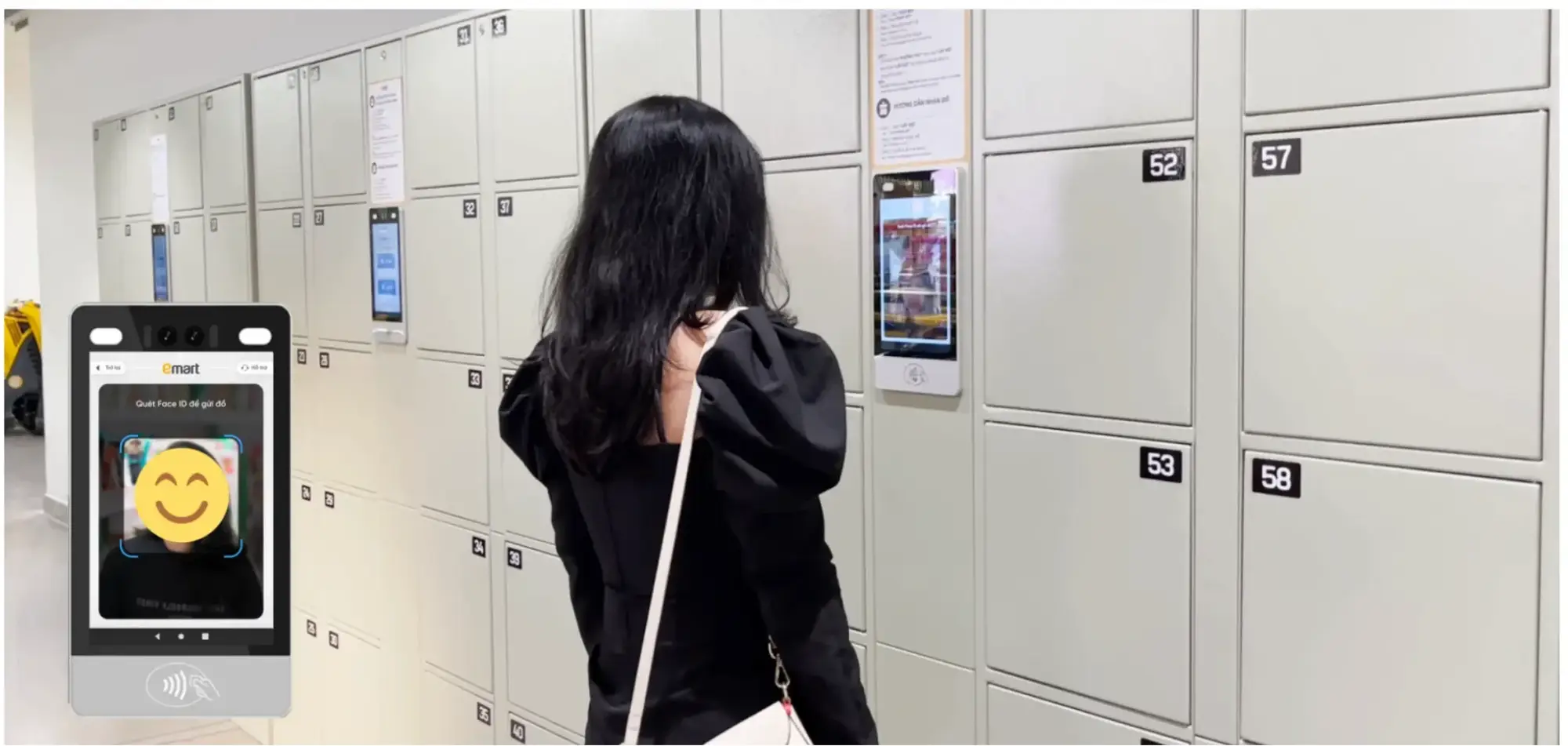
The smart locker hardware acts as a centralized access point that connects directly to the retailer's cloud management system. Store administrators can monitor compartment occupancy, usage durations, hardware health, and security audit logs in real time across multiple branches from a single unified dashboard, eliminating the need for manual on-site checks. At the same time, locker usage records and pickup timestamps sync directly into the retailer's central inventory and order management systems. This automated data flow gives the business complete visibility over cross-channel transactions, prevents fulfillment delays during online order pickups, and cuts in-store staffing overhead by more than 40%.
Conclusion
Integrating AI into omnichannel retail has evolved from an experimental competitive edge into an operational necessity. Retailers can no longer compete by simply opening more isolated sales channels; sustainable growth requires a unified intelligence layer that bridges physical stores with digital touchpoints. By dismantling data silos and deploying practical AI solutions, enterprises can eliminate operational friction, protect profit margins, and deliver the seamless shopping experiences modern consumers expect.