The Vietnam telehealth (the remote delivery of healthcare services using telecommunications technology) market is growing rapidly. It reached a value of USD 130.0 Million in 2025 and is projected to reach USD 612.5 Million by 2034, exhibiting a CAGR (compound annual growth rate) of 18.80% during the 2026-2034 forecast period.
Despite this growth, many healthcare clinics and providers face serious operational gaps. Patients in remote rural communities often suffer due to a lack of specialist access at local health stations. These geographic barriers force patients to travel long and costly distances to central hospitals, resulting in delayed treatments and clinical risks. Furthermore, clinics face heavy manual workloads for patient registration, insurance verification, and manual data entry.
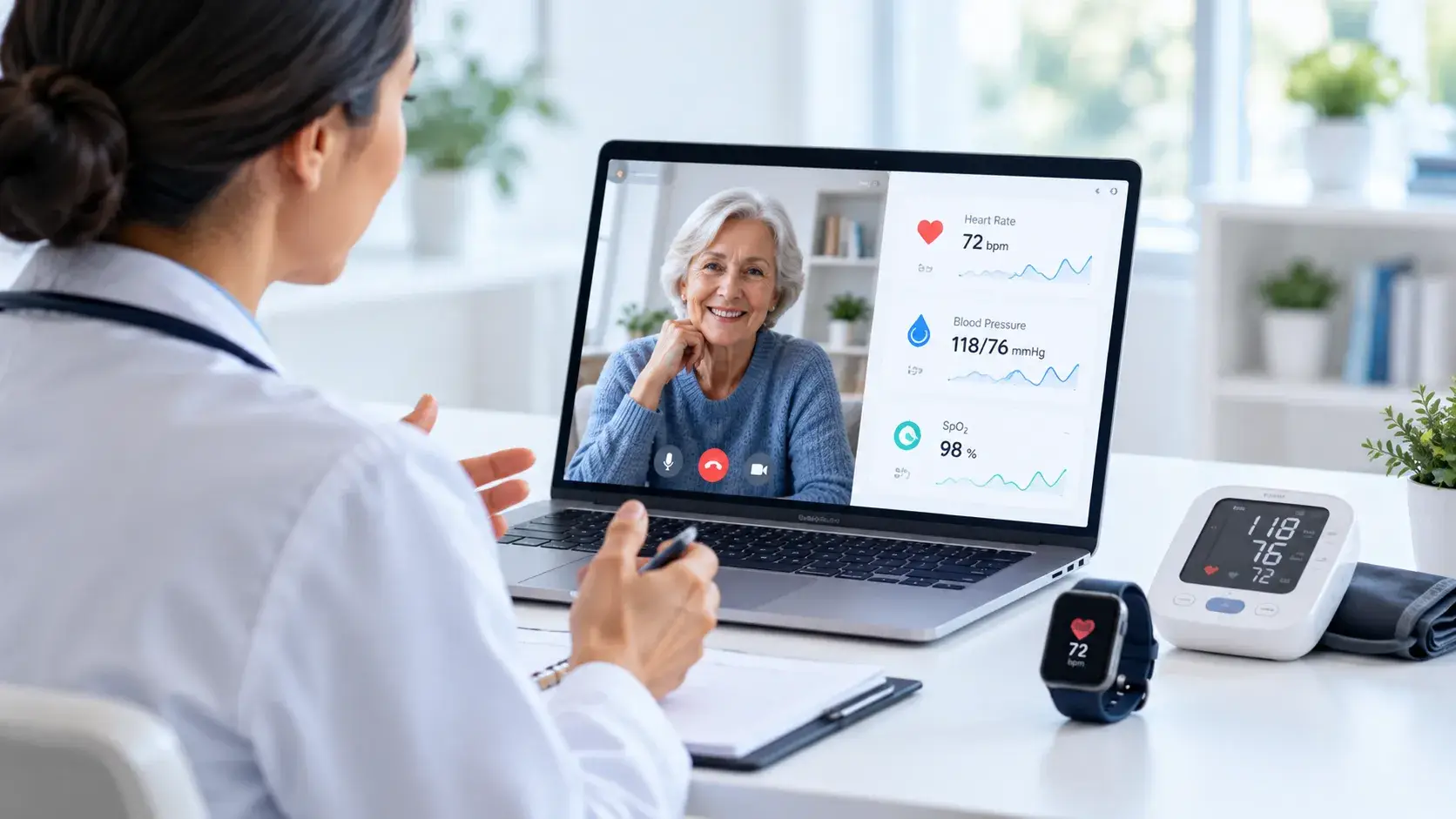
To address these challenges, advanced digital health platforms are transforming clinical workflows. These modern platforms connect wearable sensors, smart devices, and artificial intelligence (AI) software directly with remote medical clinics. Continuous tracking provides clinicians with real-time health updates, improving clinical outcomes and reducing emergency room visits. By transitioning to scalable telehealth systems, clinics can extend their geographic reach, automate check-ins, and build deep trust with patients. This modern care delivery model creates clear operational efficiency and measurable financial returns for progressive healthcare enterprises.
How does telehealth platform development work?
To understand how modern telehealth platform for providers are designed for clinics and providers, it helps to examine the key components that move health data from the patient's environment to the clinical team. An enterprise-grade solution typically includes the following interconnected parts:
- Connected medical and wellness devices: Smartwatches, smart rings, blood pressure cuffs, and ECG (electrocardiogram — a device that records the electrical activity of the heart) sensors capture real-time vital metrics directly from the patient at home.
- Patient mHealth mobile application: A user-friendly smartphone interface lets patients log daily wellness activities, view clinical trends, and receive instant automated medication reminders.
- Secure cloud backend and database: A scalable cloud server aggregates incoming health data stream feeds, manages user access roles, and runs algorithmic analyses.
- Clinician portal and remote care dashboard: A web-based interface gives doctors and home care nurses real-time access to patient health records, symptom logs, and emergency alerts.
- Integrated self-service registration kiosks: On-site hardware check-in stations verify patient identity, check insurance coverage, and schedule future appointments while integrating directly with electronic health record (EHR) databases.

Technical frameworks and system integration
Building a reliable and secure Telehealth Platform Development for Clinics & Providers infrastructure requires a robust backend system that connects diverse medical devices and integrates with existing clinical workflows:
FHIR and HL7 standardization:
Implementing FHIR (Fast Healthcare Interoperability Resources) and HL7 (Health Level Seven) protocols enables unified and legal data exchange between custom telehealth platforms and complex hospital databases.
High-quality real-time conferencing channels:
Leveraging multipoint conferencing and real-time audio streaming capabilities ensures high-definition video calls and low-latency audio during remote clinical consultations.
Comprehensive connection protocols:
Supporting diverse standards like BLE (Bluetooth Low Energy), ANT+ (a wireless technology protocol used for monitoring sensor data), cellular 4G, and Wi-Fi secures uninterrupted device-to-cloud connections.
Smart OCR transcription software:
Utilizing advanced OCR (Optical Character Recognition) engines converts paper prescriptions and photos of legacy medical screens into structured digital clinical files.

What business benefits can telehealth platforms deliver for providers?
Investing in a high-quality Telehealth Platform for Providers program provides measurable financial and operational benefits for hospitals, private clinics, and nursing homes:
- Reduced operational and labor costs: Automating patient registration, check-ins, and booking through integrated kiosks lowers administrative overhead and optimizes clinic staff allocation within existing hospital information system (HIS) workflows.
- Expanded geographic market reach: Deploying remote clinical portals allows localized private clinics to treat patients from distant rural areas without establishing physical branch locations.
- Enhanced patient retention and loyalty: Providing instant access to electronic prescriptions, treatment histories, and virtual consultations improves the patient experience and builds brand loyalty.
- Optimized long-term care programs: Continuous vital sign tracking allows specialized private clinics to offer premium monthly chronic care packages, creating reliable and predictable recurring revenue streams.
- Minimized preventable hospital readmissions: Real-time alerts of abnormal vital trends enable early outpatient interventions, preventing expensive emergency care liabilities.
How to choose the right technology partner?
Selecting the right software engineering company is a critical decision that determines the safety, usability, and long-term success of your Telehealth Platform Development for Clinics & Providers program:
- Dedicated custom medical software engineering experience: Enterprises must evaluate if the software vendor has a proven history of developing certified, clinical-grade medical software architectures.
- Strong security and compliance standards: Healthcare platforms should be built with security and regulatory compliance in mind. A reliable solution should support industry standards such as HIPAA, GDPR, and HDS to protect sensitive patient information and ensure data privacy. Compliance with recognized quality and security frameworks helps healthcare organizations reduce risk, strengthen trust, and meet regulatory requirements across different markets.
- Advanced device interoperability and testing capacity: A qualified partner should have established expertise in integrating multiple wireless hardware standards and validating complex sensor data integrity.
- Large scale and flexible talent pools: The engineering partner must deploy a deep pool of highly qualified software engineers to handle custom configurations, scaling, and long-term systems maintenance.
Why should enterprises choose TMA healthtech?
For organizations seeking an experienced and capable software engineering partner to build or deploy Telehealth Platform Development for Clinics & Providers systems, TMA Healthtech serves as a premier global provider. The company brings over 15 years of dedicated experience in custom medical software engineering, delivering secure and state-of-the-art solutions:
- All-in-one care network hub: The mCare platform connects patients, family members, home nurses, clinics, and doctors under a single, real-time care network to optimize virtual primary care and specialist clinical coordination.
- Unmatched medical device integration: TMA's mCare platform integrates seamlessly with 50+ medical and consumer wellness devices, including smartwatches, smart rings, ECG monitors, blood pressure monitors, glucose meters, and oxygen monitors.
- Highly secure and compliant infrastructure: mCare adheres to GDPR and ISO 13485 standards, along with HDS (Health Data Hosting) compliance, is designed to comply with HIPAA regulations, and ensures full encryption of all transmitted and stored patient data to protect clinical trust.
- Up to 80% reduction in administrative workloads: By leveraging AI-powered OCR capabilities, clinics can digitize paper prescriptions, medical forms, and legacy records more efficiently. This significantly reduces manual data entry and document processing efforts, allowing staff to focus more on patient care.
How has TMA delivered real-world impact?
The following examples demonstrate how different organizations have deployed the mCare platform to protect patients and simplify clinical workflows:
Supporting elderly people living alone in Vietnam:
A major telecommunications and health technology provider partnered with TMA Healthtech to equip solitary seniors with smartwatches and smart rings running the mCare platform. When the system's AI detects a sudden health change, it immediately alerts a remote medical team. Each enrolled user also receives up to 15 virtual doctor consultations, giving families reliable peace of mind.

Monitoring high-risk patients in private clinics:
Specialized private medical clinics integrated mCare to continuously track patients with epilepsy (a brain disorder characterized by repeated seizures) and serious heart conditions between scheduled office visits. Continuous vital sign tracking enabled highly precise, personalized medication adjustments, leading to significantly improved clinical outcomes and a measurable reduction in emergency room visits.
Reducing paperwork in assisted living residences:
Nursing homes deployed the mCare Nurse Mobile App to help care staff record daily routines, medications, and physical health updates. The OCR camera scanner minimized transcription errors caused by paper prescriptions, and a secure family portal shares health updates in real time, building deeper trust with residents' families.
Bringing specialist care to rural communities:
Public health agencies deployed portable mCare Health Kiosks to local health stations in Vinh Long province, Vietnam. Rural patients can visit a kiosk to check their vital signs and speak directly with central hospital specialists via high-quality video screens, eliminating the need for long and costly trips to urban medical centers.
What is the strategic next step for enterprises?
To protect patients from delayed clinical interventions and heavy manual data entry workloads and to build a stronger, more proactive care system, healthcare organizations should take the following steps:
- Perform an operational virtual care audit: Clinics must evaluate their current digital infrastructure to identify gaps in real-time symptom tracking and administrative document workflows.
- Formulate an integration and device compatibility plan: Healthcare organizations should map out their required medical device connections and EHR integration parameters before choosing a custom vendor.
- Connect with TMA healthtech today: Contact our specialized engineering team to learn how the mCare platform and our custom software solutions can protect your patients, reduce operational errors, and prepare your organization for the future of digital health.