As enterprises expand across multiple markets, training customer-facing teams in business languages becomes increasingly difficult to scale through traditional classroom or tutor-based programs. AI language learning solutions address this challenge by delivering personalized learning paths, AI-powered speaking practice, and role-specific training that adapts to each learner while providing managers with measurable progress across the organization.
What Is an AI Language Learning Solution?
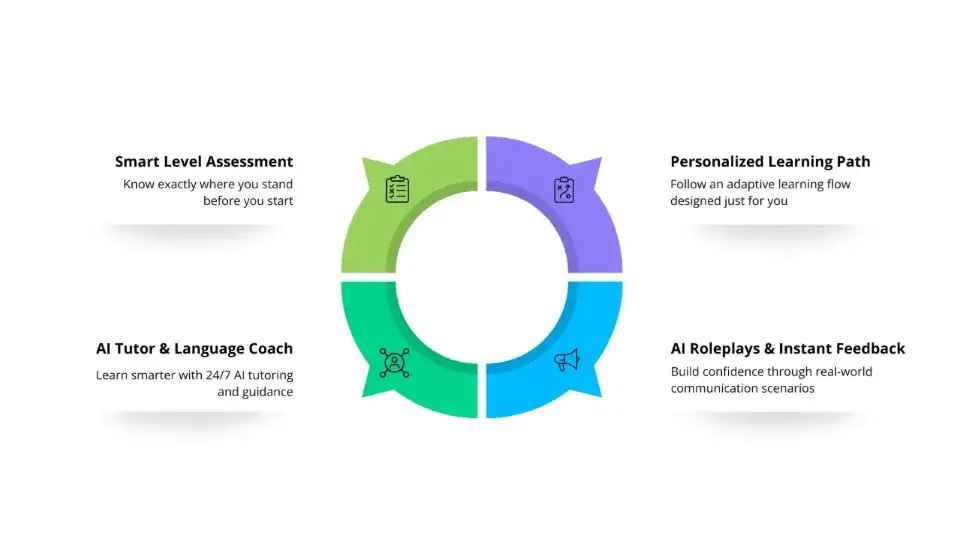
An AI language learning solution uses artificial intelligence to personalize language training based on each learner's proficiency, learning pace, and job role. Unlike traditional online language courses that deliver the same content to everyone, AI-powered platforms continuously adapt learning paths, provide speaking feedback, and measure practical language development against workplace communication requirements.
Why Traditional Language Training Cannot Scale Across Global Teams
Language training has historically been one of the most expensive and logistically complex components of workforce development. The reasons it does not scale are structural, not incidental.
High Cost of Human Tutoring
One-on-one human tutoring is widely recognized as the most effective format for language acquisition, because it provides immediate feedback, real conversational practice, and the ability to respond to the learner's specific errors in the moment. It is also prohibitively expensive at enterprise scale. A team of 200 customer service agents across three markets cannot economically receive the frequency of individual tutoring sessions needed to develop conversational fluency on a business timeline.
According to the Global Language Learning Market report by HolonIQ (2022), enterprise language training costs in Asia-Pacific markets have grown by over 30 per cent since 2019, driven by the expansion of multinational operations into markets requiring local language and cross-cultural communication capability. For most HR training managers, the gap between what individual tutoring costs and what the training budget allows is the single biggest constraint on language program effectiveness.

Difficult to Scale Across Global Teams
Group language training schedules content for the assumed average learner in the cohort. Employees who already have intermediate proficiency spend significant time revisiting material they know. Employees who need more foundational support are moved along at a pace that leaves gaps unaddressed. Neither group benefits from the experience in proportion to the time they invest.
The Business Need for Faster Workforce Language Upskilling
The pressure on language training programs is not abstract. It emerges from specific operational and commercial situations that HR training managers recognize immediately.
Customer-Facing Teams With Uneven Language Proficiency
When a company expands into a new market through a local acquisition or rapid hiring, it often inherits a team whose English or second-language proficiency is uneven across roles and levels. A customer service team where 40 per cent of agents can handle escalation calls confidently in English and 60 per cent cannot is an operational inconsistency that affects customer experience directly. Closing that gap fast, without taking agents off the floor for weeks of classroom instruction, is a practical constraint that traditional training models cannot resolve.
Sales Teams Entering New Language Markets
Sales teams moving into markets where customer relationships are conducted in a different language face a ramp time that directly delays revenue. According to McKinsey's research on global talent operations (2023), cross-border sales effectiveness drops by an estimated 20 to 30 per cent when language proficiency falls below a functional business threshold, even when product knowledge and sales technique are strong. The investment in language upskilling for market-entry sales teams has a measurable return that exceeds the training cost in most documented cases.
Compliance and Technical Communication Requirements
In regulated industries, language precision matters beyond conversational fluency. A financial services agent explaining product terms, a healthcare support specialist communicating clinical information, or a legal service provider documenting agreements in a second language all face accuracy requirements that generic language fluency does not guarantee. Role-specific language training that covers the precise vocabulary and communication standards of the industry and function is required to meet these needs.
How AI Language Learning Solutions Personalize Training by Role and Skill Level
Personalization and integration in enterprise language learning operates at three strategic pillars: matching content to the learner's current proficiency, matching content to the specific communication demands of the learner's role and linking progress directly to corporate growth metrics.
Adaptive Proficiency Assessment and Path Generation
Before assigning learning content, the platform evaluates each learner's language proficiency and generates a personalized learning path. As learners improve, AI continuously adjusts lesson difficulty and practice scenarios based on performance.
As the learner progresses, the system continuously updates its model of their current ability based on assessment performance, practice session outcomes, and error pattern analysis. Content difficulty, vocabulary focus, and practice scenario complexity all adjust accordingly. This is a core capability of any effective ai language learning solution designed for enterprise-scale training.
Role-Specific Vocabulary and Scenario Training
Customer service agents, sales representatives, and technical support specialists require different communication skills. AI language learning solutions create role-specific learning paths with vocabulary and conversation scenarios aligned to daily work, allowing employees to practice language that directly supports job performance.
Connecting Learner Progress to HR Systems
For HR training managers overseeing large language programs, visibility into individual and team progress is as important as the quality of the learning experience itself. AI language learning platforms that connect to HR systems allow managers to track proficiency development against role benchmarks, identify which team members are progressing on schedule and which need additional support, and report on language readiness as a workforce KPI rather than a training completion metric.
AI Tutoring, Speech Recognition, and Real-Time Feedback in Modern Learning
Modern AI language learning platforms combine several technologies to create a more effective learning experience.
AI Speech Recognition
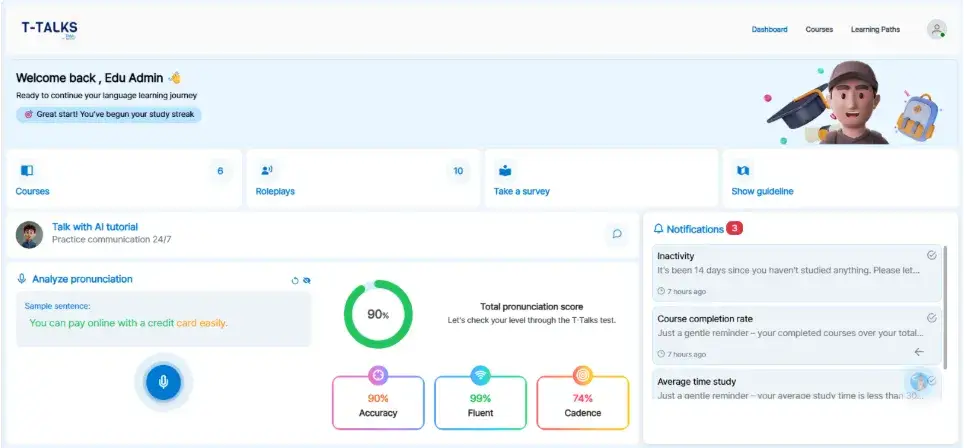
Speech recognition allows learners to practice pronunciation whenever they choose and receive immediate feedback without waiting for an instructor. The system identifies pronunciation errors, highlights areas for improvement, and encourages repeated practice until learners achieve greater speaking accuracy.
Conversational AI Practice
AI-powered conversation simulations enable employees to practice realistic workplace interactions, such as customer inquiries, product demonstrations, or technical support conversations. The system adapts each dialogue according to learner responses, creating varied practice experiences instead of repetitive scripted exercises.
To optimize training budgets, enterprises can deploy a hybrid approach: AI handles 80% of daily conversational practice at scale, reducing the dependency on expensive human instruction hours. When learners require deeper strategic guidance beyond automated practice, a personalized online tutoring solution like Smart Tutor Booking connects them with qualified human tutors for scheduled, highly targeted one-on-one sessions.
Real-Time Learning Analytics
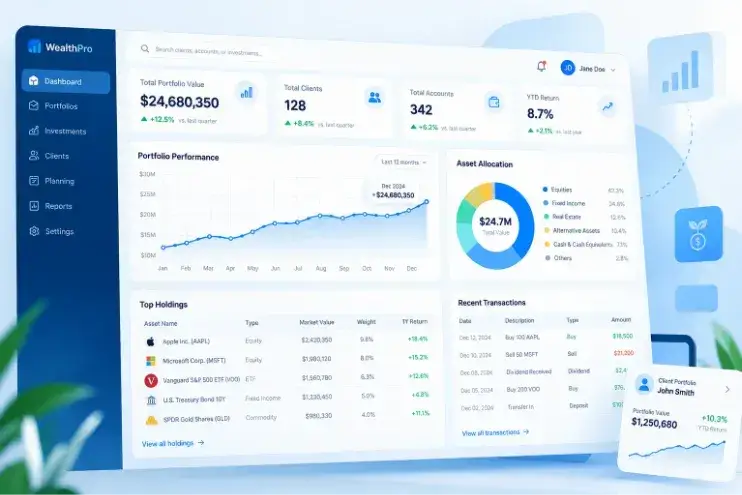
Beyond tracking course completion, AI platforms measure practical language development through assessment scores, speaking performance, vocabulary growth, and progress toward role-specific proficiency goals. Managers gain meaningful insights into workforce readiness and can make better decisions about future training investments.
This approach is typically delivered through a smart learning management solution that centralizes training data, tracks learner progress, and provides real-time visibility for HR and managers across the organization.
Frequently Asked Questions
How is an AI language learning solution different from consumer language apps?
Consumer apps focus on general language learning for individuals. Enterprise platforms provide role-specific content, manager dashboards, HR integration, and analytics that measure workplace communication skills rather than general language proficiency.
How long does it typically take to bring a customer service agent to functional business language proficiency with AI-supported training?
Progress depends on learners' starting proficiency, practice frequency, and learning objectives. Most organizations begin seeing measurable improvements after several weeks of consistent AI-supported practice.
Can AI language learning platforms support multiple target languages simultaneously?
Most enterprise AI language learning platforms support multiple target languages, though the depth of AI capability, particularly speech recognition accuracy and conversational scenario quality, varies by language. Before deploying a multi-language program, HR training managers should verify that the platform's AI capabilities for each required language meet the quality threshold needed for the specific communication demands of the role, rather than assuming uniform quality across all supported languages.
Conclusion
AI language learning solutions enable enterprises to deliver scalable, role-specific language training while reducing dependence on traditional classroom programs. By combining adaptive learning, speech recognition, and personalized tutoring, organizations can improve workforce communication more efficiently and measure progress with real-time analytics.
TMA Solutions provides this comprehensive capability through our tailored ecosystem, including AI-Powered Language Learning, Smart Tutor Booking helping global enterprises build multilingual workforces with measurable learning outcomes.