Enterprise e-learning completion rates have remained stubbornly low for years despite significant investment in content and platform infrastructure. The problem is not that employees are unwilling to learn. It is that the format, volume, and timing of most enterprise training ask too much from people who are already operating at capacity. AI-driven personalized learning platforms for enterprise address this by delivering learning in smaller, better-timed units, adapting the experience to how each employee actually engages, and reducing the cognitive overhead that makes traditional multi-hour courses feel like an obligation rather than an opportunity.
Why Employees Are Disengaging From Traditional Online Training
The relationship between enterprise e-learning and employee engagement has been deteriorating for years, and the reason is structural rather than motivational. Traditional online training was designed around the assumption that employees have extended blocks of time to dedicate to learning, that they will absorb content in sequence from beginning to end, and that completing a module is equivalent to retaining and applying the knowledge it contained. None of these assumptions hold for most enterprise employees.

The Attention Economy Inside the Workplace
Employees in knowledge-intensive roles manage constant context-switching: messages, meetings, decisions, and operational tasks competing for attention throughout the working day. When learning is delivered as a long, uninterrupted course, it competes with daily work demands and often fails to hold employees' attention.
Research published in the Journal of Applied Psychology found that knowledge workers switch tasks an average of every three minutes, and that recovering full focus after an interruption takes more than twenty minutes. Designing corporate training as an extended, uninterrupted experience ignores this reality entirely.
Irrelevance at the Point of Delivery
Even when employees engage with training content, much of it is delivered at the wrong time to be retained or applied. A module on customer negotiation techniques completed six weeks before a sales representative enters their first negotiation is significantly less effective than the same content delivered the day before. Yet traditional training schedules are built around administrative convenience, not around when the knowledge would be most useful to the learner.
Josh Bersin's research on enterprise learning effectiveness consistently identifies timing relevance as one of the strongest predictors of whether training content translates into behavioral change. Content delivered at the moment of need outperforms identical content delivered on a schedule by a wide margin in both retention and application rates.
The Completion-Retention Gap
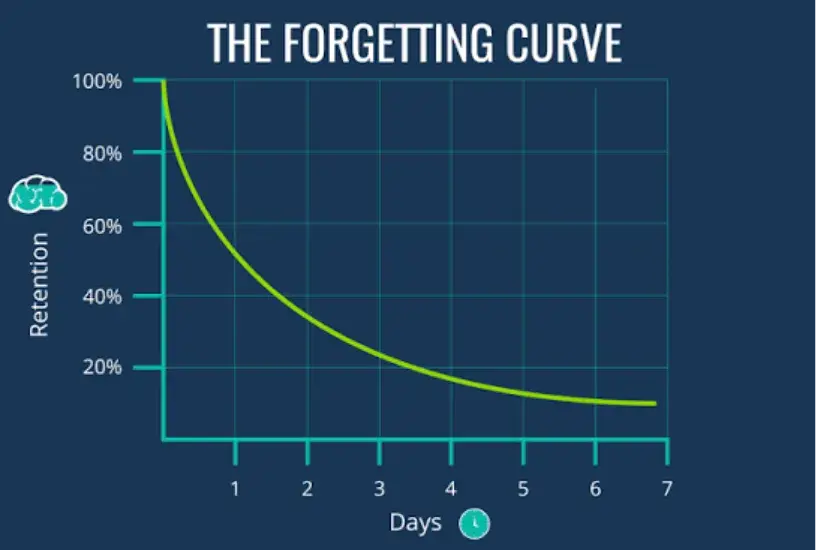
High completion rates have become a proxy for training effectiveness in most enterprise reporting. They are not the same thing. An employee who completes a compliance module by clicking through each screen satisfies the completion requirement without engaging meaningfully with the content. Research on the forgetting curve, first described by Hermann Ebbinghaus, shows that learners quickly lose new knowledge without reinforcement. Completing a course once creates compliance records but does not guarantee long-term retention.
The Rise of Microlearning and Adaptive Learning Experiences
The enterprise learning field's response to engagement decline has moved toward two interconnected approaches: breaking content into smaller, more focused units, and adapting those units to the specific context and needs of each learner.
Why Microlearning Addresses the Format Problem
Microlearning delivers content in short, focused modules typically ranging from two to ten minutes, each addressing a single concept, skill, or decision point. Short learning modules fit naturally into the limited time employees have during the workday. Combined with spaced repetition, they improve long-term retention more effectively than a single extended training session.
Degreed's 2023 How the Workforce Learns report found that 58 percent of employees prefer to learn at their own pace with short content, and that mobile-accessed microlearning has nearly twice the completion rate of traditional desktop-based e-learning courses. The format preference is not a generational quirk. It reflects how people actually work and when they actually have cognitive capacity available for learning.
Adaptive Learning as the Solution to Relevance
Microlearning solves the format problem. Adaptive learning solves the relevance problem by determining which content each employee needs and when they need it. Rather than delivering the same sequence to every learner, adaptive systems analyze performance data, role requirements, and behavioral signals to surface the specific content most likely to close each employee's current skill gap.
Together, microlearning and adaptive learning create an ongoing experience that delivers relevant content without disrupting employees' daily work.
How AI Improves Engagement Inside Personalized Learning Platforms
Behavioral Signal Analysis
AI engagement systems analyze far more than completion data. They analyze learning behavior, including time spent on content, revisit patterns, assessment performance, and engagement across different formats and times of day. This behavioral data builds an increasingly accurate model of each employee's learning profile that informs both content recommendations and delivery timing.
An employee who consistently engages with video content in the first hour of the morning but drops off during text-heavy modules in the afternoon receives a different content delivery experience than one who shows the opposite pattern. These adjustments happen automatically, without requiring the learner to configure preferences or the administrator to manage individual settings.
Intelligent Nudges at the Point of Need
AI-driven learning platforms can identify the moments when a specific employee is most likely to benefit from a learning prompt and deliver content accordingly. When an employee is preparing for a customer conversation, a short module on the relevant product feature appears in their workflow. When performance data indicates a skill gap that is about to be relevant, the system prompts engagement with targeted content before the gap affects outcomes.
This contextual delivery model requires integration between the learning platform and the operational systems where work actually happens. Without that integration, timing-based nudges cannot be personalized to actual work contexts. With it, learning becomes embedded in the workflow rather than separate from it.
AI-Scored Practice for Skills That Require Application
Engagement increases significantly when learning involves active participation rather than passive consumption. For skills that require applied practice, AI-powered simulation environments provide employees with realistic scenario experiences and immediate, specific feedback that passive content cannot deliver.
TMA Solutions provides AI-driven practice environments for customer-facing and interpersonal skills, delivering automated scoring and immediate feedback after each practice session. This helps employees improve through repeated practice while giving managers more consistent evaluation data.
What a Personalized Learning Platform for Enterprise Should Personalize
Personalization in enterprise learning is frequently described in terms of content recommendation. The scope of what a genuinely personalized learning platform for enterprise should adapt is considerably broader.
Learning Path Sequencing
The order in which employees encounter concepts matters for comprehension and retention. Employees with stronger foundational knowledge in a domain benefit from a different sequence than those who need to build those foundations first. AI sequencing analyzes prior knowledge and adjusts the order of content delivery to optimize comprehension rather than following a fixed curriculum.
Content Format and Length
Different employees absorb information better in different formats, and the same employee may engage differently with video, text, interactive scenarios, and audio depending on context and available time. Personalized learning platforms adapt format delivery based on behavioral data, serving each employee the format that has produced the strongest engagement and retention in their history.
Assessment Timing and Frequency
Spaced repetition works best when the interval between knowledge checks is calibrated to each learner's individual forgetting curve rather than a standard schedule. AI-driven assessment systems adjust review frequency based on each employee's retention, increasing reinforcement where knowledge begins to fade and reducing unnecessary repetition when competency is maintained.
Notification and Access Timing
Pushing learning content to employees at times when they are already cognitively overloaded reduces both engagement and retention. AI systems can model individual engagement patterns to identify optimal delivery windows and avoid pushing notifications during periods of demonstrated low responsiveness.
Building Enterprise Learning Experiences Employees Actually Use
Designing for the Workflow, Not the LMS
The most persistent barrier to enterprise learning engagement is that learning is positioned as something that happens outside of work: a separate activity that requires stepping away from operational responsibilities. Embedding learning touchpoints within the tools and platforms where work actually occurs removes this context switch and reduces the friction between having a knowledge need and addressing it.
Deploying an enterprise learning management tool that integrates with communication platforms, project management systems, and operational software can surface relevant learning content in the context where the need arises rather than requiring employees to navigate to a separate learning environment.
Making Progress Visible and Meaningful
Employees stay engaged when they can clearly see improvements in competency, skill development, and learning consistency rather than simply tracking completed courses. Visible progress reinforces learning habits and encourages continued participation.
Manager Visibility as an Engagement Driver
Team-level learning analytics that give managers specific, actionable insight into individual development progress create a social accountability structure that increases follow-through. When managers can see where each team member is in their development plan and have substantive conversations about that progress rather than checking a compliance box, learning becomes integrated into the performance relationship rather than operating parallel to it.
TMA Solutions develops enterprise learning solutions that connect team learning data with performance discussions, helping managers support continuous employee development.
Conclusion
Enterprise learning engagement is not primarily a motivation problem. It is a design problem. When learning is delivered in formats that compete with rather than fit within working patterns, at times determined by administrative scheduling rather than learner readiness, and measured by completion rather than capability development, disengagement is the predictable result.
A personalized learning platform for enterprise that combines AI-driven microlearning, adaptive learning paths, behavioral analytics, and workflow integration helps organizations deliver more relevant learning experiences while improving long-term knowledge retention and workforce capability.
TMA Solutions brings powerful capacities to building enterprise learning solutions that combine AI personalization, competency assessment, learning analytics, and enterprise integration to help organizations build scalable workforce development programs. Explore Smart Corporate Training, AI Coaching and Role-play Simulation System, and other enterprise learning solutions to create engaging, data-driven learning experiences that support continuous employee development.