Artificial Intelligence (AI) is reshaping how enterprise software is designed and developed. Instead of treating AI as an additional feature, organizations are increasingly adopting an AI-first software development approach where intelligence is embedded into the core architecture of applications.
This shift is happening as businesses face growing pressure to automate operations, improve customer experiences, and make faster decisions. According to McKinsey's 2024 report, 78% of organizations now use AI in at least one business function, highlighting how AI is becoming a strategic business capability rather than a standalone technology initiative.
As a result, many enterprises are rebuilding legacy systems and investing in intelligent applications that can learn, adapt, and continuously improve business outcomes.
Why Traditional Software Is No Longer Enough
Traditional enterprise applications were designed to execute predefined workflows and business rules. While these systems remain important, they often struggle to meet the demands of modern digital businesses.
Common limitations include:
- Rigid workflows: Changes often require manual configuration or software updates.
- Heavy reliance on human intervention: Employees must frequently review data, make decisions, and coordinate actions across systems.
- Fragmented data environments: Information is often distributed across disconnected applications, limiting visibility and efficiency.
- Limited adaptability: Traditional systems cannot easily respond to changing business conditions or customer needs.
As organizations generate increasing amounts of data, these limitations become barriers to growth, innovation, and operational efficiency.
What Defines an AI-first Enterprise?
An AI-first enterprise designs technology, workflows, and business processes around intelligence from the beginning rather than adding AI capabilities later. The Work Trend Index 2024 highlighted 75% of knowledge workers already use AI in their daily work, and 79% of business leaders believe AI adoption is essential to remain competitive. These trends are encouraging organizations to redesign software systems around intelligence rather than traditional rule-based architectures.
Unlike traditional applications, AI systems can:
- Analyze large volumes of structured and unstructured data: Processes data from multiple sources at scale.
- Generate insights in real time: Delivers timely insights for faster actions.
- Support operational decision making: Assists teams with data-driven decisions.
- Automate repetitive workflows: Reduces manual work through intelligent automation.
- Continuously improve through learning and feedback: Enhances performance based on data and user interactions.
This approach enables organizations to move beyond basic automation and create applications that actively contribute to business performance.
Why Enterprises Are Rebuilding Their Systems
Many legacy platforms were not designed to support modern AI capabilities. Rather than continuing to patch outdated systems, enterprises are modernizing their technology foundations. Several factors are driving this transition.
Data Has Become a Strategic Asset
AI relies on accessible, high-quality data. Organizations with fragmented systems often struggle to deploy AI effectively because critical information is stored across multiple applications. Modern AI-first architectures help unify data sources, creating a foundation for analytics, automation, and intelligent decision making.
Demand for Greater Productivity
Organizations are increasingly using AI to reduce repetitive work and improve operational efficiency.
Examples include:
- Customer service automation
- Document processing and information extraction
- Workflow orchestration
- Predictive analytics
- Knowledge management
According to Microsoft's Work Trend Index, 75% of knowledge workers now use AI at work, demonstrating how rapidly intelligent tools are becoming part of daily business operations.
Customer Expectations Continue to Rise
Today's customers expect personalized experiences, faster responses, and seamless digital interactions. AI-first applications help organizations meet these expectations by understanding user behavior, analyzing context, and delivering more relevant experiences.
The Business Benefits of AI-first Software Development
Organizations rebuilding systems around AI are not simply upgrading technology. They are creating a foundation for long-term business growth.
Key benefits include:
- Higher operational efficiency: Automating repetitive tasks reduces manual effort and operational costs.
- Faster decision making: Real-time insights help leaders respond more quickly to changing conditions.
- Improved scalability: Intelligent systems can support growing business demands without proportional increases in workforce size.
- Better customer experiences: AI enables more personalized and responsive interactions.
- Greater business agility: Organizations can adapt more quickly to market changes and emerging opportunities.
These advantages explain why AI-first enterprises are increasingly outperforming organizations that rely solely on traditional software models.
Vietnam Is Emerging as a Strategic AI and Innovation Hub
As enterprises worldwide accelerate AI-first transformation, Vietnam is increasingly positioning itself as a strategic destination for AI development and software innovation. The country has become an attractive location for global businesses seeking high-quality engineering talent, competitive development costs, and growing expertise in artificial intelligence technologies.
According to the National Innovation Center (NIC), Vietnam's AI market is projected to reach approximately USD 1.5 billion by 2030, supported by strong government initiatives and increasing investment in digital transformation.
Several factors are contributing to Vietnam's rise as an AI and innovation hub:
- Growing AI Talent Pool: Vietnam produces thousands of IT graduates annually, creating a strong foundation for AI, software engineering, and data science development.
- Expanding Technology Ecosystem: Global technology companies continue to increase investments in Vietnam, strengthening the country's capabilities in software development, AI research, and digital innovation.
- Government Support for AI Development: National initiatives such as Vietnam's National Strategy on Research, Development and Application of Artificial Intelligence are helping accelerate AI adoption across industries.
- Strong Enterprise Software Expertise: Vietnamese technology companies are moving beyond traditional outsourcing and increasingly delivering AI-driven applications, intelligent automation solutions, and enterprise digital transformation projects.
This evolution aligns closely with the shift toward AI-first software development. As organizations redesign applications around intelligence, they require partners capable of combining AI technologies, cloud platforms, data engineering, and enterprise software expertise. Vietnam's growing position in the global AI ecosystem is helping meet this demand while supporting the development of next-generation intelligent applications.
Accelerating AI-first Transformation with TMA Solutions
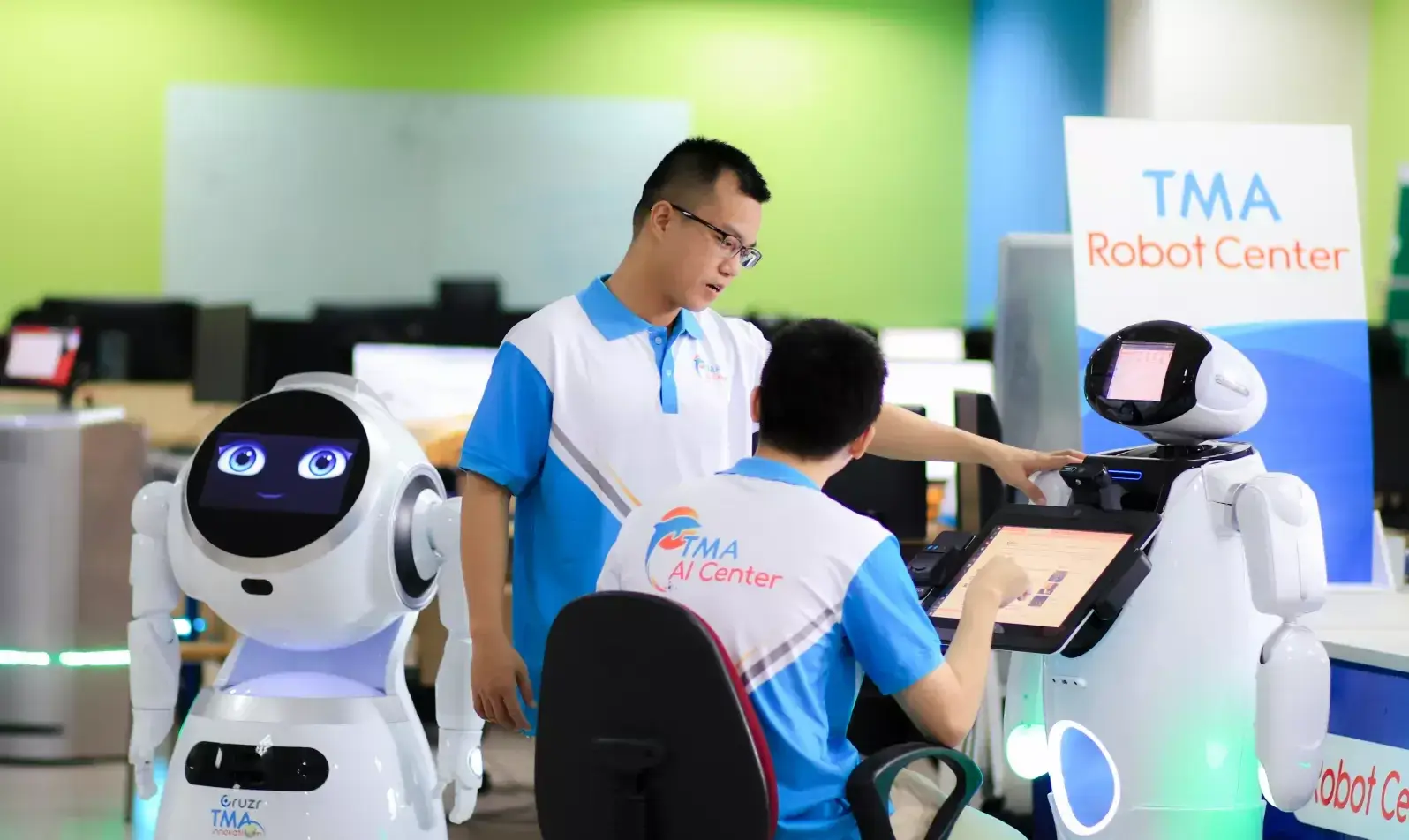
Successfully adopting AI-first software development requires more than implementing individual AI tools. Organizations need a strategic technology partner capable of integrating AI into applications, workflows, and enterprise systems. TMA Solutions helps enterprises accelerate AI adoption through its AI Center and AI Agent Factory, supporting the development of intelligent applications across multiple industries.
Key capabilities include:
- AI consulting and roadmap development
- AI Agent and Agentic AI development
- Generative AI applications
- Intelligent document processing and OCR
- Computer Vision solutions
- Predictive analytics and business intelligence
- Enterprise AI integration and modernization
Conclusion
AI-first software development represents a fundamental shift in how enterprises create and operate software systems. Rather than relying on static workflows and predefined rules, organizations are building intelligent applications capable of learning, adapting, and generating business value in real time.
As AI adoption continues to accelerate, enterprises that modernize their systems and embrace AI-first architectures will be better positioned to improve efficiency, enhance customer experiences, and maintain a competitive advantage in an increasingly intelligent digital economy.