Home
Search
Found 797 results for “ “ keyword
icon
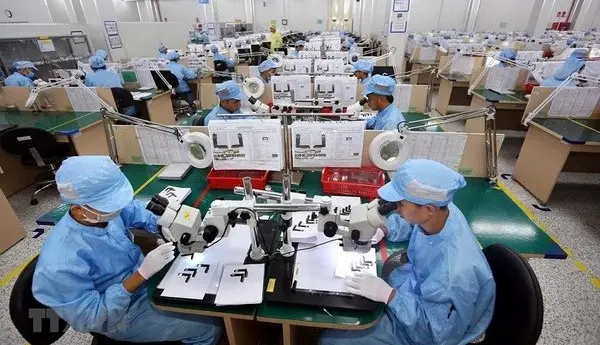
Electronic firms continue to shift investment to Vietnam In recent years, Vietnam has emerged as a preferred destination for global technology and electronics firms seeking to diversify their production bases. With a favorable business environment, skilled labor force, and strategic location in Southeast Asia, the country has attracted significant investments from industry giants such as Apple, Foxconn, Samsung, and LG. This article delves into the ongoing shift of production hubs to Vietnam and explores the implications for the global electronics and technology sector. Apple’s strategic move to Vietnam Apple Inc., one of the world’s leading technology companies, has made significant strides in expanding its production footprint in Vietnam. In 2023, Apple announced plans to move its MacBook production chain to Vietnam, a move that underscores the country’s growing importance in the global supply chain. The tech giant has tasked its largest supplier, Foxconn, with launching a MacBook production line in Vietnam as early as May this year. Moreover, Apple is also planning to produce its high-end Mac Pro in Vietnam, marking a significant shift from its traditional production bases in China. By 2025, Apple aims to produce approximately 20% of its total iPads and Apple Watches in Vietnam, alongside 5% of its MacBooks and a staggering 65% of its AirPods. These ambitious targets reflect Apple’s commitment to reducing its reliance on China and diversifying its manufacturing operations. Currently, 25 out of Apple’s 190 partners are already operating factories in Vietnam, further solidifying the country’s role in Apple’s global supply chain. Foxconn and Goertek lead the way Foxconn, Apple’s largest supplier, has been at the forefront of this shift. After investing a substantial $1.5 billion in Vietnam, Foxconn has announced plans to inject an additional $300 million into its Fukang factory located in the Quang Chau Industrial Park in Bac Giang province. This move is expected to enhance the company’s production capacity and further integrate Vietnam into Apple’s global supply chain. Similarly, Goertek, another key Apple supplier, has announced a $300 million investment in Bac Giang. This investment will bolster Goertek’s manufacturing capabilities and support Apple’s ambitious production targets in Vietnam. The decision by these major suppliers to expand their operations in Vietnam is a testament to the country’s growing appeal as a manufacturing hub. Vietnam’s rising electronics industry The shift of production hubs to Vietnam is not limited to Apple and its suppliers. Other global electronics firms are also making significant investments in the country. Lxshare, which is set to assemble the iPhone 15 Pro Max, currently operates six factories in Vietnam, employing a total of 40,000 laborers. This substantial workforce underscores the scale of Lxshare’s operations and its commitment to Vietnam as a key production base. Electronics firm Pegatron is another major player expanding its presence in Vietnam. The company is in the process of building a factory worth approximately $481 million in Hai Phong. Additionally, Pegatron has plans to relocate its research and development (R&D) center from China to Vietnam, further enhancing the country’s position as a hub for technological innovation. Other leading companies, including OPPO, HP, and Brose, are also considering relocating their production plants to Vietnam. These potential moves would further strengthen Vietnam’s electronics industry and position the country as a key player in the global market. Meanwhile, companies like Xiaomi, Bosch, Panasonic, Amkor, Sharp, and Compal are also planning to expand their business operations in Vietnam, highlighting the country’s growing attractiveness as an investment destination. Korean giants double down on Vietnam Korean electronics firms have also played a significant role in Vietnam’s rise as a manufacturing powerhouse. Samsung, one of the largest foreign investors in Vietnam, has already poured $18 billion into the country and recently launched Southeast Asia’s largest R&D center in Hanoi. Samsung’s commitment to Vietnam is set to continue, with plans to raise its total investment to $20 billion in the near future. This increased investment will likely lead to the expansion of Samsung’s production facilities and further integration of Vietnam into its global supply chain. LG, another major Korean electronics company, is also making significant investments in Vietnam. The company has announced plans to inject an additional $4 billion into its operations in the country. This investment will enhance LG’s manufacturing capabilities and support its goal of becoming a leading player in the global electronics market. Vietnam’s role in the global supply chain The ongoing shift of production hubs to Vietnam by global technology and electronics firms underscores the country’s growing importance in the global supply chain. With significant investments from industry giants such as Apple, Foxconn, Samsung, and LG, Vietnam is poised to become a major player in the global electronics industry. The country’s favorable business environment, skilled labor force, and strategic location make it an attractive destination for companies seeking to diversify their production bases and reduce their reliance on China. As more companies continue to invest in Vietnam, the country’s electronics industry is expected to grow rapidly, further solidifying its position as a key hub for global technology and electronics production. Business owners and investors should closely monitor these developments as Vietnam continues to rise as a strategic player in the global market. /vietnam-software-outsourcing Read more: Vietnam Software Outsourcing Source: VietnamPlus...

icon
Elevating the Semiconductor Industry: Affirming Position in the Digital Age The semiconductor industry is becoming a crucial pillar of Vietnam's digital economy, with the government actively attracting investment from foreign enterprises. Strong Development Potential With its key role in the digital economy, the semiconductor industry is solidifying its importance in the context of the Fourth Industrial Revolution. Semiconductor products are widely applied across various fields, creating a trend that requires countries to enhance their capabilities and diversify supply chains. Vietnam holds geopolitical advantages and human resources in the semiconductor sector. With an estimated 20 million tons of rare earth reserves, Vietnam ranks second in the world for this resource, following China. Furthermore, the government has approved a human resource development program for the /technologies/hardware-integration semiconductor industry , aiming to train at least 50,000 university-level professionals by 2030. Increasing Investment Sources Currently, Vietnam is attracting significant interest from leading corporations in the semiconductor industry. In 2024, the value of the semiconductor industry is projected to exceed $6.16 billion, positioning Vietnam as one of the important chip manufacturing hubs in the world. Sustainable Development Strategy On September 21, 2024, the Prime Minister issued a strategy for developing Vietnam's semiconductor industry through 2030, with a vision for 2050. The goal is to selectively attract investment, and establish at least 100 chip design companies, one small-scale chip manufacturing plant, and 10 packaging plants. Vietnam is actively facilitating the entry of foreign high-tech enterprises into the semiconductor industry, aiming to improve product quality and expand access to modern technology, striving for a leading position as a semiconductor manufacturing center in the region. Source: Information and Communication Magazine...
icon
Fostering national digital transformation With Vietnam making new moves to accelerate digitally, the local tech market has become more appealing to international players over the past two years, with expansion intensifying in specific areas. Shah Zeb, senior director of Business Development at Qualcomm Technologies, last week flew from the US to Vietnam to attend the Vietnam International Digital Week from October 11-14 in Hanoi, demonstrating Qualcomm’s interest in the local tech market amid the country’s acceleration to commercialize 5G. “Vietnam has three big goals: successfully deploying the 5G network; designing products for domestic and international markets; and developing digital skills and capacity,” he said. Vietnam and Qualcomm have agreed to intensify cooperation in developing and commercializing products, especially 5G devices, to meet local and international needs. Qualcomm is working with Vietnamese network operators such as Viettel, VNPT, Mobifone, BKAV, and Vinfast in 5G activities. ICT cooperation and interest have also intensified at the country level as meetings with Japan, South Korea, and the United States. At the Vietnam-Japan Digital Forum held on October 12, Vietnam’s Ministry of Information and Communications (MIC) and its Japanese counterparts discussed digital transformation and 5G rollout in the two countries. Representatives from Japanese ICT firms like Hitachi, Fujitsu, and NTT Data also shared their plans to work with partners in Vietnam. In September, the MIC also held similar events in South Korea and the United States. Encouraging enterprises to accelerate the digitalisation of production and business activities and establishing effective digital service delivery channels, the country will also enhance investment in digital infrastructure, research and development, and international cooperation in digital transformation. Source: Vietnam Investment Review...
icon
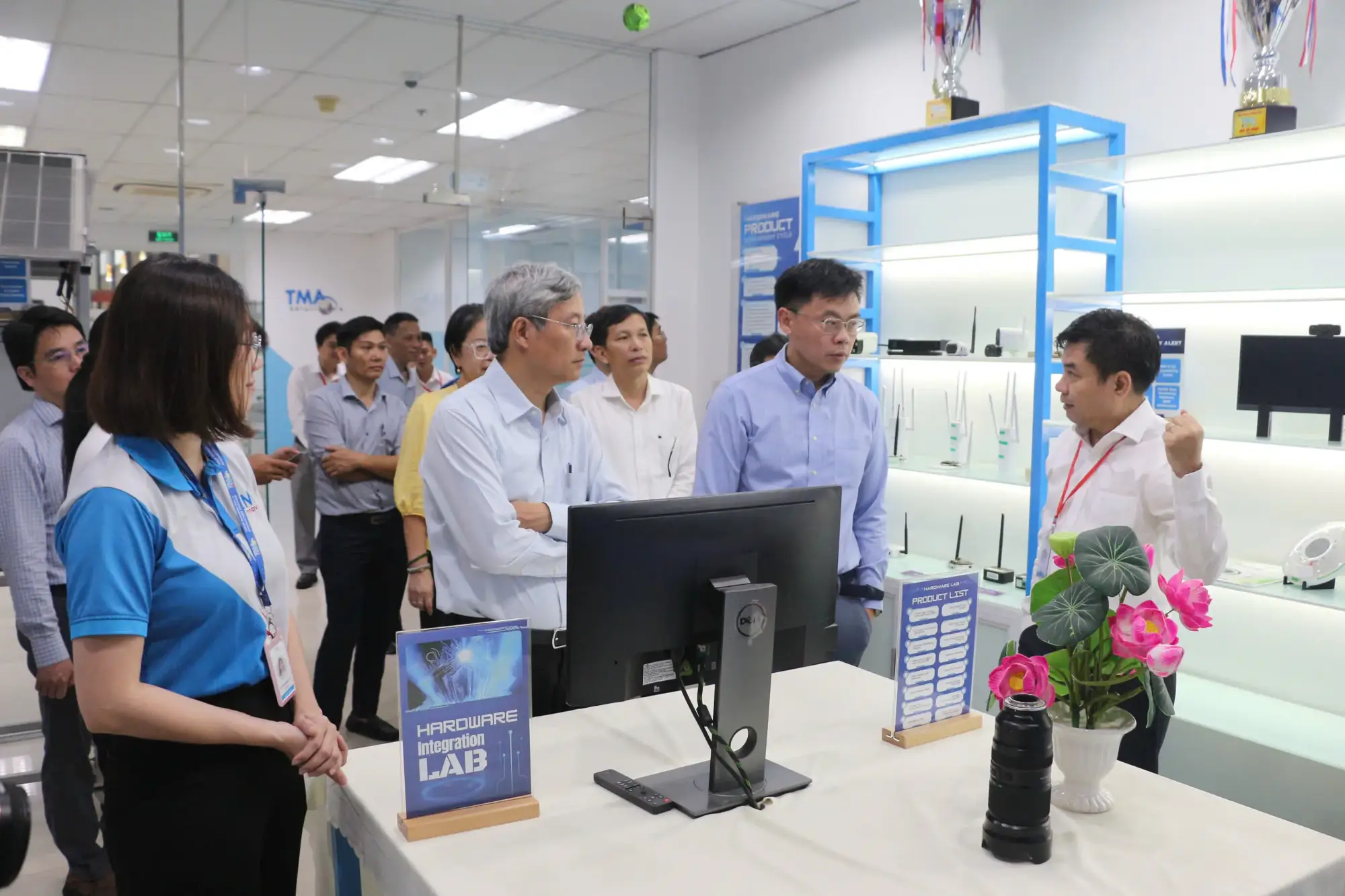
HCMC Leaders Visit TMA Solutions at Quang Trung Software Park On October 15, 2026, Mr. Truong Minh Huy Vu, Vice Chairman of the Ho Chi Minh City People’s Committee, and leaders of city departments visited TMA’s Innovation Center. The visit was part of a working session with Quang Trung Software Park (QTSC) focused on promoting the growth of innovation centers within the park and the city’s digital technology development. Vice Chairman Truong Minh Huy Vu and the delegation visit TMA Innovation Center During the session, the Vice Chairman noted that QTSC’s greatest asset is its community of technology companies, which have moved from software outsourcing to providing technology solutions and digital services. Mr. Hong introduced solutions integrated into hardwares TMA is one of the leading companies in software outsourcing in Vietnam. As a long - standing member of QTSC, TMA has grown over 29 years into a team of 4,000 engineers serving clients from 30 countries. It has expanded from software development to AI solutions for healthcare, manufacturing, finance, retail and agriculture. At TMA Solutions, TMA develops and tests these solutions before bringing them into real - world use for businesses and organizations. The visit reaffirms TMA’s role in QTSC’s innovation ecosystem. TMA will continue to work with QTSC and city agencies to develop AI and digital solutions and nurture technology talent, contributing to Ho Chi Minh City’s digital transformation....
icon
How Vietnam's tech industry utilizes ChatGPT Several tech firms in Vietnam are using OpenAI's ChatGPT to do different tasks, from writing codes and bug checking to data analysis and report creation. Quan, a CTO of a company specializing in website services, said that ChatGPT is capable of creating shortcodes to build a basic website within minutes. To accomplish the same task, it might take an engineer an entire day to manually code an entire website. Thu Hien, a specialist at the company, said the human side sometimes wins thanks to their experience and knowledge about the project. However, if ChatGPT were allowed to read all the codes of the project, it is likely that the chatbot might be able to find faulty parts that even the most experienced programmers may miss. Engineers said programs designed to find bugs are not something new in the programming field. However, what sets ChatGPT apart is how quickly it can explain a problem and reach for a solution. Thanh said that if ChatGPT is not given a clear prompt, or if the reports it produces are not properly edited, the data analysis might be inaccurate, or even false. Moreover, the cost of using Open AI's API is still quite high for the Vietnamese market. Source: vnexpress...
icon
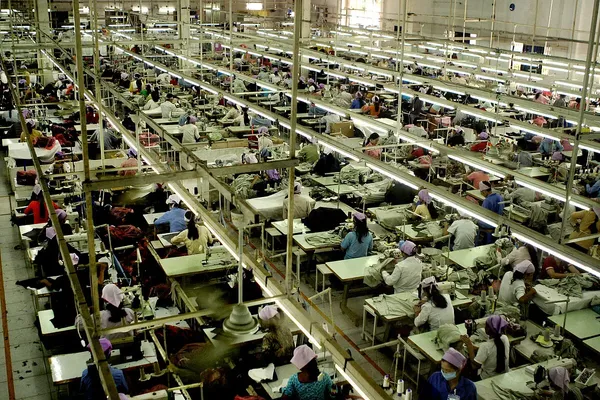
Implications of automation for workers in Vietnam The rapid advancement of technology has transformed industries worldwide, and Vietnam is no exception. As automation continues to evolve, it presents both opportunities and challenges for workers and businesses alike. This article explores the fine line between leveraging technology to enhance productivity and the potential risks of using it to control and exploit workers. The fourth industrial revolution: A double-edged sword The Fourth Industrial Revolution marked a significant shift in the global economy, with automation playing a central role. Unlike previous industrial revolutions, which primarily replaced manual labor with machines, this new wave of /technologies/rpa automation is increasingly capable of performing cognitive tasks traditionally reserved for humans. Technologies such as sensor technology, machine learning (ML), and artificial intelligence (AI) have empowered machines to create products tailored to individual needs, challenging the very nature of human work. While automation has undoubtedly increased efficiency and productivity, it has also raised concerns about the future of human employment. As machines become more capable of performing complex tasks, certain categories of jobs, particularly those that involve routine cognitive functions, are at risk of being automated out of existence. The garment and footwear industries in Vietnam, for example, still rely heavily on manual labor, but this advantage may diminish as technology becomes more cost-effective and sophisticated. The ethical dilemma: Managing versus controlling workers As businesses in Vietnam increasingly adopt automation, a critical ethical question arises: How can technology be used to manage workers without crossing the line into controlling them? This question is particularly relevant in industries where the adoption of technology is accelerating, such as manufacturing and services. In some cases, businesses have used technology to monitor workers' productivity, attitude, and behavior. Closed-circuit television (CCTV) cameras, for example, are often installed in workplaces to ensure that workers are performing their duties efficiently. In more extreme cases, businesses have equipped workers with wearable technology, such as gloves or clothing embedded with chips, to monitor their movements and progress in real-time. While these measures can undoubtedly improve productivity and efficiency, they also raise serious concerns about workers' rights to privacy and personal freedom. The data collected through these technologies can be used to exert undue pressure on workers, creating a work environment where individuals are constantly monitored and evaluated. In some instances, businesses may even use this data to threaten or manipulate workers, particularly if they wish to leave or challenge the company's practices. The role of workers and trade unions in shaping the future As automation continues to reshape the labor market in Vietnam, it is essential to involve workers and trade unions in the decision-making process. According to Dr. Pham Thi Thu Lan, a labor expert interviewed by FES, the participation of workers and their representatives is crucial in ensuring that technology is used responsibly and ethically. By involving workers in discussions about the use of technology and data in the workplace, businesses can create a more transparent and fair work environment. Trade unions can play a vital role in advocating for workers' rights and ensuring that their voices are heard in these discussions. This collaborative approach can help strike a balance between the benefits of automation and the protection of workers' rights. The risks of data commodification One of the most concerning aspects of the increasing use of technology in the workplace is the potential for data commodification. The personal data collected through monitoring technologies can be highly valuable, not only to the businesses that collect it but also to third parties who may be interested in purchasing this information. The commodification of personal data raises significant ethical and legal questions. When workers' data is treated as a commodity, it can be used in ways that are detrimental to their rights and well-being. For example, businesses may sell this data to other companies, leading to a loss of control over personal information. This practice can also exacerbate the power imbalance between employers and employees, as businesses may use the threat of data exploitation to maintain control over their workforce. A call for responsible automation As Vietnam continues to embrace the possibilities of automation, it is essential to approach this technological shift with caution and responsibility. While automation offers numerous benefits, including increased productivity and efficiency, it also presents significant risks to workers' rights and well-being. Businesses must carefully consider the ethical implications of using technology to manage and monitor their workforce. Involving workers and trade unions in the decision-making process is a crucial step toward ensuring that automation is used in a way that respects workers' rights and promotes a fair and just work environment. By striking the right balance between innovation and ethics, businesses in Vietnam can harness the power of automation while safeguarding the dignity and freedom of their workers. Source : FES...
icon
Inside TMA: Top 10 Activities for Employees 2023 at TMA Reflecting on 2023, TMA Technology Group has demonstrated an unwavering commitment to fostering a vibrant and inclusive work culture. By focusing on employee well-being and professional development, TMA has successfully created an environment where each team member can thrive. This article delves into the top 10 activities that have shaped TMA’s work culture in 2023, showcasing the company’s dedication to its employees and its position as a leader in the global IT software industry. Top 10 Activities for Employees 2023 at TMA Reflecting on 2023, TMA Technology Group has demonstrated an unwavering commitment to fostering a vibrant and inclusive work culture. By focusing on employee well-being and professional development, TMA has successfully created an environment where each team member can thrive. This article delves into the top 10 activities that have shaped TMA’s work culture in 2023, showcasing the company’s dedication to its employees and its position as a leader in the global IT software industry. Quarterly Awards: Recognizing Excellence TMA’s commitment to recognizing outstanding performance is evident through its quarterly awards program. In 2023, over 110 employees were honored as "Quarterly Star Performers," a testament to the company’s dedication to acknowledging and rewarding hard work. These awards not only motivate employees to excel in their roles but also foster a culture of excellence and achievement within the organization. Employee Engagement: Building a Strong Community Engagement and community are key pillars of TMA’s workplace culture. Throughout the year, TMA distributed over 350 engagement gifts to employees, reinforcing the company’s commitment to creating a supportive and appreciative work environment. This initiative helps build strong relationships among employees, contributing to a cohesive and motivated workforce. Celebrating Families: International Children's Day TMA understands the importance of work-life balance and the role of family in an employee’s life. In celebration of International Children’s Day, the company provided over 450 gifts to employees’ children, reinforcing the importance of family values. This gesture reflects TMA’s broader commitment to supporting its employees in both their professional and personal lives. Social Responsibility: Active Participation in the Community TMA’s dedication to social responsibility was showcased through the active participation of over 600 employees in various social activities. These initiatives, aimed at giving back to the community, underline TMA’s belief in the importance of corporate social responsibility. By encouraging employees to engage in community projects, TMA fosters a sense of purpose and social consciousness within its workforce. Fostering Team Spirit: TMA Futsal League Promoting health and team spirit, the TMA Futsal League was a significant highlight of 2023. With over 700 employees participating in this six-month-long event, which featured four leagues, 30+ teams, and 200+ matches, the league became a platform for employees to bond, compete, and stay active. The impressive tally of 1000+ goals scored during the tournament underscores the enthusiasm and dedication of the participants. Sports Festivals: Promoting Health and Wellness In addition to the Futsal League, TMA organized a large-scale sports festival across its Ho Chi Minh City and TIP campuses. Over 1,200 employees participated in more than 20 competitions over three months. These events are part of TMA’s broader strategy to promote health and wellness among its workforce, ensuring that employees are not only productive but also physically and mentally fit. Comprehensive Health Checks: Prioritizing Employee Well-Being Employee well-being is a top priority at TMA, as demonstrated by the more than 3,000 periodic health checks conducted throughout the year. These health checks are part of TMA’s proactive approach to maintaining a healthy workforce, ensuring that employees have access to necessary medical care and support. This initiative underscores the company’s commitment to the long-term well-being of its team members. Employee Essentials: TMA Raincoats and T-Shirts TMA’s focus on employee comfort and identity is reflected in the distribution of over 4,000 raincoats and t-shirts. These items not only provide practical benefits but also help foster a sense of belonging and pride among employees. Such gestures contribute to a positive work environment where employees feel valued and appreciated. Engaging the Next Generation: University Collaborations TMA is deeply invested in nurturing the next generation of tech talent. In 2023, over 6,000 university students participated in more than 100 activities organized by TMA. These collaborations provide students with invaluable exposure to the IT industry, helping them develop the skills and knowledge required to succeed in their future careers. TMA’s commitment to education and talent development is a key part of its long-term strategy for success. Continuous Learning: Extensive Training Programs Training and development are integral to TMA’s approach to employee growth. In 2023, the company organized 450 training classes with over 11,000 participants. These programs are designed to enhance the skills and competencies of TMA employees, ensuring that they remain at the forefront of industry trends and technologies. The extensive participation in these training sessions highlights the company’s dedication to continuous learning and professional development. Global Reach and Quality Assurance TMA’s success is not limited to its internal culture; the company has a strong presence in international markets, including North America, Europe, and Asia. This global reach allows TMA to understand and cater to diverse client needs, delivering tailored software solutions that meet specific market requirements. Moreover, TMA is committed to maintaining high standards of quality in all its services. The company’s adherence to international standards such as CMMI Level 5, ISO 27001, and ISO 9001 sets it apart from competitors. These certifications not only enhance client trust but also reinforce TMA’s reputation as a provider of reliable and high-quality IT solutions. Conclusion: A Year of Success and Commitment In conclusion, 2023 has been a year of significant achievements for TMA Technology Group. Through a series of well-planned activities and initiatives, TMA has successfully fostered a positive work environment that prioritizes employee well-being, professional development, and social responsibility. These efforts, combined with the company’s global reach and commitment to quality, position TMA as a leader in the IT software industry, dedicated to both its employees and clients. As TMA continues to grow and evolve, its focus on these core values will undoubtedly drive future success. Explore more of our CSR activities via this link: /about-us/csr TMA Solutions | Corporate Social Responsibility...
icon
Intel Considers Expanding Investment in Vietnam’s Semiconductor Sector Intel Corp (INTC.O) is considering a significant increase in its existing $1.5-billion investment in Vietnam to expand its chip testing and packaging plant in the Southeast Asian nation, two sources familiar with the matter told Reuters. Asked about the possible investment plan, Intel told Reuters, “Vietnam is an important part of our global manufacturing network, but we have not announced any new investments.” A statement on the Vietnam government's official portal was amended on Wednesday to remove a reference to an effort by Ho Chi Minh City to attract $3.3 billion in additional investment from Intel. The chip packaging and testing factory in Vietnam's southern commercial hub is Intel's biggest worldwide. The company is estimated to have invested about $1.5 billion in it so far. /vietnam-software-outsourcing Vietnam Software Outsourcing Source: Reuters...