Home
Search
Found 797 results for “ “ keyword
icon
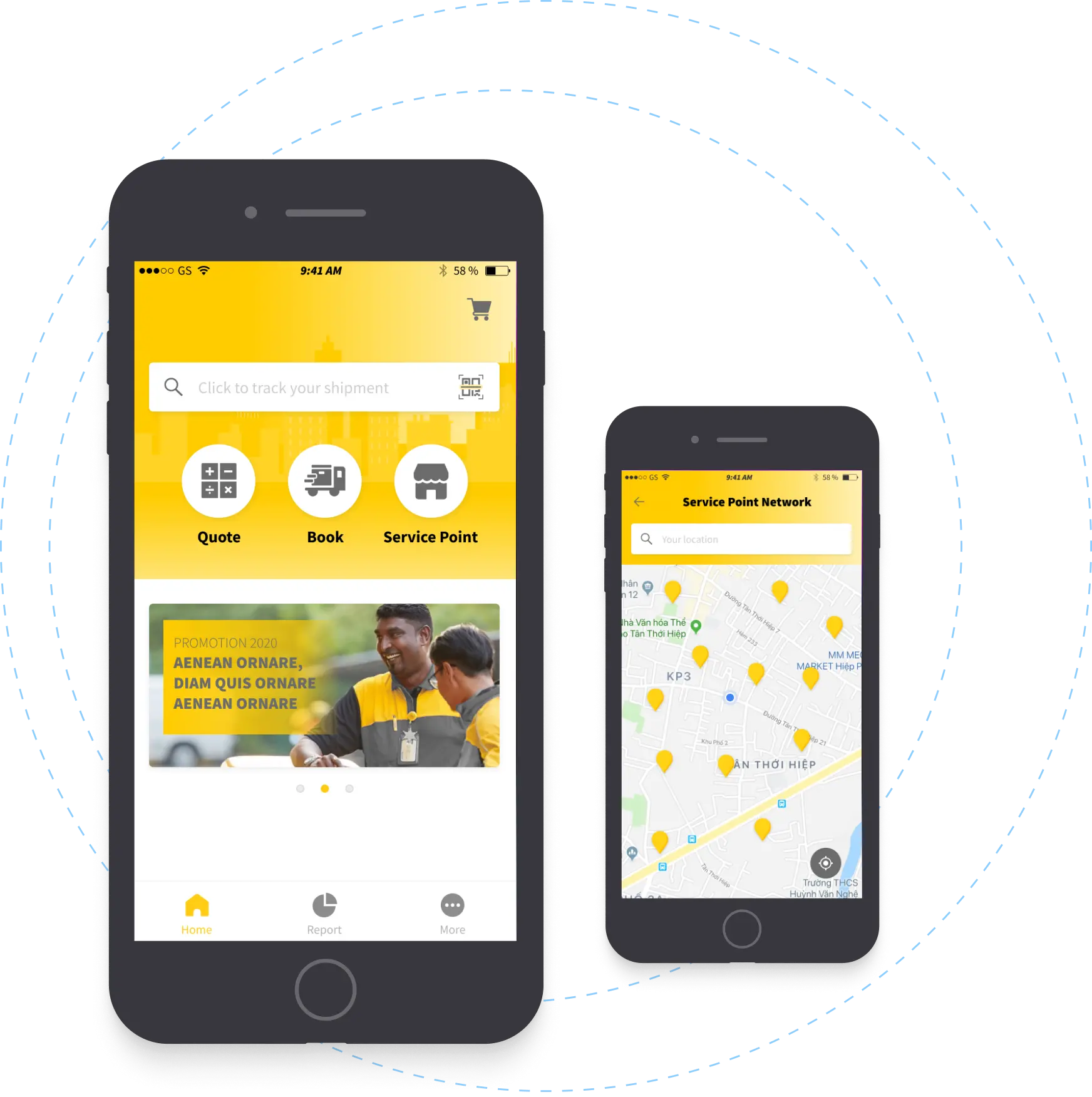
Benefits Improved Client Satisfaction: Enhance user experience by enabling easy tracking and management of orders, leading to higher client satisfaction. Increased Transparency: Real-time tracking and detailed delivery information empower clients with the insights they need, building trust and confidence in the service. Competitive Advantage: By leveraging innovative technology, the client positions itself as a leader in client-centric logistics solutions, attracting new clients and retaining existing ones. Solutions User-Friendly Mobile App: Develop a mobile application with an intuitive interface that simplifies order tracking and management for users. Real-Time Tracking Support: Implement features that provide live updates on delivery status, ensuring clients are informed at every step. Detailed Delivery Information: Offer accurate estimated time of arrival and tracking details, providing clients with comprehensive information about their deliveries. Client Challenges The client aims to enhance their delivery service while addressing key challenges in user experience and operational efficiency. The solution needs to address the following challenges: Complicated User Experience: The client struggles to deliver a seamless ordering and tracking process, resulting in frustration and a decline in client retention rates. Lacking Transparency: Limited visibility into delivery processes makes it difficult for clients to stay informed about their orders. Location: Global Industry: Logistics and Supply Chain About Client A global leader in logistics and supply chain management, offering a wide range of services including international shipping, courier services, freight transportation, and e-commerce solutions. The company focuses on enhancing delivery efficiency and client satisfaction through innovative technology solutions. Project Highlights User-Friendly Mobile App Development: Create a user-friendly mobile application that simplifies order tracking and management, enhancing user engagement and satisfaction. Real-Time Delivery Tracking: Implement live tracking features, providing clients with continuous updates on their delivery status, thereby improving transparency and trust. Increased Operational Efficiency: Streamline delivery processes through innovative technology, resulting in reduced operational costs and delays, ultimately enhancing service quality. Optimizing user experience and delivery efficiency through innovative mobile app development TMA Solutions created a mobile app with real-time tracking to improve delivery efficiency and client experience for a global logistics company....
icon
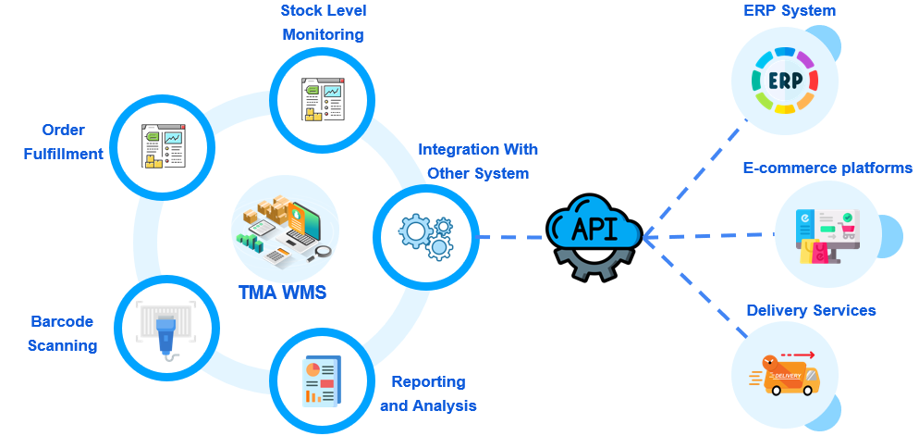
Project Highlights Centralized Inventory Management: Implement a robust system that offers a unified view of inventory across all locations, improving accuracy and control. Automated Order Fulfillment: Streamline processes for picking, packing, and shipping, significantly enhancing delivery speed and client satisfaction. Enhanced Reporting Features: Develop comprehensive reporting tools that provide valuable insights for effective decision-making and operational improvements. Real-Time Monitoring Capabilities: Integrate real-time stock tracking to ensure optimal inventory levels and reduce the risk of stockouts. About Client Our client is looking for a comprehensive solution to manage warehouse operations across multiple locations, enhance inventory control, and boost overall warehouse efficiency. Industry: Logistics and Supply Chain Client Challenges Our client aims to develop a Warehouse Management System to optimize their warehouse operations and improve overall efficiency and client satisfaction. Ineffective Order Fulfillment: Challenges in order fulfillment processes are causing delays in deliveries, leading to client dissatisfaction. Limited Reporting Capabilities: Inadequate reporting tools hinder strategic decision-making, impacting overall operational efficiency. Inventory Management Difficulties: Difficulty in managing inventory across multiple warehouses creates inconsistencies and complicates stock control. Solutions Warehouse Management System: Create a centralized platform that provides a comprehensive view of inventory across all locations. Real-Time Stock Monitoring: Implement real-time tracking to ensure optimal stock levels are maintained. Order Fulfillment Process: Streamline picking, packing, and shipping processes for improved efficiency. Reporting Tools: Develop insightful reporting features to enhance decision-making capabilities. Benefits Improved Inventory Accuracy: Centralizing inventory management reduces discrepancies and enhances accuracy across all locations. Enhanced Operational Efficiency: Streamlining order fulfillment processes leads to faster picking, packing, and shipping, ultimately improving service delivery. Real-Time Visibility: Real-time stock monitoring provides timely updates, helping to maintain optimal stock levels and reduce stockouts. Data-Driven Decision Making: Insightful reporting tools equip management with essential information for strategic decision-making. Optimizing warehouse management with centralized inventory and real-time monitoring Centralizing inventory and real-time monitoring to boost warehouse operations and client satisfaction for Warehouse Management System....
icon
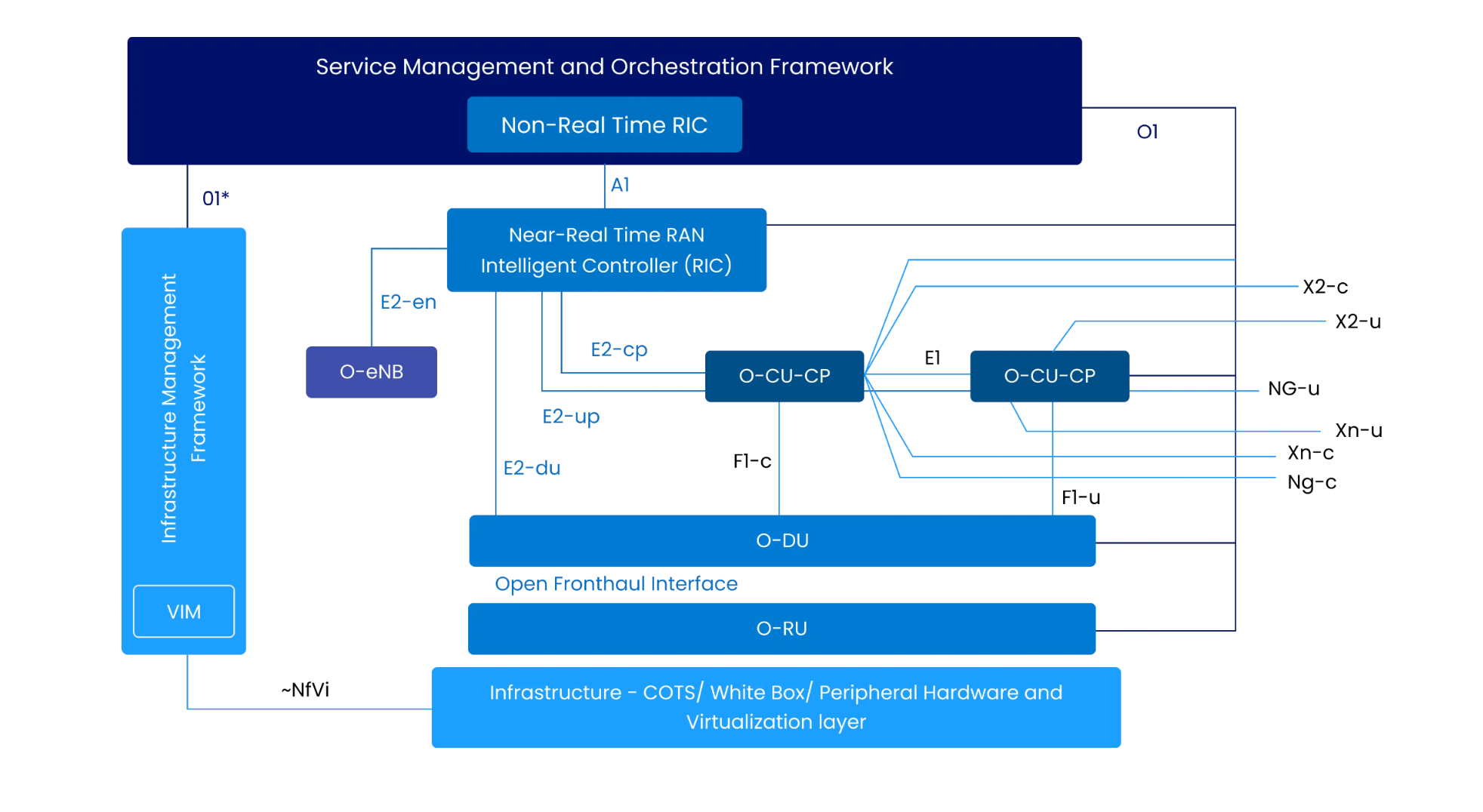
O-RAN Development TMA Solutions developed an O-RAN architecture integrated with Multi-access Edge Computing (MEC) to deliver ultra-low latency, high performance, and scalable 5G services. The deployment reduced core congestion, improved real-time AR/VR and IoT application performance, and enhanced user experience through localized data processing. Solution Highlights Deploy an O-RAN based architecture with Multi-access Edge Computing (MEC ) capabilities. MEC platform enables real-time, resource-intensive applications such as AR/VR, IoT , and video caching at the edge. Designed to reduce traffic load on 5G Core while ensuring ultra-low latency and high performance. Fully aligned with ETSI MEC standards for interoperability and scalability. Success Story During the PoC phase, the O-RAN MEC deployment successfully demonstrated: Seamless integration of MEC with a 5G Core and gNB. AR/VR applications operated smoothly at the edge with significant latency reduction. Video caching reduced Core site traffic by more than 40%, improving throughput and user satisfaction. The architecture proved to be future-ready, enabling quick adoption of additional IoT and 5G services. Benefits Ultra-low latency : Real-time responses for AR/VR and IoT applications. Reduced Core congestion : Heavy workloads processed at the edge, freeing Core resources. Enhanced user experience : Faster content delivery (e.g., video caching at the edge). Scalability : Flexible integration of new applications without Core reconfiguration. Standards-compliant : ETSI alignment ensures ecosystem compatibility and easier adoption. Problem Statement With the exponential growth of 5G applications (e.g., immersive AR/VR, IoT ecosystems, video-on-demand), the traditional 5G Core becomes overloaded with compute-heavy and latency-sensitive tasks. This leads to: Network congestion at the Core site. High latency, making real-time applications impractical. Limited scalability for next-generation services. Solutions Implement an O-RAN architecture that separates CU/DU/RU for flexible deployment. Integrate a MEC system including: MEC Platform (MEP) : For hosting edge applications. MEP Manager : For resource allocation and application lifecycle management. MEC Orchestrator : For coordinating MEC services with the 5G Core and RAN. Deploy MEC nodes close to end-users to process data locally, minimizing backhaul traffic. Ensure full compliance with ETSI MEC standards to guarantee interoperability with existing 5G systems....
icon
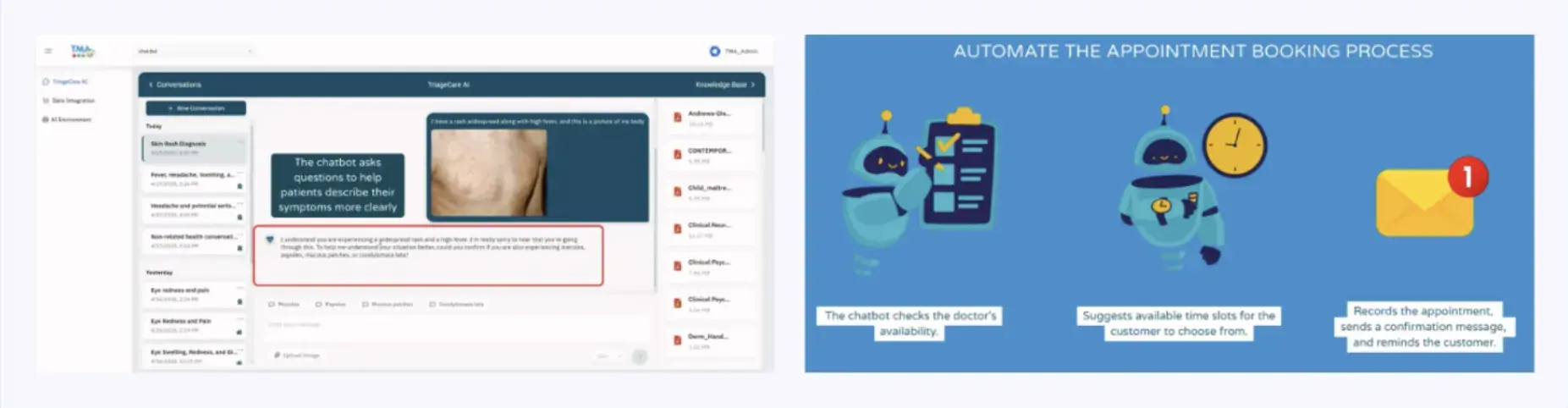
Technologies TMA Data Platform TMA Agentic AI Framework Gemini Description This solution simplifies patient check-ins and provides clear guidance. It also integrates with HIS, EMR, and scheduling systems for better coordination. Functions Symptom input via text or image : Patients can submit symptoms by typing or uploading photos Medical AI understanding : Analyze inputs using trusted medical datasets for accurate assessment Clear health guidance : Deliver easy-to-follow advice based on symptom analysis System integration : Connect with HIS, EMR, and scheduling systems for updates and bookings Patient Intake Assistant This solution simplifies patient check-ins and provides clear guidance....
icon
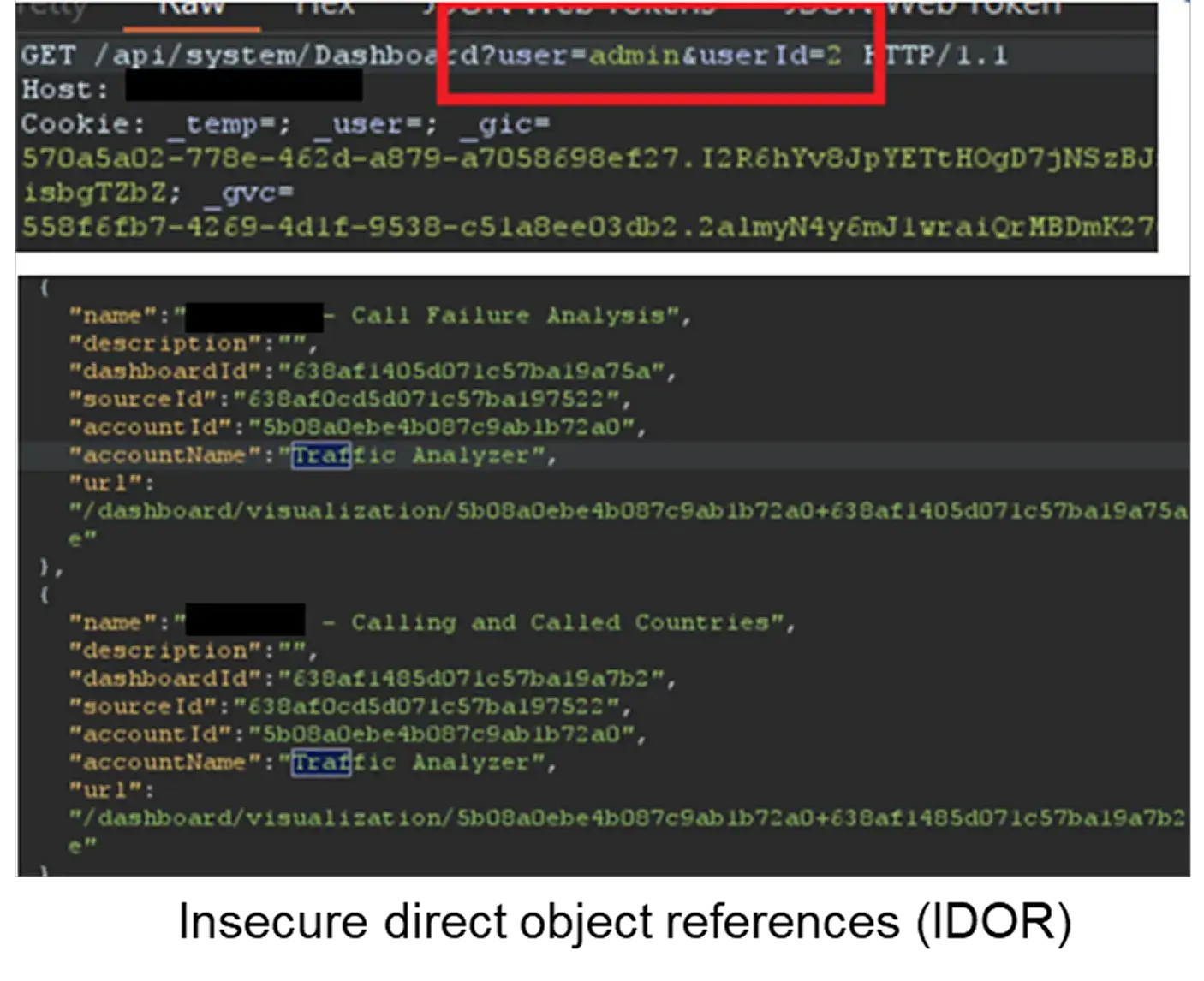
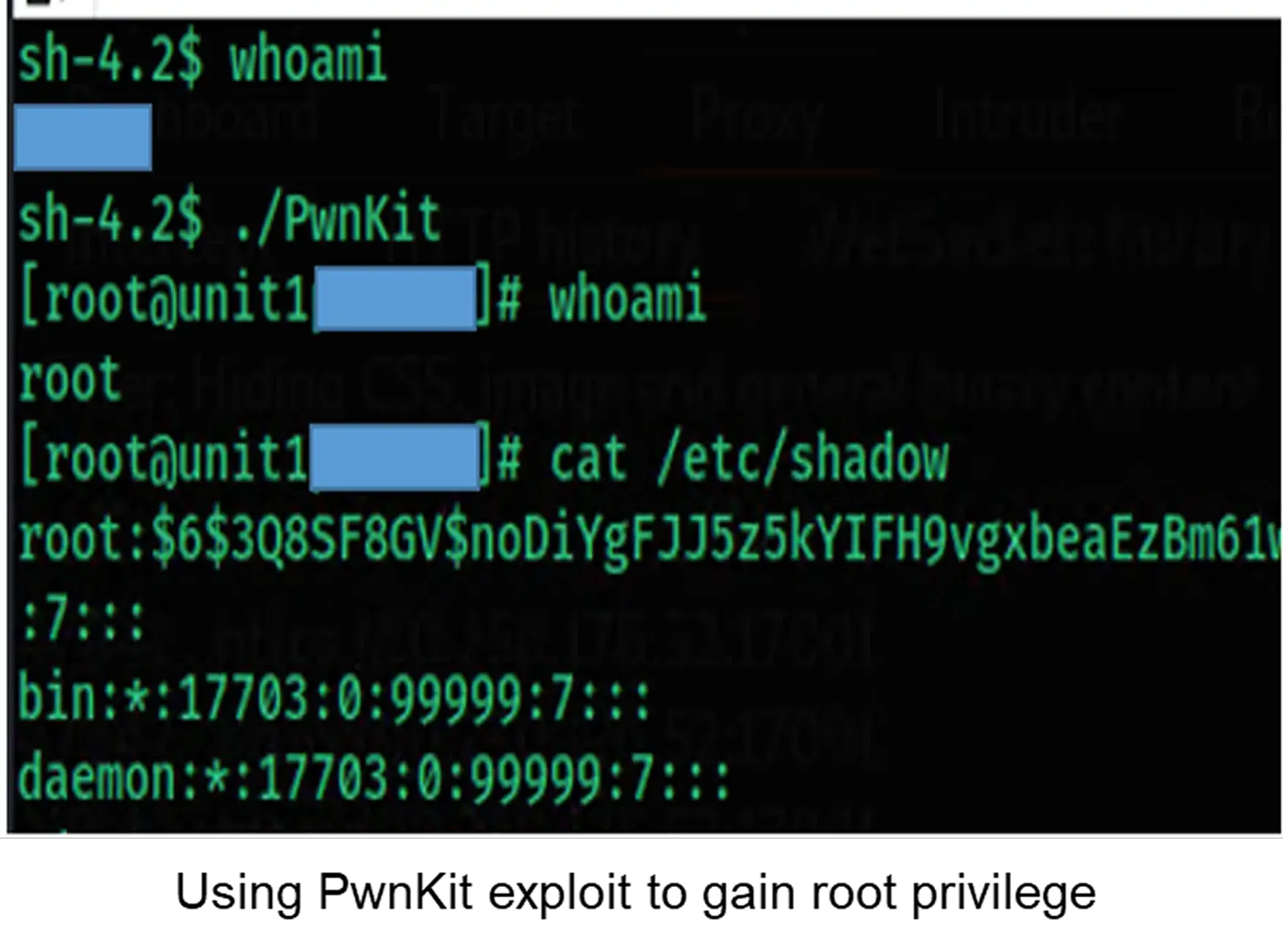
Penetration Testing Service TMA has 10+ years of experiences providing services of Security testing and Penetration testing Penetration Testing Service Highlights​ TMA has 10+ years of experiences providing services of Security testing and Penetration testing for global software companies:​ 100 Skillful & certified engineers​ Certified CEH, CompTIA PenTest+, OSCP​ Test method Blackbox, Greybox, Whitebox​ Test category Web, applications, network, system, software, OS, Database​ Test is executed for both systems at TMA site and client sites​ Standard Pentest Engagement process and testing process are implemented Penetration Testing Techniques & Tools Penetration Test Methods​ Standard: PTES 7 Stages, OWASP, SANS, OSSTMM​ Blackbox Greybox/Whitebox​ Blind​ External Internal​ Tools​ Nessus​ Kali​ BurpSuite​ Metasploits NMAP​ OWASP ZAP​ WireShark, OpenVas​ MobSF, Xcode, Genymotion​ Penetration Test Types​ Web Application​ Mobile Application​ System Security ​ Network Security​ Cloud Security​ Programming Languages​ Perl Python​ Javascript​ SQL​ Security Scoring System​ Common Vulnerability Scoring System – CVSS​ Common Weakness Enumeration – CWE​ NIST Special Publication 800-115, Technical Guide to Information Security Testing and Assessment​ OWASP Mobile Application Security Verification Standard (MASVS)​ Pentest Phase Information gathering​ Gather all relevant info about target system: IP address, opened port, OS,…​ Passive & Active​ Threat ​modeling To understand and model all threats (adversaries, trusted partners…). ​ Identify and determine potential attacks Objectives​ Objectives are discussed between the client and PEN test team to create an understanding between both parties of what is expected and provided. For example: identify system weaknesses and vulnerabilities, evaluate the impact of data exposure and exfiltration​ Target​ Understand the target system under penetration test Clarify requirements​ Determine what is needed for the test in technical perspectives​ Scope​ The scope will vary by organization and what their infrastructure and posture look like. A client's scope will typically define what you can and cannot do. For example: no exfiltration of data, system downtime is not permitted (DoS, DDoS attack)​ System under test: a cloud-based service that securely connects new or existing phone lines, numbers and service plans to Microsoft Teams Test method: Greybox Test category: Cloud-based Service​ Tools used: Burp Suite Professional​ Test Procedure:​ Find the vulnerable order confirmation email feature.​ Inject malicious payloads and send it to potential clients​ Summary of issues found:​ Malicious email with real, authentic sender.​ Engagement Process Report​ Report security findings and how to fix the vulnerabilities & recommendations​ Post​ exploitation Try to move to another location/user. Established a backdoor for persistence Vulnerability analysis​ Take into account port and vulnerability scans, data gathered, and information collected during info gathering​ Exploitation​ Perform the attack such brute force, Injection, Target specific systems, identifies critical infrastructure, and targets information or data to attempted to secure.​ Pentest Report Content Contents Executive Summary Overview System Under Test Information Risk Ratings Summary of the Findings Vulnerabilities & Remediation Details​ Details of Testing Executed​ System under test: an EMS platform that provide monitoring, operation and management to network elements Test method: Whitebox Test category: Linux System Tools used: Manual, automated enumeration scripts (Linpeas, LinEnum, LSE…) Rules​​ Focus on internal/external network, segmentation of DMZ and internal servers?​ Define outlines of report such as executive summary, purpose, scope, findings, remediation advices​ Permit to attack subnet/domain?​ PenTest Process​ Test Procedure: Check for system information (outdated kernel, current user information, sudo…) Check for misconfiguration (SUID, Cron Job, PATH, Capabilities, NFS…) Find exploits according to enumeration results. Summary of issues found: Vulnerable to PwnKit, able to escalate to root. Gain a persistent backdoor using cron Information Disclosure via readable Files. System under test: A big data platform to feed data to Analytics Applications that secure and monitor your Communication Services and Networks Test method: Greybox Test category: Analytics API Tools used: Burp Suite Professional Test Procedure: Find the request that query information only available to admin user. Send that same request, but now with low privilege user’s authentication token (IDOR) Summary of issues found: Low privilege user can view sensitive information available to admin only. (IDOR) Case Study Pentest for VoIP Cloud-based system​ Pentest for Element Management System Pentest for Analytic Platform System under test: a cloud-based service that securely connects new or existing phone lines, numbers and service plans to Microsoft Teams​ Test method: Greybox Test category: Cloud-based Service​ Tools used: Burp Suite Professional​ Test Procedure:​ Find the vulnerable order confirmation email feature.​ Inject malicious payloads and send it to potential clients​ Summary of issues found:​ Malicious email with real, authentic sender.​ System under test: an EMS platform that provide monitoring, operation and management to network elements Test method: Whitebox Test category: Linux System Tools used: Manual, automated enumeration scripts (Linpeas, LinEnum, LSE…) Test Procedure: Check for system information (outdated kernel, current user information, sudo…) Check for misconfiguration (SUID, Cron Job, PATH, Capabilities, NFS…) Find exploits according to enumeration results. Summary of issues found: Vulnerable to PwnKit, able to escalate to root. Gain a persistent backdoor using cron Information Disclosure via readable Files. System under test: A big data platform to feed data to Analytics Applications that secure and monitor your Communication Services and Networks Test method: Greybox Test category: Analytics API Tools used: Burp Suite Professional Test Procedure: Find the request that query information only available to admin user. Send that same request, but now with low privilege user’s authentication token (IDOR) Summary of issues found: Low privilege user can view sensitive information available to admin only. (IDOR)...

icon
Project Highlights Perform penetration testing for an analytics platform that feeds data to analytics applications that secure and monitor VoIP communication services and networks. About Client Industry: Telecommunications Location: North America Client Needs The client requested a full process of penetration testing for the target system under test (an analytics platform), including: Test methodology Test procedure Summary of found issues Solutions Test methodology: Testing Approach: Grey box Test Category: Analytics API Security Assessment Objective: to evaluate whether access control mechanisms properly enforce role-based access across API endpoints that handle sensitive network and user data Tools Used: Burp Suite Professional (for API interception, token manipulation, request replay, and response analysis) Test procedure: API Mapping and Role Analysis Identified key API endpoints responsible for admin-only dashboards, raw CDR data, network health metrics, and fraud signal intelligence. Analyzed documentation and Swagger files to infer endpoint patterns and expected parameters. Access Control Testing (IDOR Focus) Authenticated as a high-privilege (admin) user to observe authorized API calls and responses. Replayed the same requests using a low-privilege (read-only or analyst) user's JWT/OAuth token. Altered user IDs, tenant IDs, and role flags in headers and body content to test for Insecure Direct Object Reference (IDOR) conditions. Response Analysis Compared responses received by admin and low-privilege users. Checked for discrepancies in HTTP status codes, data visibility, and error handling. Benefits Detected critical authorization flaws before exploitation: Exposed IDORs and token-scope weaknesses that would have allowed low-privilege users to access admin-only data. Strengthened RBAC enforcement: Delivered specific code and API design changes to enforce object-level access control and reduce attack surface. Reduced sensitive data exposure: Recommended error-handling and filtering practices to eliminate information leakage in responses and logs. Improved operational security and auditability: Proposed logging, token scope validation, and CI checks to prevent regressions and enable faster incident response. Business risk reduction: A prioritized remediation roadmap that aligned security fixes with the client’s compliance and uptime objectives. Pentest for Analytics Platform Performed penetration testing for an analytics platform supporting VoIP services to detect authorization flaws, enhance API security, and strengthen role-based access control....
icon
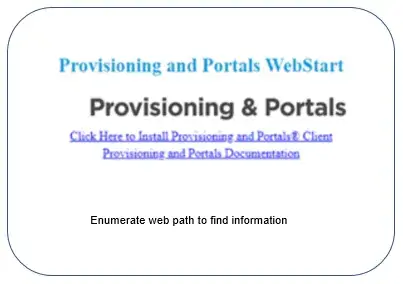
Project Highlights Conducted penetration testing for a Carrier VoIP Provisioning Portal Server, a secure web-based platform designed for subscriber and device provisioning, system resource management, and carrier-grade service configuration within large-scale VoIP communication systems. The engagement identified critical vulnerabilities, validated security controls, and strengthened the platform’s overall resilience against cyber threats, ensuring secure, reliable, and compliant service delivery for carrier-grade operations. About Client Industry: Telecommunications Location: North America Client Needs The client required a comprehensive penetration testing engagement for a Carrier VoIP Provisioning Portal Server, which served as a secure web-based platform for subscriber provisioning, device management, and carrier-grade service configuration within large-scale VoIP communication networks. The scope covered: Test methodology Test procedure Summary of identified vulnerabilities and actionable recommendations Solutions Test methodology: Testing Approach: Black box Test Category: Web Application Security Assessment Objective: to assess the publicly accessible provisioning portal for weaknesses that could allow unauthorized access, information disclosure, or compromise of service availability or integrity. Tools Used: Nmap: Network and port scanning to identify open services and protocols Nessus: Vulnerability scanner to identify known CVEs and configuration issues Burp Suite Professional: Web proxy to analyze and manipulate HTTP requests and responses Test procedure: Initial Network & Service Discovery Performed Nmap scanning to enumerate open ports, services, and server banners. Detected a web server running on port 443 with valid SSL certificate and HTTP 302 redirection from port 80. Identified potential entry points, including the login page, API endpoints, and static assets directory. Vulnerability Scanning Ran Nessus scan to detect vulnerabilities in the web stack and known software. Discovered version information of underlying web server and libraries. Highlighted software dependencies with outdated versions of Prototype.js and jQuery, vulnerable to known XSS and DOM injection attacks. Web Application Testing with Burp Suite Pro Intercepted requests to understand session handling, form submissions, and API structures. Identified hidden endpoints through forced browsing and directory brute-force. Created a sitemap and tree view of accessible routes and files. Information Disclosure & Reconnaissance Discovered exposed configuration files and asset metadata that revealed: Software versions (e.g., jQuery 1.7.2, Prototype.js 1.6.1) Error messages disclosing server-side technology (e.g., PHP warnings, stack traces) Static HTML comment blocks containing deprecated admin links Attack Vector Mapping Mapped possible attack vectors, including Outdated JS library exploitation File path traversal possibilities Potential for user enumeration via login response analysis Benefits Revealed the Application’s Real Exposure Surface: Provided full visibility into accessible and vulnerable system components. Identified Third-Party Library Weaknesses: Exposed outdated dependencies posing potential exploitation risks. Detected Risky Misconfigurations and Data Leakage: Enabled proactive remediation and reduced attack exposure. Strengthened Overall Security Posture: Validated system resilience against real-world black-box attack scenarios. Pentest for Carrier VoIP Provisioning Portal Performed penetration testing for a Carrier VoIP Provisioning Portal Server to identify vulnerabilities, detect misconfigurations, and enhance the platform’s overall security and compliance....
icon
Solutions Test Methodology Testing Approach : White-box assessment. T est Category : Linux System Security Testing. Objective : Identified potential privilege escalation paths, misconfigurations, insecure file permissions, and outdated packages that could enable unauthorized privilege gain or persistence. Tools Used : Manual testing (Linux command-line techniques) Automated enumeration frameworks: LinPEAS LinEnum LSE (Linux Smart Enumeration) Test Procedure System & User Enumeration Collected detailed system information: kernel version, distribution, installed packages, and running services. Verified current user privileges, group memberships, and accessible sudo commands. Checked for vulnerable binaries in the user’s PATH. Misconfiguration Assessment Searched for SUID binaries, world-writable files, and insecure cron jobs. Audited environment variables (e.g., $PATH, $LD_PRELOAD) for insecure settings. Evaluated service permissions, particularly custom monitoring daemons. Privilege Escalation & Exploit Simulation Validated exploitation paths identified through enumeration. Detected local privilege escalation exploits (e.g., PwnKit – CVE-2021-4034). Found insecure cron jobs owned by root and weak file permission structures. Persistence Testing Explored persistence mechanisms such as cron job injection, SSH key planting, and startup script modification. Sensitive Information Discovery Reviewed directories (etc, /var, /opt/ems, /home) for readable config files and credentials. Identified hardcoded API tokens, SNMP community strings, and topology files exposing internal data. Benefits Early Detection of Privilege Escalation Risks: Discovered and mitigated exploitable escalation paths before potential attackers could leverage them. Enhanced Linux System Hardening: Provided actionable remediation to improve kernel, service, and user-level security controls. Proactive Insider Threat Mitigation: Prevented privilege misuse and unauthorized persistence mechanisms by reinforcing secure configurations. Strengthened Compliance & Reliability: Aligned Linux host security with telecom-grade operational standards, ensuring system stability and continuous uptime. Project Highlights Performed penetration testing for an Element Management System (EMS) platform designed to monitor, operate, and manage network elements within a VoIP carrier-grade communication system. The engagement uncovered critical vulnerabilities, validated system defenses, and enhanced overall platform security, ensuring reliable network operations, robust protection against cyber threats, and compliance with carrier-grade security standards. About Client Industry: Telecommunications Location: North America Client Needs The client required a comprehensive Linux privilege escalation assessment for a critical server within its VoIP carrier-grade communication environment. The goal was to identify system weaknesses that could be exploited by insider threats or attackers with limited access privileges. Pentest for Element Management System Conducted penetration testing for an Element Management System (EMS) platform to identify privilege escalation risks, strengthen Linux system defenses, and ensure telecom-grade security compliance....