Introduction
Deepfakes have become a growing concern in the digital age. With the ability to manipulate audio and video content to mimic real people, these AI-generated forgeries are increasingly used in fraud, disinformation campaigns, and social manipulation. As they grow more sophisticated, the urgency to detect and respond to deepfakes has never been greater.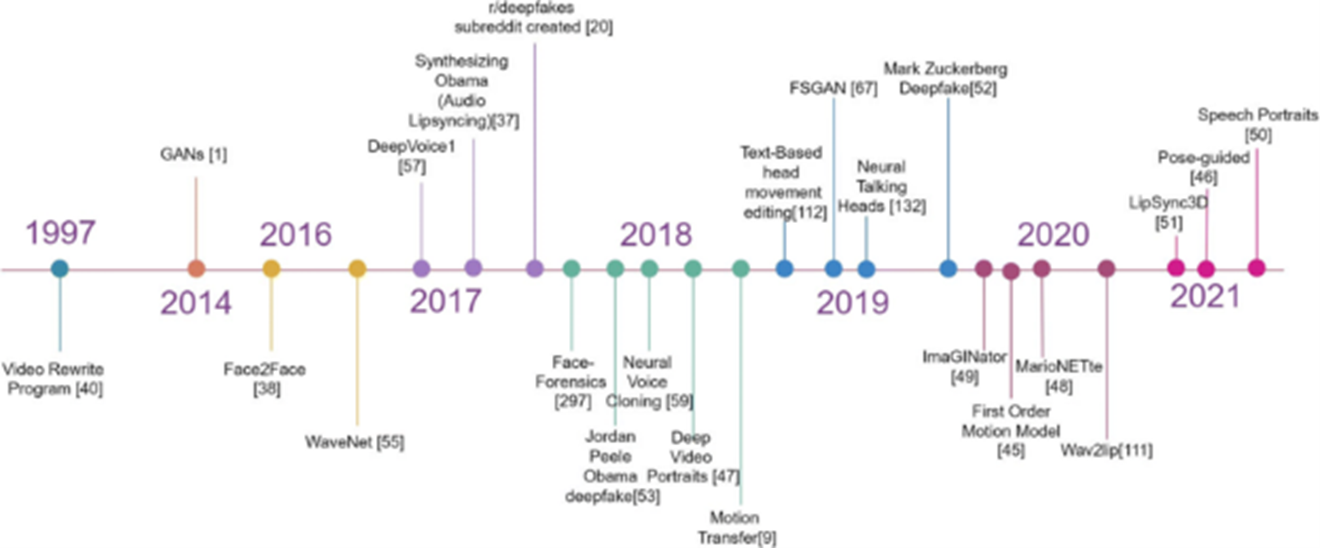
Early Detection Methods
In the early days, deepfake detection relied on manual analysis or simple digital watermarking techniques. These approaches were slow and often ineffective against advanced forgeries, especially when dealing with high-quality synthetic content.
Rise of AI/ML Techniques
The shift toward using AI and machine learning has been a game-changer. Detection tools now leverage convolutional neural networks (CNNs) and other deep learning models to identify subtle inconsistencies in facial expressions, blinking patterns, or lighting artifacts that may go unnoticed by the human eye.
Notable models include XceptionNet, MesoNet, and FaceForensics++, which have shown effectiveness in identifying manipulated facial features in synthetic media. However, this remains a cat-and-mouse game—every improvement in detection is often followed by advances in generation techniques.
Current Limitations in Detection and Response
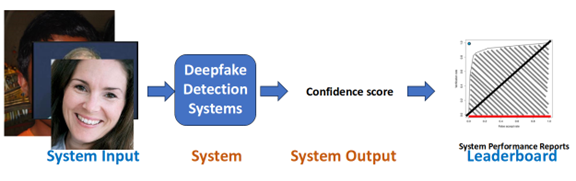
Despite progress, several challenges persist:
- Real-time detection is rare. Most tools analyze content after it has already been published, limiting timely intervention. Real-time detection is difficult due to high computational cost, system latency, and the requirement for large-scale, well-labeled training datasets to handle diverse types of manipulated media.
- Latency in response. Even if a deepfake is detected, organizations may not have streamlined processes or automation in place to act quickly enough to prevent harm.
- Lack of integrated response mechanisms. Detection alone is not sufficient. Many systems are missing a coordinated response pipeline that can immediately escalate and mitigate threats once identified.
TMA SOAR with TrueSight Flow: A New Approach
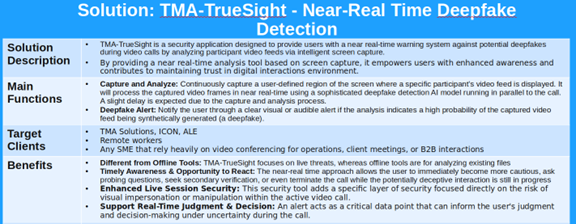
To address these gaps, TMA Solutions leverages its SOAR platform—TrueSight Flow—which offers near-real-time monitoring and automation capabilities for media content integrity.
What is SOAR?
Security Orchestration, Automation, and Response (SOAR) systems integrate threat intelligence, detection tools, and workflow automation to help security teams respond more quickly and consistently to incidents.
By combining AI-powered detection with SOAR automation, TrueSight Flow enables real-time event correlation, auto-alerting, and even policy-driven content suppression or escalation. Once a deepfake is detected, the system can immediately trigger alerts, activate takedown protocols, or route cases to human reviewers, closing the loop between identification and response.
Conclusion
Deepfakes will continue to evolve, posing risks to individuals, organizations, and societies. While detection technology has made significant progress, the next critical step is improving how quickly and effectively we respond. Tools like TMA’s TrueSight Flow represent a forward-thinking move toward integrated, responsive solutions in the fight against synthetic media threats.


.webp_2026-10-01-18-27-07-971.webp)
.webp_2026-10-01-18-17-11-290.webp)