Introduction: The Path to a Smarter Factory is Not Always Smooth
The promise of the smart factory is compelling: a hyper-efficient, data-driven environment that boosts productivity, reduces costs, and enhances agility. With 86% of manufacturers believing smart factory initiatives will be the main driver of competitiveness in the next five years, the question is no longer if but how to make the transition.
However, the journey from a traditional plant to a fully integrated smart factory is filled with significant hurdles. Many organizations find themselves struggling with high costs, complex technology integration, and a workforce unprepared for the digital shift. In fact, many initiatives fail to move beyond the pilot stage, a phenomenon known as “pilot purgatory”. This article identifies the five biggest challenges of smart factory implementation, supported by industry research, and provides a practical guide on how to overcome them.
High Initial Investment and Unclear ROI
The Challenge: The upfront cost of implementing smart factory technologies—from IoT sensors and software platforms to new machinery—can be substantial. For many executives, especially in small and medium-sized enterprises (SMEs), justifying this large capital expenditure without a clear and immediate Return on Investment (ROI) is a major barrier.
How to Overcome It:
- Start Small and Scale: Instead of a factory-wide overhaul, begin with a pilot project in a high-impact area. Focus on a single production line or a critical bottleneck where improvements can be quickly measured.
- Focus on OEE: Use Overall Equipment Effectiveness (OEE) as a key metric. A simple Machine Monitoring System (MMS) can track downtime and inefficiencies, providing clear data to prove the value of further investment.
- Adopt a Modular Approach: Choose solutions that are modular and scalable. This allows you to add capabilities over time as you achieve positive ROI, controlling costs and minimizing risk.
Integrating Legacy Systems (IT/OT Convergence)
The Challenge: Most factories are "brownfield" environments, meaning they operate with a mix of old and new equipment from various manufacturers, each with its own proprietary protocols. Integrating these legacy Operational Technology (OT) systems with modern Information Technology (IT) infrastructure is a complex technical nightmare. This lack of interoperability creates data silos and prevents the seamless flow of information needed for a truly smart factory.
How to Overcome It:
- Use IoT Gateways: Implement IoT gateways and protocol converters that can translate data from older machines (using protocols like Modbus) into a standard format (like MQTT) for modern IT systems.
- Centralized IoT Platform: Deploy a centralized platform that can connect to diverse assets, regardless of their age or vendor. This creates a unified data layer for the entire factory.
- Prioritize Data Standardization: Establish a clear data governance strategy from the beginning to ensure all information collected is consistent, accurate, and usable across different applications.
The Talent Gap and Workforce Resistance
The Challenge: A smart factory requires a workforce with new skills in data analytics, AI, and robotics. According to Deloitte, the talent gap is a top concern for manufacturers, with many struggling to find and retain qualified employees. Furthermore, existing employees may resist change, fearing that automation will make their jobs obsolete. This cultural resistance can sabotage even the most well-designed digital transformation strategy.
How to Overcome It:
- Invest in Reskilling and Upskilling: Create internal training programs to equip your current workforce with the necessary digital skills. Focus on turning machine operators into "data interpreters."
- Promote Human-Machine Collaboration: Frame the transformation not as a replacement of people, but as an augmentation of their abilities. Emphasize how technology can eliminate repetitive, tedious tasks, allowing employees to focus on higher-value problem-solving.
- Engage Employees Early: Involve factory floor staff in the planning and implementation process. Their hands-on knowledge is invaluable for identifying practical challenges and ensuring the new tools are user-friendly.
Cybersecurity Vulnerabilities
The Challenge: As factories become more connected, their "attack surface" expands dramatically. Every IoT sensor, machine, and network connection is a potential entry point for cyber threats. A successful attack on a smart factory can go beyond data theft; it can halt production, damage expensive equipment, compromise worker safety, and disrupt the entire supply chain.
How to Overcome It:
- Adopt a "Defense-in-Depth" Strategy: Implement multiple layers of security, including firewalls, intrusion detection systems, and network segmentation to isolate critical OT systems from the general IT network.
- Prioritize Access Control: Enforce strict role-based access control and multi-factor authentication to ensure only authorized personnel can access or modify sensitive systems.
- Regular Security Audits and Training: Conduct regular vulnerability assessments and provide ongoing cybersecurity training for all employees to build a security-conscious culture.
Data Overload and Failure to Scale
Data Overload and Failure to Scale
The Challenge: Smart factories generate an enormous amount of data. Without a clear strategy, companies risk "drowning in data" without extracting any meaningful insights (4). This is a key reason why many companies get stuck in "pilot purgatory"—they can successfully run a small-scale trial but fail to scale it across the enterprise because the data management and analytics capabilities are not robust enough (2).
How to Overcome It:
- Define Clear Business Goals: Before collecting any data, define the specific business problems you want to solve. This ensures you only gather relevant data and can measure the impact of your initiatives.
- Leverage Edge and Cloud Computing: Use edge computing to process time-sensitive data locally on the factory floor, reducing latency. Send summary and historical data to the cloud for more complex analysis and long-term storage.
- Utilize AI-Powered Analytics: Implement AI and machine learning platforms that can automatically analyze large datasets to identify patterns, predict failures, and provide actionable recommendations, turning raw data into business intelligence.
How TMA Solutions Helps You Overcome These Hurdles
The journey to a smart factory is a marathon, not a sprint. At TMA Solutions, we provide a modular and scalable approach to help you navigate these challenges effectively.
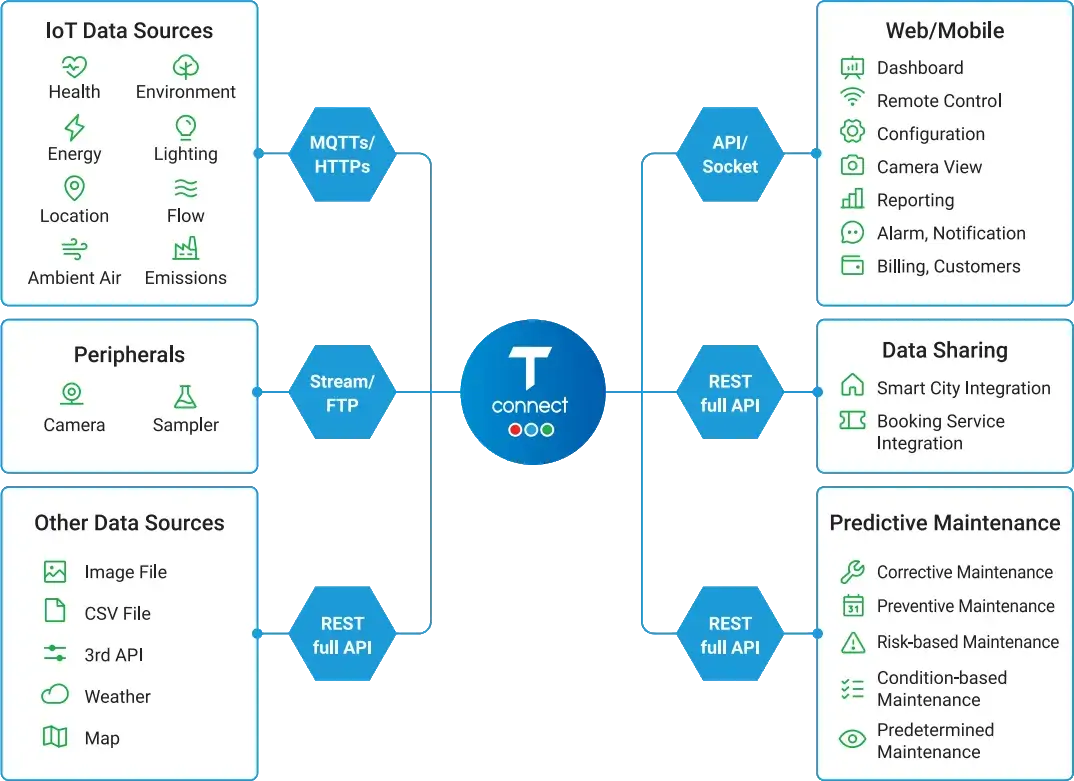
Our T-Connect IoT platform is designed to solve the integration problem, seamlessly connecting legacy and modern equipment into a single, unified dashboard. It provides the foundation for data collection and management, helping you move beyond pilot projects to a factory-wide deployment. Paired with our Machine Monitoring System (MMS), you can start small, prove ROI quickly, and build momentum for your digital transformation. We empower you to turn data into a strategic asset, ensuring your smart factory initiative delivers tangible business value from day one.
Conclusion: Turning Challenges into Competitive Advantages
While implementing a smart factory presents significant challenges, they are not insurmountable. By adopting a strategic, phased approach that focuses on clear business outcomes, invests in people, and prioritizes security and scalability, manufacturers can successfully navigate the complexities of digital transformation.
The goal is not just to build a factory that is "smart," but one that is resilient, agile, and prepared for the future. With the right strategy and the right technology partner, these challenges become opportunities to build a lasting competitive advantage.


