Introducing AI in the Modern Enterprise
Artificial Intelligence (AI) has rapidly transitioned from a futuristic concept, confined to research labs and science fiction, to an indispensable component of the modern business toolkit. As organizations navigate an increasingly complex and competitive digital landscape, the strategic implementation of AI has become a critical driver of operational efficiency, enhanced client satisfaction, and sustainable competitive advantage. This transformation marks a significant paradigm shift towards intelligent automation, impacting the entire business value chain. Businesses are no longer just adopting individual AI tools; they are beginning to cultivate comprehensive AI ecosystems.
At the heart of this evolution are several key technological pillars. AI Virtual Assistants serve as foundational tools, augmenting human capabilities and boosting productivity by handling a variety of tasks. Building upon this, Smart AI Assistants represent a more advanced generation, equipped with sophisticated contextual understanding and learning capabilities to tackle more complex challenges. The overarching strategic deployment of these and other AI technologies is encapsulated in AI for business management, which aims to optimize overall business functions and unlock new value. A particularly visible and impactful application of this is the AI-powered Virtual Assistant for Client Service, a specialized tool that directly reshapes how companies interact with their clients and manage brand perception. These elements are not isolated solutions but interconnected components of a dynamic AI ecosystem, working synergistically to deliver transformative results. The increasing adoption of AI across these varied domains signals a fundamental move towards a more automated, intelligent, and responsive operational model for businesses worldwide. For organizations that fail to embrace this holistic view of AI, the risk of falling behind agile competitors who leverage AI for comprehensive optimization and superior client experiences becomes increasingly pronounced.

Understanding Virtual and Smart Assistants for Business Transformation
To effectively harness the power of AI, businesses must first understand the core tools at their disposal. While often used interchangeably, terms like "AI Virtual Assistants" and "Smart AI Assistants" carry distinct capabilities and applications, especially within the context of comprehensive AI for business management.
AI Virtual Assistants are fundamentally AI-driven tools engineered to comprehend and act upon human requests, whether delivered verbally or in writing. Their primary function is to automate tasks and furnish information, thereby alleviating the burden of repetitive duties on human employees. This allows personnel to redirect their focus towards more strategic, high-value activities that demand human ingenuity and critical thinking.
The next tier in this evolution is represented by Smart AI Assistants. These are more advanced software applications that leverage a suite of AI technologies, including sophisticated Natural Language Processing (NLP) and Machine Learning (ML), to understand natural language with greater nuance, process complex commands, and execute tasks with a superior degree of contextual awareness and adaptive learning. A defining characteristic of Smart AI Assistants is their capacity for continuous improvement; they learn from each user interaction, progressively refining their performance and accuracy over time.

The strategic framework guiding the deployment of these tools is AI for business management. This involves the methodical application of AI technologies, such as machine learning and natural language processing, to optimize a wide array of business functions, enhance employee productivity, and ultimately drive substantial business value. It is the 'why' and 'how' behind the integration of AI tools into the organizational fabric.
The remarkable capabilities of these assistants are powered by several key technologies:
- Natural Language Processing (NLP): This enables machines to understand, interpret, and generate human language, facilitating natural and intuitive interactions between users and AI systems. Advanced NLP models, such as GPT-4, have significantly enhanced the conversational abilities of modern assistants.
- Machine Learning (ML): ML algorithms allow AI systems to learn from vast datasets without being explicitly programmed for each specific task. This enables them to identify patterns, make predictions, and improve their performance over time through experience.
- Large Language Models (LLMs) & Generative AI: LLMs are a type of ML model trained on massive amounts of text data, enabling them to understand and generate remarkably human-like text and engage in complex conversations. Generative AI, often powered by LLMs, can create new content, from text to images.
The progression from basic AI Virtual Assistants to more sophisticated Smart AI Assistants is a direct result of these underlying technological advancements. As NLP becomes more nuanced, ML algorithms become more powerful, and LLMs more capable, the "smartness" of AI assistants increases, allowing them to handle a wider range of complex tasks, understand context more deeply, and learn more effectively. This technological maturation significantly expands the potential applications and transformative impact of AI for business management and enhances the effectiveness of specialized tools like the AI-powered Virtual Assistant for Client Service. Consequently, businesses evaluating AI solutions should recognize that not all assistants offer the same level of sophistication; investing in Smart AI Assistants powered by modern AI architectures generally yields a greater potential for profound business impact compared to simpler, often rule-based, virtual assistants.

How AI Virtual Assistants and Smart AI Assistants Drive Effective Business Management
The integration of AI Virtual Assistants and Smart AI Assistants into the strategic framework of AI for business management is fundamentally reshaping how organizations approach internal operations, leading to substantial gains in efficiency, productivity, and informed decision-making.
A primary contribution of these AI tools is the automation of repetitive and time-consuming tasks. Activities such as data entry, appointment scheduling, document verification, and transcribing phone calls, which traditionally consume significant human hours, can be efficiently handled by AI assistants. This automation not only frees up human capital to concentrate on more complex, creative, and strategic endeavors but also offers tangible benefits like a reduction in human error and the provision of 24/7 operational capacity for these tasks. The ability of AI Virtual Assistants to work around the clock without fatigue ensures continuous progress on routine processes, a feat unattainable by human counterparts.
This offloading of mundane work directly translates into enhanced productivity and efficiency across various departments. Employees, unburdened by tedious administrative duties, can dedicate more time and cognitive resources to tasks that drive innovation and growth. Some reports indicate that AI assistants can make employees up to 66% more productive by streamlining routine processes.
The application of AI for business management through these intelligent assistants spans multiple departments:
- Sales Acceleration: Smart AI Assistants can significantly boost sales team performance by automating lead research, updating Client Relationship Management (CRM) systems with interaction data, generating meeting summaries, drafting follow-up emails, and even providing sales representatives with real-time insights during deals. Microsoft, for example, saw a 40% increase in client interaction time and lead conversions after equipping its sales team with an AI assistant that provided insights into client needs.
- HR Simplification: In Human Resources, AI Virtual Assistants streamline processes like new employee onboarding by automatically sharing essential documents and company policies. They can also serve as a 24/7 resource for employees, answering frequently asked questions about benefits or leave policies, thus reducing the workload on HR professionals.
- IT Support Automation: AI-powered assistants are increasingly used to resolve common IT support tickets automatically, guide users through basic troubleshooting steps, and monitor system health proactively, alerting IT staff to potential issues before they escalate. This leads to faster resolution times and improved employee satisfaction with IT services.
- Project Management: Specialized Smart AI Assistants, such as Motion, aid project managers in planning work, allocating resources effectively, automating to-do lists, and adapting to shifting priorities by automatically scheduling tasks based on deadlines and team availability.
- Financial Data Analysis: While requiring careful oversight and verification, particularly for complex or sensitive tasks, AI Virtual Assistants can assist in financial operations by performing tasks like calculating financial ratios in bulk or identifying trends within large datasets, offering speed and potential insights.
Beyond task automation, Smart AI Assistants play a crucial role in improving decision-making processes. By integrating with business intelligence tools and CRM systems, these assistants can analyze vast quantities of data to identify operational bottlenecks, spot emerging market trends, and generate comprehensive reports. This capability empowers leaders to make more informed, data-driven strategic decisions, moving away from intuition-based choices towards evidence-backed strategies.

The true transformative potential of AI for business management is realized when Smart AI Assistants transcend isolated task automation and become deeply embedded within core business workflows and enterprise systems, such as CRM and Enterprise Resource Planning (ERP) platforms. This deep integration facilitates a continuous intelligence loop, where assistants can access, process, and act upon comprehensive business data. For instance, an AI assistant integrated with a CRM can not only automate data entry but also leverage historical client data to personalize communications or predict future needs. This systemic integration is what elevates AI from a mere efficiency tool to a strategic asset that drives profound operational improvements and insightful decision-making. Businesses aiming to maximize their AI investments should therefore prioritize solutions offering robust integration capabilities, fostering an interconnected AI fabric rather than a collection of disparate tools.
The Strategic Role of the AI-Powered Virtual Assistant for Client Service
In an era where client experience is a key differentiator, the AI-powered Virtual Assistant for Client Service has emerged as a pivotal technology. These intelligent software programs, leveraging AI disciplines like Natural Language Processing (NLP), Machine Learning (ML), and sometimes Robotic Process Automation (RPA), are designed to interact seamlessly with clients, address their inquiries, and facilitate service requests effectively. Their capabilities extend far beyond simple FAQ bots, enabling them to manage a diverse array of client service tasks, from answering common questions to guiding users through intricate processes and even offering personalized product recommendations.
The deployment of an AI-powered Virtual Assistant for Client Service brings a multitude of benefits that directly enhance client interactions and overall business performance:
- 24/7 Availability & Instant Support: One of the most significant advantages is the ability to provide continuous client assistance, irrespective of business hours or geographical time zones. This round-the-clock availability drastically reduces client wait times and ensures that support is accessible whenever needed, a factor highly valued by modern consumers.
- Efficient Query Resolution: These assistants excel at handling a high volume of routine inquiries, with some systems capable of resolving up to 80% of common client questions without human intervention. They can also troubleshoot frequently encountered issues, thereby freeing up human agents to concentrate on more complex, nuanced, or sensitive client problems that require a human touch.
- Personalized Client Interactions: By leveraging client data, including past purchase history, browsing behavior, and stated preferences, AI-powered Virtual Assistants can deliver highly tailored support and engagement. This personalization can manifest as relevant product recommendations, customized advice, or interactions that acknowledge the client's unique relationship with the brand, fostering stronger engagement and trust.
- Omnichannel Consistency: Modern clients interact with businesses across multiple touchpoints, such as websites, mobile applications, social media platforms, and messaging apps. AI-powered Virtual Assistants can provide a consistent and coherent support experience across all these channels, ensuring that clients receive uninterrupted service regardless of their preferred mode of interaction.
- Scalability: During peak periods, such as holiday seasons or product launches, client inquiry volumes can surge dramatically. AI assistants can handle these spikes by managing thousands of interactions simultaneously without a proportional increase in operational costs or a decline in service quality.
- Cost Reduction: The automation of routine client service tasks naturally leads to reduced operational costs. Businesses can manage larger volumes of client interactions with leaner support teams, optimizing labor expenses without compromising service availability or quality.
- Data Collection and Insights: Every interaction an AI-powered Virtual Assistant has with a client is a potential source of valuable data. These systems can collect information on common pain points, frequently asked questions, client sentiment, and emerging trends, providing rich insights that can be used to improve products, services, and overall client service strategies.
The advanced capabilities of today's AI-powered Virtual Assistant for Client Service enable it to go far beyond the limitations of traditional chatbots. They can understand the context of a conversation, accurately interpret client intent, and engage in more intricate problem-solving scenarios. Seamless integration with CRM systems and other backend business applications allows them to access real-time client data and provide accurate, up-to-the-minute information, further streamlining the support process. Some assistants are also equipped with speech recognition and synthesis technologies, enabling natural voice-based interactions.

Initially, the adoption of AI in client service was often driven by the pursuit of cost savings and operational efficiency. However, the technology has matured to a point where its strategic value extends far beyond these initial benefits. The capacity for deep personalization, informed by sophisticated data analysis and machine learning, coupled with the potential for proactive engagement—anticipating client needs or potential issues before they arise—positions the AI-powered Virtual Assistant for Client Service as a powerful engine for building client loyalty and driving revenue. For instance, Sephora's virtual assistant contributed to a 30% increase in average order value through personalized recommendations. This shift indicates that businesses viewing their client service AI solely as a deflection or cost-cutting tool are overlooking a significant opportunity. The true, enduring value lies in leveraging this technology to cultivate stronger, more profitable, and more satisfying client relationships, making client experience enhancement a primary objective.
How Smart AI Assistants Create Synergy Between Business Management and Client Service
The true potential of an enterprise AI strategy is unlocked when Smart AI Assistants bridge the gap between internal AI for business management and external AI-powered Virtual Assistant for Client Service operations. This synergy creates a unified front, where data and insights flow seamlessly between domains, fostering holistic business improvement and a more responsive, client-centric organization.
Historically, internal operational data and client service interaction data often resided in separate silos, limiting the ability to derive comprehensive insights. Smart AI Assistants, particularly when integrated across the enterprise and deeply embedded within systems like Client Relationship Management (CRM) platforms, can dismantle these barriers. The CRM, enhanced by AI, often becomes the central nervous system, collating and processing both operational and client-facing data.

This integration facilitates a powerful feedback loop. Insights gathered by the AI-powered Virtual Assistant for Client Service—such as frequently reported issues, evolving client preferences, product feedback, and real-time sentiment analysis—become invaluable intelligence for broader business strategy. This client-generated data, when analyzed by AI for business management systems, can:
- Inform Product Development and Service Enhancements: Identifying recurring client pain points or desired features can directly guide R&D efforts and service improvements, leading to offerings that better meet market needs.
- Optimize Marketing Campaigns and Sales Strategies: Understanding client sentiment, preferences, and behavior allows for more targeted and effective marketing messages and sales approaches, improving conversion rates and client acquisition.
- Identify Operational Bottlenecks: Client complaints or service delays can often signal underlying inefficiencies in internal processes. AI can help pinpoint these operational bottlenecks that negatively impact the client experience.
Conversely, enhancements in internal operations, driven by AI for business management, yield direct benefits for client service. For example, if a Smart AI Assistant optimizes inventory management and supply chain logistics, the AI-powered Virtual Assistant for Client Service can provide clients with more accurate product availability information and reliable delivery estimates. Streamlined internal communication and workflows mean that when human intervention is required for a client issue, agents are better equipped with information and internal support, leading to faster and more effective resolutions.
The AI itself benefits from this unified approach through continuous learning. AI models utilize feedback loops where data from client interactions is fed back not only to refine the client service AI but also to inform and improve the AI models governing business processes. This creates a virtuous cycle: better client insights lead to improved operations, which in turn lead to better client experiences, and all these interactions provide new data for the AI to learn from and adapt further.
The most advanced AI deployments foster a symbiotic relationship where AI for business management and the AI-powered Virtual Assistant for Client Service are not merely integrated but actively co-evolve. This co-evolution is powered by a shared data and intelligence ecosystem, often orchestrated by sophisticated Smart AI Assistants functioning within a robust CRM framework. It's not a one-way flow of information; rather, it's a dynamic system where internal operational changes influence client interactions, and client feedback shapes operational adjustments, with AI learning and adapting across the entire spectrum. This holistic optimization, driven by an interconnected AI "brain," allows businesses to become more agile, responsive, and intelligent. Achieving this level of synergy requires a strategic, top-down approach to AI implementation, emphasizing strong data governance, inter-system connectivity, and a commitment to breaking down traditional departmental silos.
Leveraging T-VA (TMA Virtual Assistant) to Build, Scale, and Govern Smart AI Assistants
The development and deployment of sophisticated Smart AI Assistants require robust platforms that simplify the complexities involved. "T-VA" (TMA Virtual Assistant) represents a comprehensive solution for organizations looking to harness the full potential of AI-driven assistance.
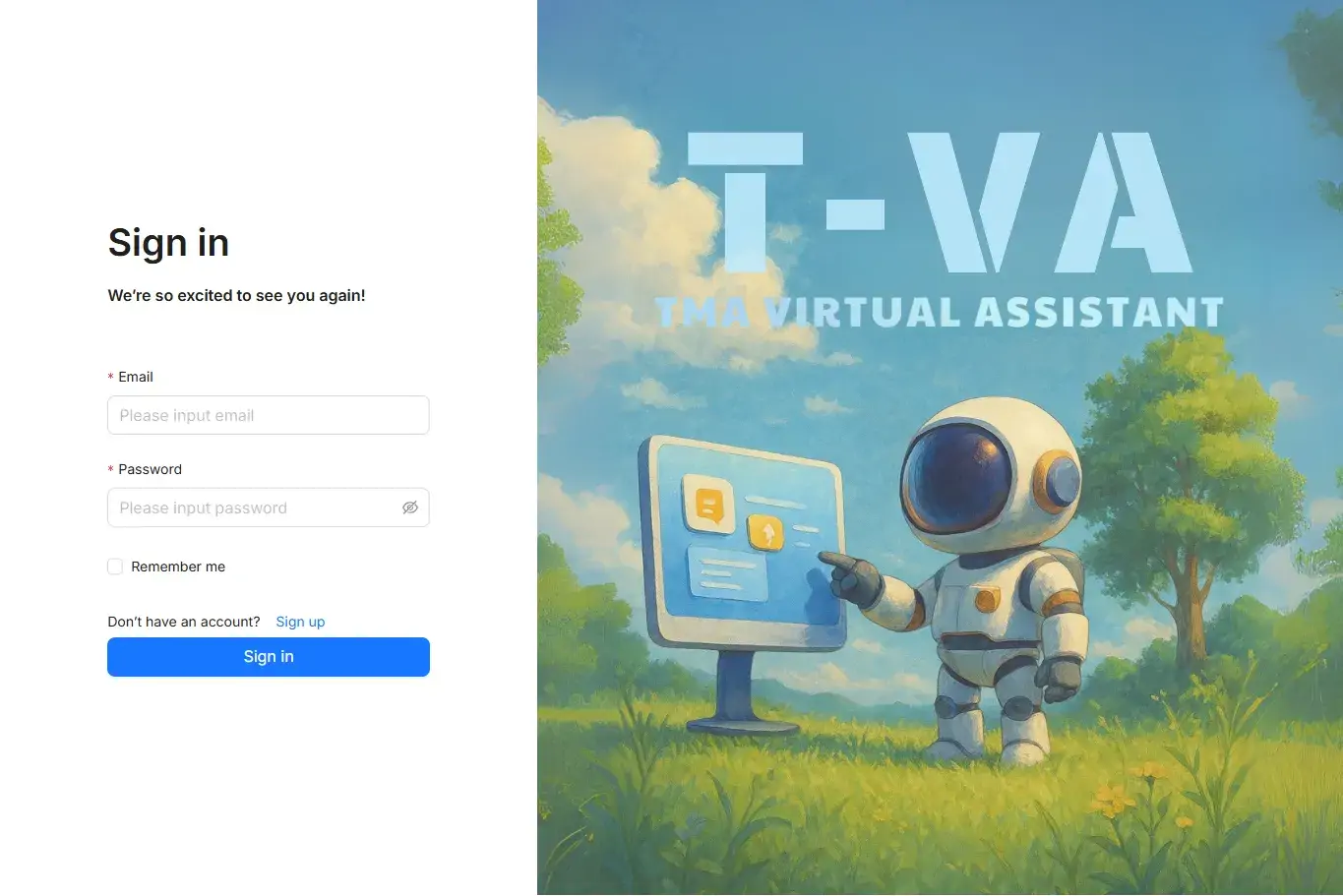
Building with Advanced Tools: T-VA can provide a suite of development tools, pre-built models, and APIs that accelerate the creation of custom Smart AI Assistants. This might include intuitive drag-and-drop interfaces for designing conversational flows, NLP engines for understanding user intent, and integration capabilities with existing enterprise systems. This allows businesses to tailor assistants to specific industry needs and unique business processes, moving beyond generic solutions.
Scaling for Growth and Demand: As a business grows, so does the demand on its operational and client service capacities. T-VA is often designed with scalability in mind, enabling Smart AI Assistants to handle increasing volumes of interactions and data without a proportional increase in underlying costs or a decrease in performance. This could involve cloud-native architectures, load balancing, and efficient resource management, ensuring the assistants remain responsive and effective as the user base expands.
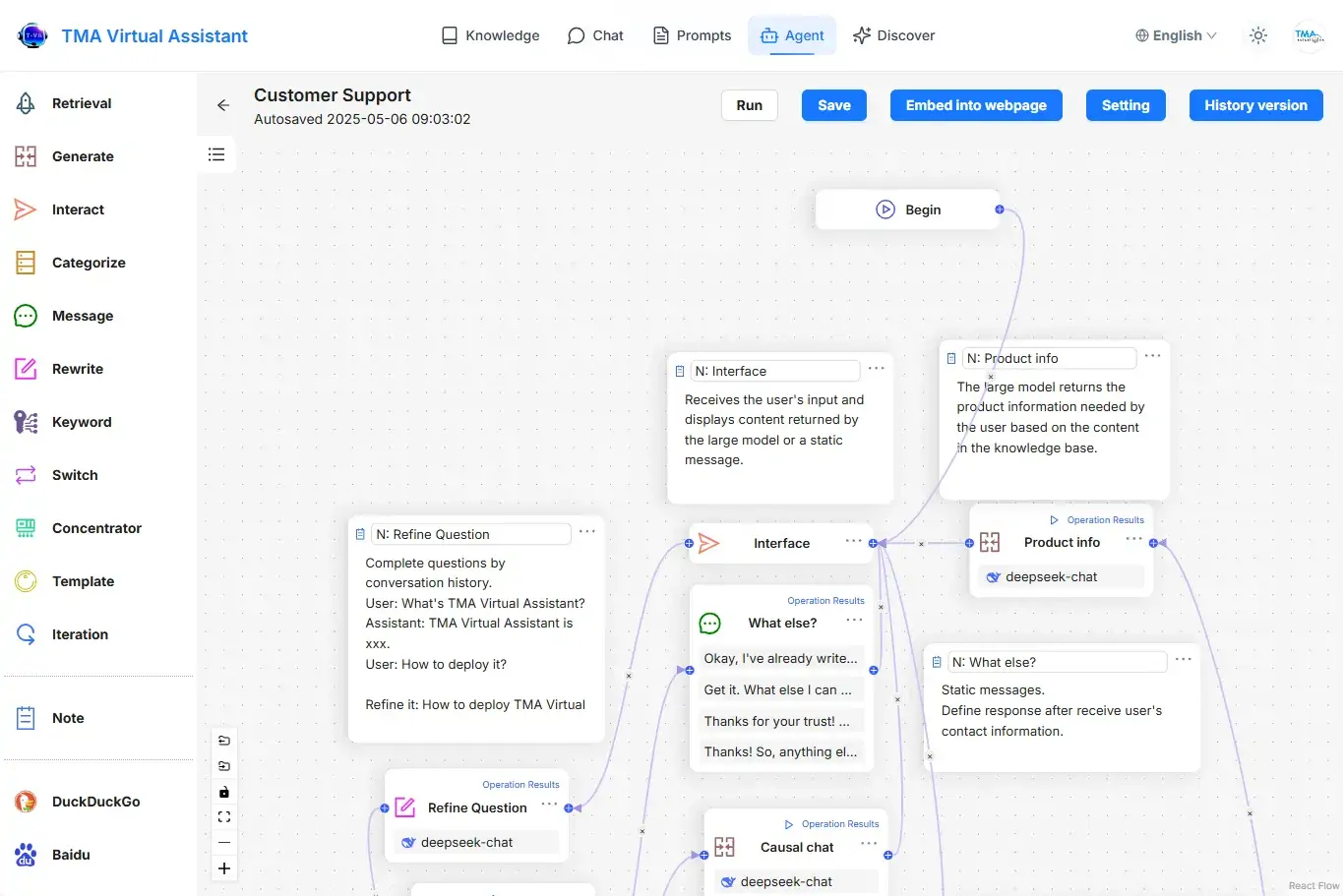
Governing for Trust and Compliance: With the increasing sophistication of AI, governance becomes paramount. T-VA can incorporate features for robust governance of Smart AI Assistants. This includes tools for monitoring assistant performance, managing access controls, ensuring data privacy and security (e.g., GDPR, HIPAA compliance), and maintaining audit trails of interactions. Effective governance builds trust with users and ensures that the AI assistants operate ethically and within regulatory boundaries. It also allows for version control and systematic updates, ensuring the assistants evolve responsibly.
By utilizing a platform like T-VA, businesses can streamline the entire lifecycle of their Smart AI Assistants, from initial conception and development to deployment, ongoing management, and future enhancements, ensuring they remain powerful, reliable, and secure assets.


.webp_2026-10-01-18-27-07-971.webp)
.webp_2026-10-01-18-17-11-290.webp)
.webp_2026-10-01-18-08-26-854.webp)
.webp_2026-10-01-17-47-32-240.webp)