Artificial Intelligence (AI) is no longer a futuristic concept in healthcare; it’s becoming a core component of diagnostics, treatment planning, and operational efficiency. But what happens when, instead of a single AI, you have a coordinated team of intelligent systems working together? Enter Multi-Agent AI Systems (MAAS) – a powerful, collaborative approach poised to transform healthcare delivery as we know it.
What Are Multi-Agent AI Systems?
Think of a highly specialized medical team managing a complex patient case: a radiologist, an oncologist, a pathologist, and a primary physician working in tandem. Multi-Agent AI Systems mimic this collaboration – but with AI agents acting as the experts.
Each agent is:
- Autonomous: Able to act independently and make decisions within its scope.
- Collaborative: Able to communicate and coordinate with other agents to achieve shared goals.
- Specialized: Tailored for specific tasks like medical imaging, EHR data analysis, or appointment optimization.
Together, they form an AI “dream team” capable of solving intricate healthcare challenges more efficiently and intelligently.

MAAS in Action: Real-World Use Cases
The applications of MAAS are broad and transformative, improving care quality, operational efficiency, and patient engagement. At TMA Solutions, we’ve successfully deployed multi-agent systems to tackle real-world challenges for healthcare providers:
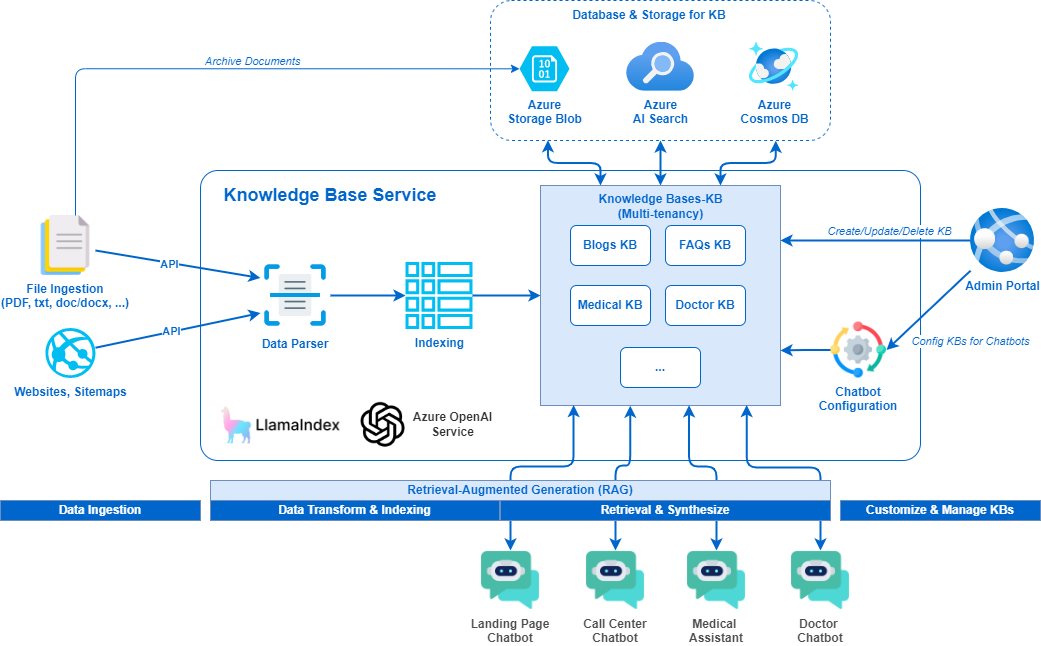
- AI Chatbot for Symptom Knowledge: We implemented an intelligent chatbot that provides users with general health information and possible causes for their symptoms—an accessible first touchpoint for patient engagement.
- Pre-Screening and Scheduling Agents: Our systems assist in screening patients’ symptoms and intelligently scheduling appointments, optimizing hospital workflows and minimizing patient wait times.
- Doctor Onboarding Support Agents: To assist newly hired doctors in clinics, TMA developed agents that guide their onboarding process, track their progress, recommend relevant training content, and report assessments to senior doctors for oversight and development.
- Symptom Analysis and Department Recommendation: We’ve built agents capable of guiding patients in identifying symptoms, analyzing medical history, and recommending the most relevant department or specialty for further care—improving triage accuracy and enhancing patient satisfaction.
These systems don’t replace humans—they enhance the capabilities of clinicians and hospital staff by handling repetitive tasks, surfacing insights, and improving the patient journey.
 Studies_2025-11-12-10-52-44-218.webp)
Benefits of Multi-Agent AI Systems
Implementing MAAS in healthcare offers numerous strategic and operational advantages:\
- Better Decision-Making: The combined analysis from specialized agents results in more accurate diagnoses and more effective, personalized treatment strategies.
- Operational Efficiency: Automation of admin tasks, optimized scheduling, and smart triaging reduce resource waste and increase throughput.
- Personalized Care: MAAS can leverage real-time, multi-source data to tailor care plans for each patient.
- Scalability: These systems are ideal for processing large volumes of data and managing complex workflows across hospitals and clinics.
- System Resilience: Distributed architecture makes MAAS more robust—if one agent fails, others can still operate and adapt.
Overcoming the Challenges
Despite the potential, MAAS implementation involves notable hurdles:
- Coordination & Architecture: Designing effective communication and conflict-resolution mechanisms among agents is complex.
- Privacy & Security: Ensuring data protection across distributed agents is critical, especially under regulations like HIPAA and GDPR.
- Ethical Oversight: Accountability, explainability, and trust are essential when AI agents impact human health decisions.
- Infrastructure Integration: Existing hospital systems must be able to integrate with MAAS components seamlessly.
- System Reliability: Ensuring consistent performance, early error detection, and fail-safes is vital in clinical environments.
The Future of MAAS in Healthcare
The evolution of MAAS is accelerating, with significant advances on the horizon:
- Deeper Integration: Systems will become more tightly woven into EHRs, IoT health devices, and real-time hospital operations.
- Higher Autonomy: Agents will evolve from support tools to strategic partners, capable of handling complex tasks independently.
- More Personalization: As data sources increase, agents will deliver increasingly nuanced and tailored care recommendations.
- Evidence-Based Validation: Rigorous clinical testing, standardization, and published outcomes will guide responsible deployment.
Conclusion
Multi-Agent AI Systems represent a paradigm shift in intelligent healthcare delivery. By bringing together specialized AI agents that collaborate in real-time, MAAS can revolutionize how patients are diagnosed, treated, and supported—both in hospitals and at home.
At TMA Solutions, we are proud to be at the forefront of this transformation, delivering real-world multi-agent systems that empower healthcare providers to enhance efficiency, improve outcomes, and deliver smarter, more human-centric care. As the field continues to grow, MAAS will be instrumental in building the intelligent, responsive healthcare systems of the future.


.webp_2026-10-01-18-27-07-971.webp)
.webp_2026-10-01-18-17-11-290.webp)
.webp_2026-10-01-18-08-26-854.webp)
.webp_2026-10-01-17-47-32-240.webp)