The Internet of Things (IoT) is revolutionizing the way we live, work, and interact with the world around us. It's a vast network of interconnected devices—from smartphones and wearables to industrial machinery and city infrastructure—all collecting and exchanging data. This data is then used to automate tasks, improve efficiency, and gain valuable insights. But how exactly does IoT work? What are its advantages and challenges? And how is it changing different sectors like consumer goods, industry, and commerce? Let's dive in and explore the fascinating world of IoT examples.
IoT applications: Consumer vs. Industrial vs. Commercial
The world of IoT examples can be broadly categorized into three main areas:
- Consumer IoT
Consumer IoT encompasses personal and wearable smart devices designed for individual use. Examples include smart home appliances (like thermostats or cooking devices) and wearable fitness trackers, enhancing everyday convenience and personal health monitoring.
- Industrial Internet of Things (IIoT)
The Industrial IoT (IIoT) involves interconnected devices within industrial environments, such as manufacturing machinery or energy management systems. These applications focus on optimizing operations, improving efficiency, and ensuring robust performance in industrial settings.
- Commercial IoT
Commercial IoT refers to IoT systems deployed in business and organizational contexts outside the home. Applications include tools for managing consumer interactions, tracking auditable data, and supporting operations in sectors like healthcare, retail, and logistics, driving operational efficiency and data-driven decision-making.
Components in IoT
For the magic of IoT to happen, a network of interconnected devices needs to work together. Here's a simplified breakdown:
- IoT platform
An IoT platform acts as the central hub for managing device connectivity, whether through a software suite or cloud service. It oversees hardware, software, processing capabilities, and application layers, ensuring seamless operation and monitoring of IoT ecosystems.
- Sensors
IoT sensors, or smart sensors, translate real-world conditions (like temperature or motion) into interpretable data. For instance, temperature sensors measure heat changes, while motion sensors detect movement by monitoring ultrasonic waves, enabling devices to respond accordingly.
- Unique identifiers (UIDs)
Unique identifiers (UIDs) are essential for device communication within IoT networks, providing context for each device. These identifiers, such as IP addresses, can denote individual devices (instance identifiers) or device categories (type identifiers), facilitating efficient data exchange.
- Internet connectivity
IoT devices leverage various network protocols to connect to cloud platforms and other devices, enabling data transmission and communication. This connectivity is the backbone of IoT functionality, allowing devices to interact and share information.
- Data processing & analysis
AI and machine learning enhance IoT devices, with natural language processing (NLP) simplifying user interactions (e.g., via devices like Amazon Alexa). These IoT examples showcase how machine learning further boosts the analytical prowess of IoT systems, improving functionality and decision-making.
- Edge computing
Edge computing optimizes IoT performance by relocating computational resources, like data storage, closer to the data source. This approach, often implemented through IoT gateways, reduces latency and conserves bandwidth, enhancing overall efficiency.
What advantages does IoT offer?
The benefits of IoT are far-reaching and impact various aspects of our lives. Here are some key advantages:
- Automation & increased efficiency
IoT eliminates the need for manual intervention in routine tasks, such as adjusting thermostats or securing doors, enhancing efficiency and improving quality of life by freeing up time and reducing human error.
- Resource optimization & sustainability
By automating resource management, IoT optimizes energy and water usage, minimizing waste and reducing costs without the need for constant human monitoring, fostering sustainability.
- Data-driven insights & improved decision-making
IoT enables seamless collection and analysis of vast amounts of data previously challenging to gather, providing actionable insights that drive informed decision-making and operational improvements.

What challenges of IoT should we consider?
Despite its vast potential, IoT comes with some challenges that need to be addressed:
- Data privacy
The proliferation of IoT devices increases data collection, making it harder to safeguard personal information. This heightened tracking raises significant privacy risks, potentially compromising the confidentiality of shared data.
- Data security
IoT device security often depends on manufacturers, and inadequate prioritization of security measures can leave wireless networks vulnerable to breaches, posing substantial risks to overall system integrity.
- Bandwidth limitations
An overload of connected devices, common in many IoT examples, on a shared network, can lead to reduced internet speeds, impacting performance and user experience as the network struggles to handle the increased demand.

8 real-world examples of IoT
Here are some real-world IoT examples of how it is transforming various industries:
Connected cars
Audi’s connect® System
Audi's connect® plans provide a range of IoT-enabled features, allowing drivers to monitor EV charging status, adjust interior temperatures, and analyze driving behavior via their smartphones. Audi enhances security through a partnership with Cisco, ensuring robust protection for its connected vehicles.
IoT Fleet Tracking from Zubie
Zubie offers real-time GPS tracking for rental and business fleets, alongside vehicle health and driver performance monitoring. This system identifies risky driving habits, such as hard braking or rapid acceleration, to optimize maintenance schedules, prevent accidents, and improve fuel efficiency.
Tesla’s Connectivity Service
Tesla integrates advanced connectivity into its electric vehicles, offering standard features like maps, navigation, and music streaming via Wi-Fi. With Tesla's Premium Connectivity, users gain access to these features through cellular data as well. The Tesla app further enables remote control of charging history, climate settings, service scheduling, and roadside assistance.
Smart appliances
LG Electronics’ ThinQ Appliances
LG's ThinQ line integrates machine learning and IoT connectivity, compatible with Google Assistant and Amazon Alexa. The ThinQ app allows users to manage smart appliances of IoT examples like refrigerators, washers, dryers, and ovens with notifications for maintenance needs, enhancing convenience and device longevity.
Samsung Electronics Smart Appliances
Samsung extends its IoT capabilities beyond mobile devices to smart home appliances and TVs, enabling seamless integration across phones, tablets, and computers. Users can remotely manage tasks like scheduling cleanings with the Jet Cordless Stick Vacuum or receive alerts for an open fridge door via a mobile device.
Energy-Saving Appliances from Electrolux
Electrolux focuses on sustainability, leveraging IoT sensor technology in its appliances (e.g., fridges, ovens, washers, dryers) to optimize energy use. This approach has boosted energy efficiency by 12.6% since 2015, aligning with eco-friendly consumer demands.
Tovala’s Smart Oven
Tovala's smart oven, paired with a meal-kit subscription, simplifies cooking by scanning QR/barcodes and using Wi-Fi to determine optimal cooking settings. This IoT integration ensures precise cooking times and temperatures, preventing undercooking or burning for a hassle-free experience.
TMA Solutions' Dryer Machine Optimization Solutions
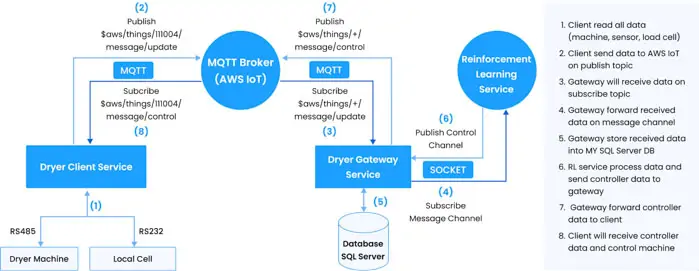
TMA Solutions offers dryer machine optimization solutions, leveraging IoT and machine learning to enhance dryer efficiency and performance. By automating machine control and collecting real-time data sent to the cloud, the system predicts moisture content and self-optimizes drying time using a reinforcement learning model.
Connected security systems
Wyze’s Smart Security Cameras
Wyze offers a diverse lineup of IoT-controlled devices, including smart security cameras available in wired and wireless options. These cameras can be stacked for extended coverage, and the Wyze app allows users to remotely access video feeds, enhancing home security monitoring.
Josh.ai’s Integrated IoT System
Josh.ai's voice-controlled home automation integrates with various smart devices, including phones, watches, TVs, and tablets. Its security features include doorbell cameras, door locks, and indoor/outdoor cameras, all manageable via the Josh app for remote device control.
IoT Security Systems from Verkada
Verkada provides a comprehensive IoT security ecosystem, featuring cameras of varying sizes, environmental sensors, alarm panels, and access control devices like door controllers and camera intercoms. The Verkada Command platform enables real-time insights and automatic updates across all connected devices as IoT examples.
SimpliSafe’s Glass Break Sensors
SimpliSafe's wireless and cellular security systems are designed for resilience, with features like power outage protection, secure networks, and deep encryption. Its Glass Break Sensors can distinguish between different types of shattering, such as a broken bottle versus a window pane, for precise threat detection.
Eyelock’s NanoIXT Security System
Eyelock specializes in iris-based identity authentication, serving industries like automotive, finance, retail, mobile, and healthcare. The nanoIXT system authenticates up to 30 people per minute, featuring multi-language verbal support and auto-tilt cameras for efficient facial and iris scanning in controlled access environments.
Smart agriculture equipment
IoT Herd Tracking from HerdDogg
HerdDogg uses lightweight ear sensors to collect and transmit herd data to the cloud, accessible via their app. Additionally, a GPS-enabled drone allows farmers and ranchers to remotely monitor herd locations, improving livestock management and oversight.
AGCO Corporation’s Smart Farming Platform
AGCO's Fuse platform digitizes farm operations, offering mobile tools for fleet management and decision-making. The Connect mobile app aggregates equipment data, helping farmers identify inefficiencies and optimize machinery performance, boosting overall productivity.

Connected retail
IoT Price Predictions from Engage3
Engage3's Price Image tool uses machine learning to analyze in-store audits, web scraping, and point-of-sale data, helping retailers set competitive prices. The platform offers predictive analytics, historical pricing insights, and a vast product database with millions of UPCs and billions of annual price updates.
Enevo’s Waste Management Sensors
Enevo deploys IoT-enabled sensors in waste and recycling containers, serving sectors like retail. These sensors collect data to verify collection schedules, preventing overbilling by waste haulers for unperformed services.
Spectralink’s Mobile IoT Devices
Spectralink enhances retail operations as IoT examples—Internet-connected devices and apps for mobile workers, integrated with its AMIE platform. This central hub manages deployment, analytics, diagnostics, and alerts, improving client care, efficiency, and sales associate performance.
Zippin’s Checkout-free Technology
Zippin's IoT ecosystem, including sensors, cameras, and check-in kiosks, enables checkout-free retail. Shoppers use an app or credit card to enter, and the system tracks item selections, automatically charging clients. This eliminates checkout lines, offering a streamlined in-store experience.
Connected healthcare Monitors
Endotronix’s IoT Heart Monitor
Endotronix's Cordella system facilitates proactive heart failure monitoring, connecting patients and doctors for early detection, informed interventions, and efficient management. It uses an implanted sensor to monitor pulmonary arterial pressure, offering a less invasive alternative to heart catheterization.
Propeller Health’s Inhaler Sensor
Propeller's inhaler sensor helps users identify asthma triggers and stay connected with healthcare providers via an app. The digital data improves asthma control assessment, accurately tracking inhaler usage to refine guidelines and enhance patient outcomes.
Nanit’s Smart Baby Monitor
Nanit's smart baby monitors, like the Nanit Pro Camera, collect and analyze data on baby movements, sleep, breathing, and environment, sharing insights via a mobile app. This enables parents to understand sleep patterns, improve sleep quality, and respond promptly to alerts.
TMA Solutions’s Senior Health Monitor
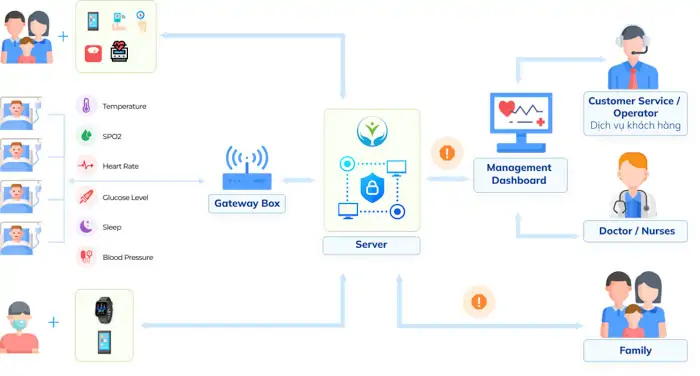
TMA Solutions' remote health monitoring system uses wearable sensors and an app to collect seniors' vital health data (heart rate, blood pressure, activity levels). This data is securely transmitted to healthcare providers for remote monitoring and proactive care, providing peace of mind for seniors and their families.
Connected manufacturing equipment
IoT Production Insights from Tulip
Tulip's platform empowers factory operations teams to create user-friendly apps that integrate with hardware, using the I/O Gateway and Edge MC to connect devices and sensors. This provides real-time production insights and customizable visualizations, supported by self-service analytics for tailored reporting.
IoT Safety Management from StrongArm Technologies
StrongArm Technologies offers IoT-connected safety wearables that analyze extensive industrial data, monitoring worker metrics like motion, work duration, and machine interactions, and CCTV activity. This generates a safety score to identify potential risks or inefficiencies, ensuring worker safety with precision akin to athlete monitoring.
IoT Production Monitoring from Amper
Amper's system leverages machine learning, data science, and IoT sensors to optimize manufacturing. By tracking factors like energy use and downtime, it helps factory managers plan schedules, reduce costs, and identify growth opportunities, enhancing overall production efficiency.
Axzon’s Temperature and Moisture Sensors
Axzon's IoT sensors deliver real-time temperature and moisture data during automotive manufacturing, while predictive maintenance technology monitors equipment health to prevent breakdowns. By tracking equipment temperatures, the sensors help avoid issues like overheating, motor winding damage, and bearing failures, ensuring operational continuity.
Connected cities
UrbanFootprint’s City Planning Software
UrbanFootprint's software aids in designing sustainable cities by analyzing energy usage and urban impacts—data often gathered from IoT examples. For instance, Madison, Wisconsin, used it to assess the benefits of enhancing its bus rapid transit system, evaluating factors like transit accessibility, public health, and emissions for its 2040 Comprehensive Plan.
Telit’s Smart Lighting System
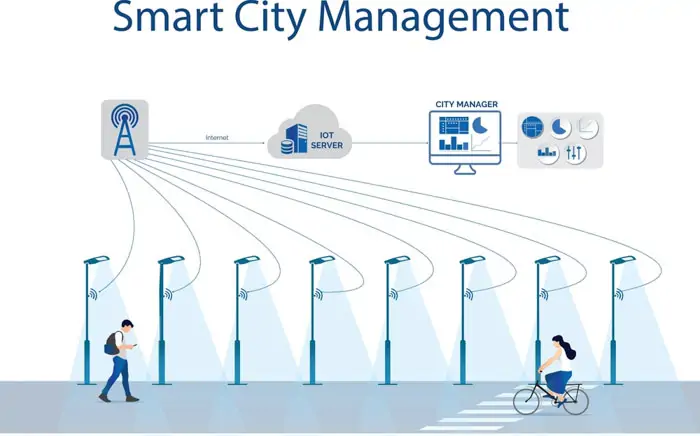
Telit's IoT connectivity platforms support smart city initiatives, enabling mobile monitoring of public lighting. Cities can adjust light intensity based on time or traffic, manage outages, and tailor lighting for first responders or crime prevention, enhancing urban safety and efficiency.
HAAS Alert’s Safety Cloud
HAAS Alert's Safety Cloud facilitates real-time communication between first responders and drivers, sending digital alerts about accident scenes, emergency vehicles, or school bus crossings. This proactive notification system helps drivers take precautions, reducing accidents and traffic disruptions.
Conclusion
The Internet of Things, with its diverse IoT examples, is rapidly transforming industries and our daily lives. From smart homes and connected cars to industrial automation and smart cities, IoT is creating new opportunities for efficiency, innovation, and improved quality of life. While challenges related to security, privacy, and interoperability remain, the potential of IoT is undeniable. As technology continues to advance and adoption grows, we can expect even more transformative applications of IoT in the years to come.


.webp_2026-10-01-18-27-07-971.webp)
.webp_2026-10-01-18-17-11-290.webp)
.webp_2026-10-01-18-08-26-854.webp)
.webp_2026-10-01-17-47-32-240.webp)