For generations, agriculture depended on experience, seasonal patterns, and manual observation. That approach is no longer enough. Climate instability, water scarcity, rising fertilizer costs, and stricter sustainability requirements are pushing farms to operate with precision, automation, and real-time data.
This shift defines Agriculture 4.0, where the most valuable data starts in the soil and flows to the cloud. At TMA Solutions, we build end-to-end Smart Agriculture Platforms that transform raw soil data into real operational decisions.
Why Soil IoT Matters
When soil conditions are not measured in real time, farming is largely guesswork. Once soil data becomes continuous and actionable, three major changes happen immediately:
- Costs are reduced through optimized irrigation and fertilization.
- Yields become more stable because crops stay within ideal growth conditions.
- Environmental impact is controlled, supporting sustainability and regulatory compliance.
Soil data is no longer a technology upgrade, it is a business control system for modern farming.
The Five Soil Metrics That Drive Results
A production-grade IoT system focuses on the core variables that directly impact crop performance:
- Soil Moisture: Controls irrigation and root health
- Soil Temperature: Determines planting timing and microbial activity
- Soil pH: Regulates nutrient availability
- NPK Nutrients: Enables precision fertilization by zone
- Electrical Conductivity (EC): Early warning for salinity and soil stress
Together, these five indicators define the real condition of the field, not assumptions based on weather alone.
From Field to Cloud: How the System Works
Building a reliable soil IoT system is not just about installing sensors. Success depends on:
- Correct sensor selection based on soil type, crop, and deployment depth
- Reliable connectivity using LoRaWAN, Cellular (GSM / NB-IoT / LTE-M), or Wi-Fi depending on terrain
- Autonomous power design using solar and ultra-low-power firmware
- Rugged hardware that survives weather, chemicals, and flooding
- Scalable architecture that grows from small pilots to large deployments
This engineering foundation is what allows automation and AI to work reliably in real farms.
What TMA Solutions Delivers
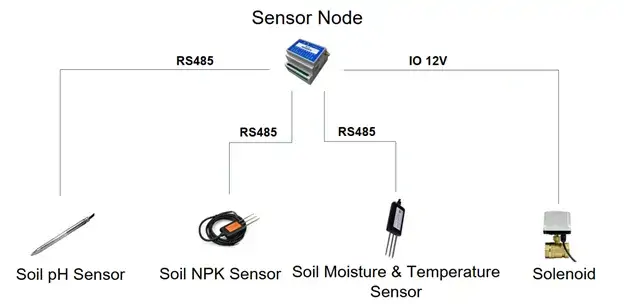
TMA Solutions provides a full-stack Smart Agriculture Platform, integrating field devices, cloud infrastructure, AI analytics, and irrigation automation into one unified system.
- Enterprise Cloud Deployment on AWS, Microsoft Azure, or Google Cloud
- Solar-Powered IoT Sensors for real-time soil and air monitoring
- AI-Driven Smart Irrigation & Climate-Aware Scheduling
- Multi-Zone Precision Irrigation Control
- Hybrid Wireless Connectivity via LoRaWAN, Cellular, and Wi-Fi
- Centralized Cloud Dashboard & Open APIs for system integration
- Full Lifecycle Operations & Technical Support
We position TMA not as a hardware supplier, but as a long-term platform and system engineering partner.
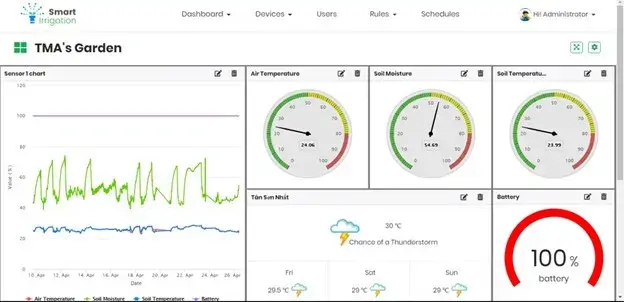
Conclusion
IoT soil monitoring is no longer experimental. It is now:
- A cost-control tool
- A yield-stability engine
- A climate-risk protection layer
- A sustainability and compliance enabler
Farms that measure their soil in real time operate with control. Those that don’t are increasingly exposed to cost volatility and climate risk.
TMA Solutions delivers smart agriculture from soil to cloud, from raw data to intelligent action. Contact us today!


.webp_2026-10-01-18-27-07-971.webp)
.webp_2026-10-01-18-17-11-290.webp)
.webp_2026-10-01-18-08-26-854.webp)
.webp_2026-10-01-17-47-32-240.webp)