28/05/2025
In today's dynamic business landscape, guesswork is a luxury few can afford. For businesses aiming to thrive, understanding future trends and making proactive decisions is paramount. This is where forecasting models for sales data step in, transforming raw historical figures into actionable insights about what's to come.
What Exactly Are Sales Forecasting Models
At its core, a sales forecasting model is a sophisticated analytical tool that uses historical sales data, along with various other relevant factors, to predict future sales performance. Instead of relying on intuition or simple extrapolation, these models employ statistical algorithms and machine learning techniques to identify patterns, seasonality, trends, and other underlying relationships within your sales data. The output is a projection of future sales, often accompanied by a confidence interval, providing a more robust and data-driven understanding of potential outcomes.The Undeniable Benefits Of Sales Forecasting
Implementing robust sales forecasting models offers a multitude of advantages that ripple across an entire organization:
- Improved Resource Allocation: By anticipating future demand, businesses can optimize inventory levels, production schedules, and staffing, preventing costly overstocking or stockouts.
- Enhanced Financial Planning: Accurate sales forecasts are fundamental for budgeting, cash flow management, and setting realistic revenue targets, leading to more stable financial operations.
- Smarter Marketing and Sales Strategies: Understanding future sales trends allows for more targeted marketing campaigns, proactive sales initiatives, and effective client engagement.
- Better Supply Chain Management: From raw materials procurement to distribution, a clear sales forecast helps streamline the entire supply chain, minimizing disruptions and maximizing efficiency.
- Risk Mitigation: Identifying potential dips or surges in sales early on allows businesses to develop contingency plans and mitigate potential risks before they impact the bottom line.
- Strategic Decision Making: Ultimately, reliable sales forecasts empower leadership to make informed, data-driven decisions regarding product development, market expansion, and long-term business strategy.
Applications Of Forecasting Models In Sales
The versatility of sales forecasting models means they can be applied to a wide array of business scenarios:
- Short-term Operational Planning: Predicting daily or weekly sales to optimize staffing in retail stores, manage call center volumes, or schedule deliveries.
- Medium-term Tactical Planning: Forecasting monthly or quarterly sales to plan marketing campaigns, adjust production capacity, and manage inventory at a more strategic level.
- Long-term Strategic Planning: Projecting annual or multi-year sales to inform decisions about new product launches, market entry, capital investments, and overall business growth.
- Seasonality and Trend Analysis: Identifying recurring sales patterns (e.g., holiday spikes) and long-term growth or decline trends to adjust strategies accordingly.
- Impact Assessment: Analyzing the potential sales impact of price changes, promotions, or external factors like economic shifts.
Our Expertise At TMA Solutions
At TMA Solutions, we understand the critical role that accurate sales forecasting plays in achieving business success. We have extensive experience in building sophisticated forecasting models tailored to the unique needs of our clients. Our expertise includes developing solutions for:
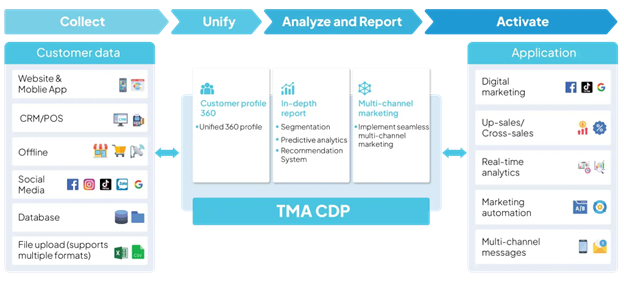
- Client Data Platforms (CDP) for Enhanced Marketing & Planning: We build data analytics and forecasting models that leverage comprehensive client data within a CDP. This allows businesses to predict client behavior, anticipate future purchasing patterns, and segment audiences more effectively, leading to better targeted and planned marketing campaigns. By understanding which clients are likely to buy what and when, businesses can optimize their outreach and maximize ROI.
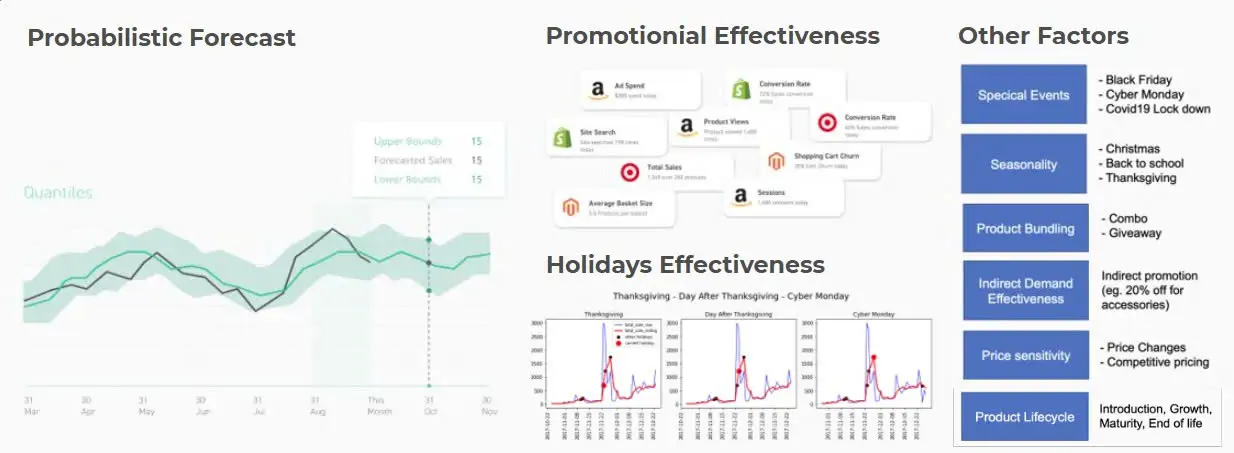
- Granular Retail Forecasting at a Per-SKU Level: We specialize in developing highly granular forecasting models that predict retail sales at a per-SKU (Stock Keeping Unit) level. This level of detail provides an unparalleled advantage for retailers, enabling granularity in planning for every SKU, from storage and inventory management to outgoing products. This precision helps businesses:
- Avoid expired inventory: By accurately predicting demand, the risk of holding excess stock that expires becomes significantly lower.
- Optimize storage: Knowing exactly how much of each SKU is needed helps optimize warehouse space and reduce storage costs.
- Improve restocking efficiency: With precise forecasts, businesses can implement better planning for restocking, ensuring products are available when clients want them, minimizing lost sales due to stockouts, and streamlining the entire supply chain
Conclusion
In an increasingly competitive market, leveraging the power of sales forecasting models is no longer an option, but a necessity. The insights gleaned from these sophisticated tools empower businesses to move beyond reactive decision-making and embrace a proactive, data-driven approach. By accurately anticipating demand, optimizing resources, and refining strategies, organizations can achieve greater efficiency, reduce costs, and ultimately drive sustainable growth. Partnering with experts like TMA Solutions can provide the critical foresight needed to navigate market complexities, seize emerging opportunities, and confidently shape a successful future.


.webp_2026-10-01-18-27-07-971.webp)
.webp_2026-10-01-18-17-11-290.webp)