In the rapidly evolving world of fintech, fintech peer-to-peer lending (P2P) has emerged as a disruptive force, transforming how individuals and businesses access credit and investment opportunities. By connecting borrowers directly with investors through online platforms, P2P lending offers an alternative to traditional banking. This article provides a comprehensive overview of P2P lending, exploring its mechanics, advantages, disadvantages, and future potential in the digital age. Let’s dive in right now!
Understanding peer-to-peer lending
Fintech peer-to-peer lending connects borrowers directly with individual investors through online platforms, streamlining the lending process. Here's how it works:
Loan application and credit evaluation
A prospective borrower submits an online loan application through the P2P lending platform. The platform then evaluates the borrower's creditworthiness, assessing their credit history, income, and other relevant financial data. Based on this evaluation, the borrower is assigned a risk grade and a corresponding interest rate.
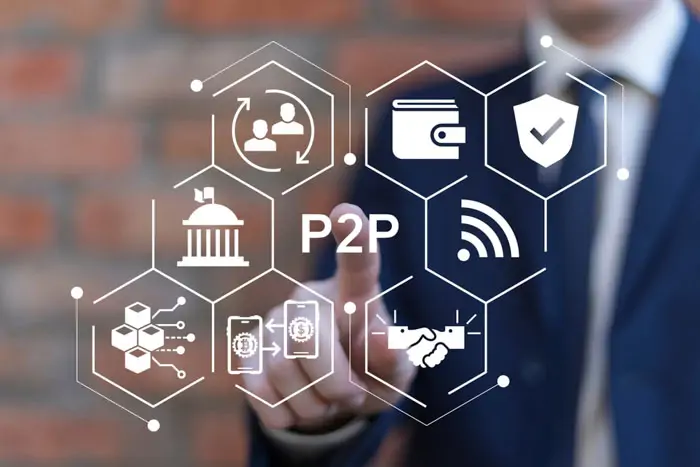
Loan listing and investor matching
Once the loan application is approved, it is listed on the platform, making it visible to potential investors. Investors can then review loan listings based on factors like risk grade, interest rate, and loan amount. The platform facilitates the matching of borrowers with investors who are willing to fund their loans.
Loan disbursement and repayment
After an investor or group of investors commits to funding the loan, the funds are disbursed to the borrower. The borrower is then responsible for making regular payments, typically monthly, which include both principal and interest, according to the agreed-upon terms.
Platform fees and service charges
The P2P lending platform acts as an intermediary and charges fees for its services. These fees can be charged to both borrowers (e.g., origination fees) and investors (e.g., service fees) for facilitating the loan process.
Peer-to-Peer lending in the fintech landscape
Fintech peer-to-peer (P2P) lending is rapidly gaining traction in the fintech industry, offering a new wave of investment opportunities and reshaping how borrowers and investors engage with financial services. Unlike traditional banking, which relies on physical branches and conventional loan structures, P2P lending platforms are modernizing the lending process with tech-driven solutions.
These platforms have shown immense growth potential: the global P2P lending market generated $153 billion in 2022 and is projected to soar to $1.7 trillion by 2032, reflecting a robust compound annual growth rate (CAGR) of 27.5% from 2023 to 2032.

However, the market’s full potential is still constrained by a lack of awareness about P2P lending’s benefits and the challenges posed by stringent regulatory frameworks. Despite these hurdles, the influence of P2P lending in the broader fintech ecosystem continues to expand.
Advantages of peer-to-peer lending
P2P lending drives fintech peer-to-peer lending innovation by offering distinct advantages over traditional banking. It attracts investors seeking better returns and borrowers looking for more accessible loans. Here's how:
Higher returns and lower costs
Traditional banks often impose high interest rates on loans, hindering borrowers. P2P lending offers borrowers potentially lower rates while providing investors with higher returns than traditional savings or bonds. This mutually beneficial model fuels P2P platform growth.
Streamlined application process
Traditional loan applications are often complex, involving paperwork, bank visits, and lengthy wait times. P2P platforms offer a streamlined online process. Borrowers create a profile, specify the loan amount and desired interest rate, and then connect with potential lenders. This user-friendly approach attracts more individuals and businesses to digital lending.
Fast access to funds
P2P lending offers significantly faster access to funds compared to traditional banks. While bank approvals can take weeks or months, P2P platforms automate much of the process, often disbursing funds within a week.

They also accommodate smaller loan amounts, sometimes as low as $1,000, expanding access to financing, especially for startups and individuals with smaller needs. This speed and flexibility drive the popularity of P2P lending.
Disadvantages of peer-to-peer lending
While popular, fintech peer-to-peer lending carries inherent risks. A key concern is platform uncertainty. Although many platforms have credit score requirements for borrowers, default risk remains, as loan repayment isn't always guaranteed. This deters some investors from seeking predictable returns.

Furthermore, while some borrowers get lower interest rates, it increases risk for lenders. This can create a trust gap between borrowers and investors, potentially hindering wider P2P adoption. Transparency and strong security are crucial for mitigating these risks and building user confidence.
The future of fintech peer-to-peer lending
The future of fintech peer-to-peer lending (P2P) lies in strategic partnerships between disruptors and established market leaders. By combining strengths, such collaborations can drive innovation and create new market opportunities. For example, a P2P lending firm with advanced technology can partner with a provider that has a larger client base, resulting in mutual growth and a competitive edge. These partnerships will be crucial for integrating artificial intelligence (AI), enhancing both operational efficiency and client experience, and positioning P2P lending as a dominant force in fintech.
A significant challenge for the P2P sector is raising consumer awareness. While P2P lending is becoming more recognized, many consumers are still unfamiliar with its benefits. Overcoming this knowledge gap will be essential for unlocking greater growth. As consumers seek better ways to access credit and investors look for improved returns, P2P lending could be the ideal solution.
To succeed, P2P platforms must remain committed to transparency and fairness in their processes. If these elements are prioritized, the P2P lending market will continue to grow, establishing itself as a powerhouse in the fintech space in the years ahead.
Conclusion
Fintech peer-to-peer lending (P2P) has established itself as a significant player in the fintech landscape, offering both borrowers and investors new opportunities in the digital age. While challenges such as regulatory frameworks and consumer awareness remain, the advantages of P2P lending, including streamlined processes, faster access to funds, and potentially better returns, continue to drive its growth.
As technology advances and the market matures, P2P lending is poised to play an increasingly important role in democratizing finance and shaping the future of financial services. Platforms that prioritize transparency, security, and user experience will be best positioned to thrive in this dynamic and evolving sector.


.webp_2026-10-01-18-27-07-971.webp)
.webp_2026-10-01-18-17-11-290.webp)
.webp_2026-10-01-18-08-26-854.webp)
.webp_2026-10-01-17-47-32-240.webp)