Electronic control units in automobiles (ECUs) control various systems within modern vehicles, becoming integral to their functionality. From engine management to safety features, ECUs ensure that the vehicle operates efficiently and safely. In this article, we will explore what an ECU is, its core functions, how it works, its role in modern vehicles, its evolution, and what the future holds for this technology.
Dive deeper into the world of ECUs and gain a comprehensive understanding of this essential automotive technology.
Understanding an electronic control unit (ECU)
Electronic control units in automobiles (ECUs) are responsible for controlling a wide range of functions, from basic engine operation to complex safety systems. The following subsections detail their functionalities and working mechanisms.
Basic ECU function
The ECU, often called the "brain" of the engine, manages core engine operations. Its fundamental role involves precise control of fuel injection and ignition timing (in petrol engines), using sensor data to ensure these events occur at the optimal moment. This basic function ensures efficient combustion and engine operation.
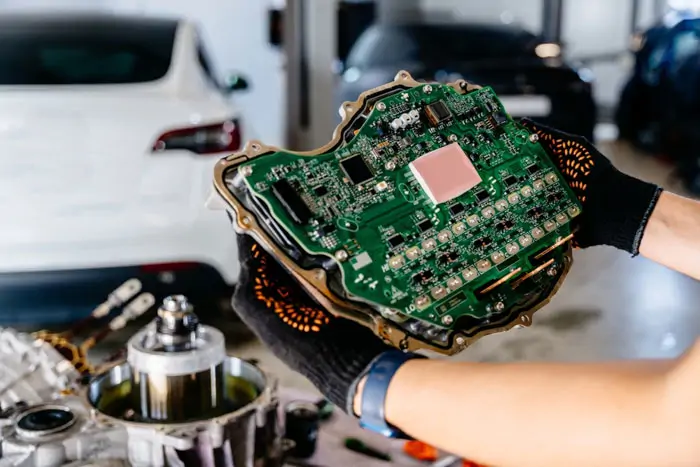
The ECU also manages power distribution to its internal components and various sensors and actuators around the vehicle, regulating different voltages (from a few volts to over 200 volts) and handling high current outputs.
Advanced ECU functions
Modern ECUs go beyond basic control by adapting to engine variations caused by manufacturing tolerances, wear, and environmental factors. They learn and adjust parameters like fuel mixture to maintain optimal performance over time.
A monitoring microprocessor oversees the main processor's operation, ensuring its correct functioning and providing a safety net in case of faults, especially critical in drive-by-wire throttle systems.
The move to electronic throttle control from the 1980s onwards, enabled by ECUs, eliminated the need for manual idle adjustments and improved engine control for functions like EGR, shutdown, and starting. It also allowed for torque mapping, improving engine torque and driveability.
How does an ECU work?
The ECU operates through a continuous cycle of input, processing, and output. It receives input from various sensors (temperature, pressure, position, etc.) and other modules (e.g., ABS).
The ECU's microprocessor then processes this data according to pre-programmed software, determining appropriate outputs such as fuel injector pulse width and ignition timing. Finally, the ECU sends signals to actuators (fuel injectors, ignition coils, throttle bodies, cooling fans) to execute these actions. This cycle happens continuously, allowing real-time control of the engine.
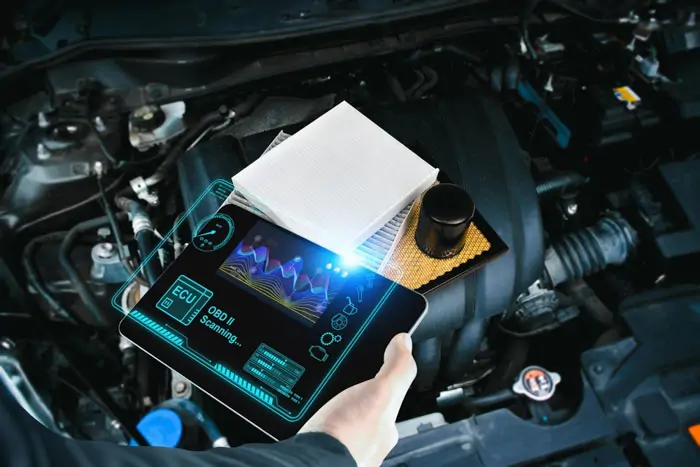
The ECU also has self-diagnostic capabilities, constantly monitoring inputs and outputs for deviations from programmed tolerances. When a fault is detected, a diagnostic trouble code (DTC) is stored, allowing technicians to diagnose and address issues. Live sensor data can also be accessed for more detailed analysis.
The role of ECUs in modern vehicles
This section describes the key roles of the electronic control unit in automobiles (ECUs), focusing on its core functions and communication with other vehicle systems.
Core functions
ECUs manage core engine and transmission functions, adapting to real-world conditions. Due to manufacturing variations, mechanical wear, and environmental factors, engines don't always operate in perfect "factory" settings.
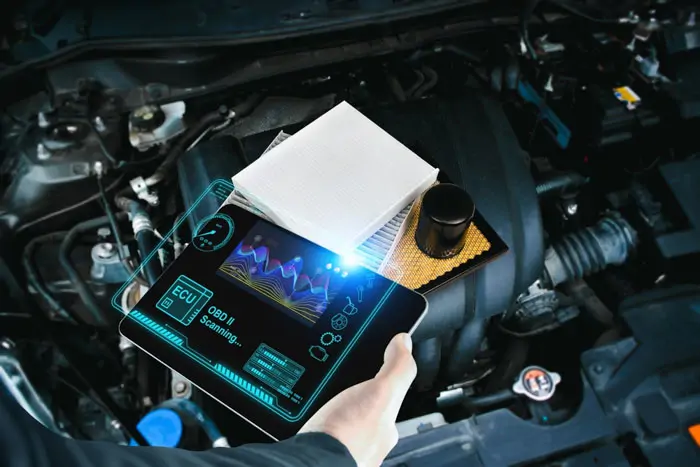
ECUs compensate for these changes through adaptations. For example, as an air filter becomes clogged, the ECU adjusts fuel injection to maintain optimal performance.
This adaptive behavior applies to various systems, including hydraulic systems (adjusting solenoid timing) and engine wear (adjusting throttle position for idle speed). Fundamentally, ECUs control fuel injection and ignition timing (in petrol engines) based on sensor input, ensuring precise operation.
Communication with other systems
ECUs communicate with each other and other vehicle components via the Controller Area Network (CAN bus). CAN is a robust and efficient communication protocol designed for automotive and industrial environments.
It operates without a central host, offering reliability, speed, scalability, and standardized messaging. Each ECU acts as a node on the CAN bus, broadcasting messages that other ECUs can choose to receive or ignore based on message IDs.
CAN uses an arbitration system to prioritize critical messages, ensuring minimal delay in the transmission of safety-critical data (e.g., ABS, ESC). This prioritization enhances vehicle safety and responsiveness by guaranteeing immediate attention to critical commands.
The evolution and future of ECUs
The electronic control unit in automobiles (ECUs) has undergone significant development since its inception, evolving from simple control mechanisms to complex, networked systems. Here are the traces of this evolution and explore future trends:
Historical development
ECU development has progressed significantly over the decades.
- 1970s: Early stages
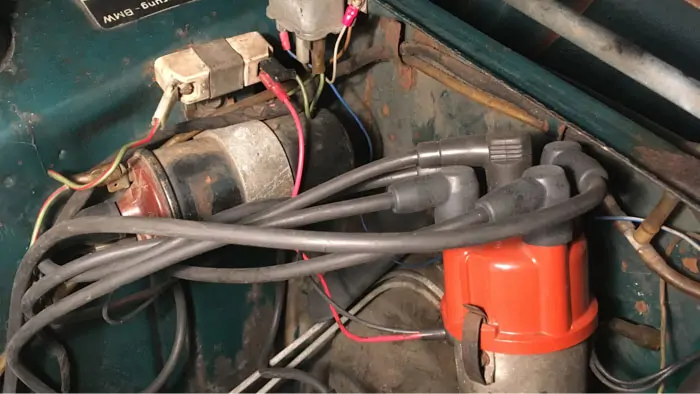
In the 1970s, the first ECUs were introduced with the simple function of controlling solenoids in carburetors, which helped improve their efficiency. Some ECUs also began controlling the fuel-air mixture at idle speeds, offering basic regulation that improved engine performance.
- 1980s: Fuel and ignition control
With the advent of fuel injection systems in the 1980s, ECUs became critical for managing fuel and ignition in petrol engines. This shift marked the beginning of more sophisticated engine control systems, and the introduction of closed-loop Lambda control helped improve engine efficiency and emissions.
- 1990s: Vehicle security and diesel engines
By the 1990s, ECUs were not only responsible for managing engine performance but also played a vital role in vehicle security. ECUs began appearing in diesel engines, significantly contributing to the growth of the turbodiesel engine in the automotive market.
- 2000s: Advanced control systems
In the 2000s, the ECU's capabilities expanded to include managing advanced systems like Drive-by-Wire throttle control, turbocharger systems, and emission controls. These innovations allowed for greater precision in engine performance and efficiency, pushing the boundaries of automotive engineering.
- 2010s and beyond: Comprehensive control
Today, ECUs have become highly integrated with numerous vehicle systems, controlling a vast array of inputs and outputs. ECUs now manage the combustion process, throttle control, cooling systems, and emissions. They play a critical role in hybrid vehicles, enabling communication between powertrains, and are essential for advanced driver assistance systems (ADAS) and autonomous driving features.
ECUs in modern vehicles
Modern ECUs are integral to nearly all vehicle functions, from basic engine control to advanced driver-assistance systems.
They handle complex tasks like torque mapping (optimizing throttle angle during acceleration) and adapt to changing conditions (e.g., a clogged air filter) to maintain optimal performance. They are interconnected via networks like CAN, enabling communication and coordination between various vehicle systems.
ECUs in autonomous vehicles
ECUs are critical to the operation of autonomous vehicles, where precise control of the vehicle's movement is essential for passenger safety. In these vehicles, ECUs process data from a range of sensors, including cameras, radar, LiDAR, and GPS, to understand the vehicle's surroundings.
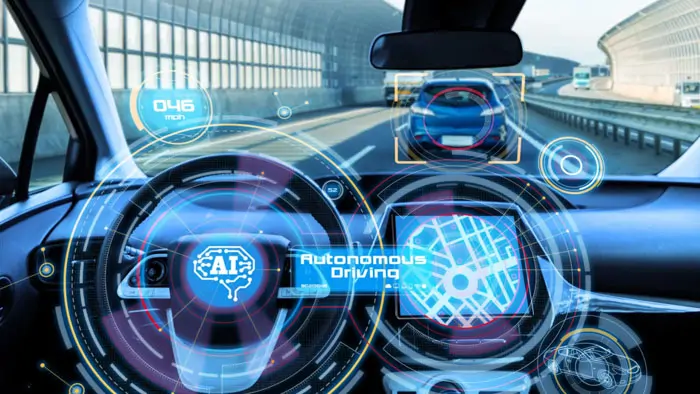
The ECUs then use advanced algorithms, including machine learning and artificial intelligence, to make real-time decisions regarding the vehicle's direction, speed, and braking. As autonomous vehicle technology advances, the complexity and number of ECUs required will continue to grow.
Conclusion
The electronic control unit in automobiles (ECU) has transformed from a simple engine management tool into a complex network of interconnected systems vital for modern vehicle performance, safety, and efficiency. From powertrain control to advanced driver assistance and autonomous driving, ECUs are essential. As the automotive industry shifts towards connected, autonomous, and electric vehicles, the ECU's role will only expand, shaping the next generation of cars. Want to learn more about ECU functionalities? Explore our other resources on automotive software and embedded systems.


.webp_2026-10-01-18-27-07-971.webp)
.webp_2026-10-01-18-17-11-290.webp)
.webp_2026-10-01-18-08-26-854.webp)
.webp_2026-10-01-17-47-32-240.webp)