Introduction: The Power of a Virtual Copy
In the digital manufacturing landscape, a "digital twin" is one of the most transformative concepts. It's a virtual replica of a physical asset, process, or system that continuously syncs with its real-world counterpart. This living, breathing digital model allows manufacturers to simulate, analyze, and optimize operations without ever interrupting the physical production line.
While the concept may seem complex, its application is straightforward and delivers significant value. According to research, companies that use digital twins can gain real-time insights, shorten time-to-market, and achieve substantial cost savings.
What Is a Digital Twin?
A digital twin is more than just a 3D model. It’s a dynamic, virtual representation that uses data from sensors and IoT devices to accurately reflect the state and behavior of a physical object in real time. For manufacturing, this can be a single machine, an entire production line, or even a whole factory.
The digital twin constantly receives data, such as temperature, pressure, vibration, and performance metrics. This stream of information allows it to mimic the physical system's actions and predict future behavior.
The Role of Digital Twins in Optimizing Production
Digital twins are crucial for enhancing operational efficiency and making data-driven decisions. They provide a safe, risk-free environment for experimentation and analysis.
- Process Optimization and Simulation: Digital twins enable manufacturers to simulate and test various production scenarios without disrupting the actual workflow. For example, a manufacturer can use a digital twin to model changes to the factory layout, adjust a production sequence, or test a new material to see how it impacts efficiency, costs, and waste. This helps identify and eliminate bottlenecks before they become real problems.
- Proactive Maintenance and Failure Prediction: By continuously monitoring real-time data from a physical asset, a digital twin can predict potential failures. It can detect subtle anomalies, such as unusual vibrations or temperature spikes, that might signal a component is about to fail. This capability allows teams to schedule maintenance precisely when it's needed, preventing costly unplanned downtime.
- Improved Product Quality and Design: In the design phase, a digital twin allows for virtual prototyping and testing. Manufacturers can simulate how a product will perform under various conditions, enabling them to refine designs, spot potential flaws, and reduce the need for expensive physical prototypes. This ensures the final product meets all specifications and quality standards.
Use Cases and Real-World Impact
The power of digital twins is best illustrated through real-world applications:
- Automotive Industry: A car manufacturer uses a digital twin of an assembly line to optimize robot movements and ensure every part is installed correctly, which helps improve product quality and reduce rework.
- Aerospace: A company can create a digital twin of a jet engine to monitor its performance in real time during a flight, using the data to predict maintenance needs and extend the engine's lifespan.
TMA Solutions and the Digital Twin
At TMA Solutions, we believe the digital twin is a cornerstone of a truly smart factory. We provide comprehensive digital twin services that integrate with existing factory ecosystems, helping businesses visualize, analyze, and optimize their operations.
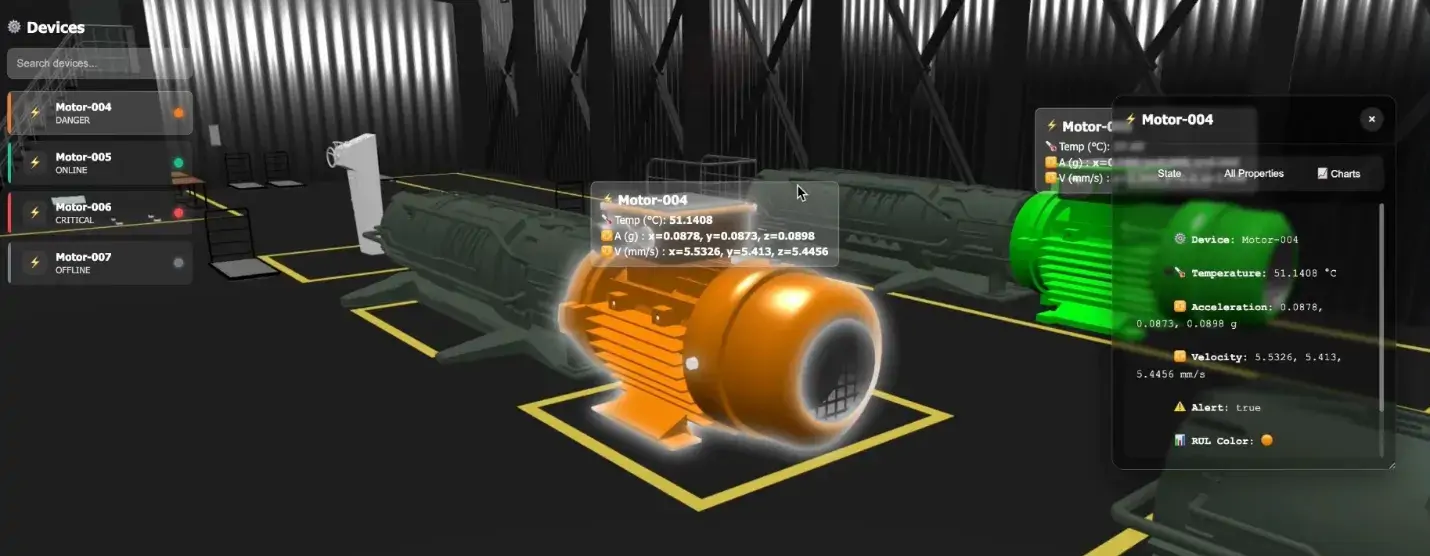
Our approach includes:
- Data Integration: We connect disparate data sources—from IoT sensors and legacy machines to MES and ERP systems—to create a unified digital model.
- Virtual Modeling and Simulation: We build precise virtual replicas of your production lines, allowing you to run "what-if" scenarios to identify hidden efficiencies.
- Real-time Dashboards: Our dashboards provide a single pane of glass to monitor the health and performance of your physical assets, helping you make informed decisions quickly.
Conclusion: The Future Is Here
The digital twin is not a technology of the future—it is a critical tool for today's digital manufacturing. By bridging the gap between the physical and digital worlds, it provides an unparalleled level of visibility, control, and foresight. For companies that want to optimize their production, enhance their agility, and stay ahead in a competitive market, adopting a digital twin strategy is no longer an option, but a necessity.


.webp_2026-10-01-18-27-07-971.webp)
.webp_2026-10-01-18-17-11-290.webp)
.webp_2026-10-01-18-08-26-854.webp)
.webp_2026-10-01-17-47-32-240.webp)