In today’s fast-evolving financial landscape, digital transformation is no longer a luxury – it's a necessity. The industry faces significant disruption as clients demand seamless, tech-driven solutions. This article explores the critical elements of digital transformation in finance industry, highlighting the challenges and benefits financial institutions encounter during this digital shift.
The impact of digital transformation on the finance industry
The impact of digital transformation in the finance industry is particularly evident in banking, where it is crucial as client expectations evolve alongside fintech innovations.
Traditional banks must modernize to compete with digital platforms that offer seamless mobile and online services. This shift enhances the client journey by breaking down data silos and creating an omnichannel experience. Key technologies like AI, IoT, and blockchain play a pivotal role in this transformation, driving automation and operational efficiency.

Clients now seek real-time access to personalized financial products with transparency and security. Meeting these demands requires banks to analyze client data to deliver relevant services. Ultimately, this transformation is essential for banks to remain competitive, improve client engagement, and foster long-term growth.
Key benefits of digital transformation in finance industry
Digital transformation in finance industry is reshaping banking, creating opportunities, and improving client satisfaction. Key benefits include:
Democratizing investment opportunities
Digital transformation has fundamentally reshaped investment banking, shifting the focus from large institutional clients to a broader range of individual investors. This democratization of investment opportunities is facilitated by all-in-one digital platforms that cater to shorter-term investment goals.
Data-driven insights derived from client profiles now inform product offerings and technological decisions, enabling more targeted and relevant services.
Streamlined compliance with automation
Modern financial management systems are essential for maintaining regulatory compliance in today's complex financial landscape.
Digital transformation enables automated processes that streamline compliance tasks such as auditing and reporting, freeing up employees to focus on higher-value activities.
Cloud-based systems further enhance compliance by providing automatic updates and ensuring adherence to the latest regulations.

Expanded client base
A digital-first approach significantly expands a bank's reach and facilitates client acquisition.
By offering transparent services and 24/7 account access through digital channels, banks can attract and engage a wider client base, overcoming geographical limitations and providing greater convenience.
Advanced security measurement
While digitization brings new security challenges, it also provides access to advanced security solutions. Sophisticated software development services play a crucial role in protecting sensitive client data and mitigating the risk of cyberattacks and fraud.
Robust security measures are paramount to maintaining client trust and ensuring the integrity of digital banking operations.
Personalized banking experiences
Digital transformation empowers banks to deliver highly personalized banking experiences.
By leveraging data analytics and client insights, banks can understand individual client needs and preferences, offering tailored products and services. This shift towards personalized banking transforms the client relationship, moving from infrequent interactions to a continuous, secure, and trusted digital ecosystem.
Drivers of digital transformation in finance industry
Several key factors are driving digital transformation in finance industry, particularly within banking and financial services:
Client-centricity
A central driver of digital transformation is the increasing focus on the client journey.
Banks are leveraging data and emerging technologies to create personalized banking experiences tailored to individual client needs and preferences. This client-centric approach aims to enhance engagement, satisfaction, and loyalty.

Modern infrastructure for efficiency
Modernizing infrastructure is crucial for achieving the operational efficiency and agility required in the digital age.
Technologies like automation and AI streamline internal processes, reduce costs, and provide banks with a significant competitive advantage by enabling faster service delivery and improved responsiveness.
Data-driven intelligence
Advanced data analytics plays a vital role in data-driven decision-making. By breaking down traditional data silos and implementing sophisticated analytics tools, banks can gain deeper insights into client behavior, market trends, and operational performance.
This enhanced data analysis facilitates better risk management, more effective strategic planning, and the development of innovative new products and services.
Cybersecurity resilience
As banking services become increasingly digital, robust security measures are paramount.
Digital transformation initiatives prioritize advanced cybersecurity protocols to protect sensitive client data and mitigate the growing threat of cyberattacks. These measures include advanced fraud detection systems, robust authentication methods, and adherence to evolving regulatory compliance standards.
Digital integration
The broader digital revolution is compelling the financial sector to embrace digital-first strategies.

Key digitization initiatives, such as strategic partnerships with fintech startups and the adoption of open banking frameworks, are expanding service offerings, fostering innovation, and creating more interconnected and accessible financial ecosystems for all stakeholders.
Technology's role in digital transformation in the finance industry
Digital transformation in finance industry relies on a suite of interconnected technologies that are reshaping how institutions operate, serve clients, and manage risk. Here are the key technologies driving this transformation:
API integration
APIs are fundamental to modern banking, enabling seamless data exchange and service integration between different software applications.
This allows banks to connect with new clients and partners, create innovative products and services, and improve operational efficiency by avoiding redundant development efforts. APIs are crucial for open banking initiatives and facilitating third-party integrations.
Cloud computing and mobile solutions
Cloud computing is now a cornerstone of financial services' digital transformation, providing scalable and flexible resources that enable faster operations and agile infrastructures. The pandemic-driven surge in mobile banking, with registrations spiking by 200%, has further accelerated cloud adoption.
Financial institutions leverage the cloud for secure data hosting, streamlined processes, and seamless application access, resulting in enhanced service availability and significant cost savings. This cloud and mobile integration future-proofs digital capabilities and enhances client experiences, ensuring competitiveness in the digital age.

AI and machine learning
AI and machine learning (ML) are central to the digital transformation of financial services, impacting client experience, security, decision-making, and operational efficiency. AI enhances client interactions through chatbots and virtual assistants, providing instant support and personalized insights.
ML algorithms bolster security by detecting fraud and improving credit underwriting. Advanced data analysis powered by AI and ML facilitates data-driven decisions and personalized product recommendations. Finally, AI-driven automation streamlines processes like KYC/AML checks, increasing efficiency and compliance.
IoT connectivity
The Internet of Things (IoT) connects physical devices through sensors and software, opening new avenues for financial services. This connectivity enhances client experiences with instant contactless payments, seamless mobile banking interactions, and usage-based insurance models driven by real-time data.
Operationally, IoT devices, such as smart sensors, optimize workforce dynamics and reduce building management costs. Furthermore, IoT data strengthens risk management by improving authorization processes and enabling more accurate risk assessments.
Blockchain technology
Blockchain technology is rapidly becoming a key driver of innovation in financial services, offering enhanced security, transparency, and decentralization.
By securing data transactions and providing a transparent interface, blockchain builds client trust and streamlines operations. While still in early adoption, it holds significant potential to improve key processes like supply chain management, trading, and claims processing through smart contracts.

Notably, blockchain can revolutionize global payments, reducing transaction times from days to seconds with 24/7 availability. This transformative potential has captured industry attention, with a growing number of financial institutions planning implementation.
Cybersecurity and privacy
Financial services companies manage highly sensitive client and third-party data, making them prime targets for cyberattacks. Data breaches can result in significant financial losses, reputational damage, legal liabilities, and regulatory sanctions.
Therefore, robust cybersecurity and data privacy measures are paramount. Financial institutions must prioritize advanced threat detection and rapid incident response capabilities, implementing real-time defense mechanisms to effectively mitigate evolving cyber threats and protect sensitive information.
Data analytics
The financial services industry is rapidly adopting big data analytics to leverage the vast volumes of data generated from diverse sources such as mobile devices, computers, and sensors.
Modern analytics solutions enable financial organizations to efficiently process and validate this heterogeneous data, extracting valuable insights that drive strategic initiatives.
C-level executives are utilizing these insights to enhance marketing efforts, create personalized client experiences, and automate key processes through machine learning algorithms. By effectively harnessing big data, financial institutions gain a significant competitive advantage in today's dynamic digital landscape.
Automation with RPA
Robotic Process Automation (RPA) is rapidly becoming a standard tool in financial services, with Gartner reporting that approximately 80% of finance leaders have already implemented or are planning to implement it. By automating repetitive tasks and processes, RPA significantly enhances accuracy in financial analysis and forecasting.

Furthermore, when combined with other intelligent automation technologies, RPA drives substantial improvements in operational efficiency, regulatory compliance, and overall productivity, augmenting the digital capabilities of financial institutions
Challenges in digital transformation in the finance industry
While digital transformation presents significant opportunities for financial services companies, it also introduces several key challenges that must be addressed for successful implementation:
Digital skills gap and onboarding
A successful digital transformation in finance industry requires a workforce equipped with the necessary digital skills.
Financial institutions must invest in robust training and onboarding programs to ensure employees can effectively utilize new technologies and understand their evolving roles and adapt to new workflows. Continuous learning is essential to keep pace with rapid technological advancements.
Data privacy and cybersecurity
Protecting sensitive financial data is paramount. As digital transactions increase, so do the risks of cyberattacks and data breaches.
Financial institutions must prioritize robust cybersecurity measures, including advanced threat detection, incident response planning, and strict adherence to data privacy regulations such as GDPR. Maintaining client trust depends on demonstrating a commitment to data security.

Legacy system integration
Integrating new technologies with existing legacy systems is a significant hurdle. Many financial institutions rely on outdated infrastructure that can hinder the adoption of modern solutions.
A strategic approach to software implementation, including the use of APIs to bridge the gap between old and new systems, is crucial for smooth integration and avoiding disruptions to core operations.
Effective end-user support
Providing timely and effective support to both staff and clients is essential for successful digital adoption.
Users need readily available assistance when encountering issues with new digital tools and platforms. This includes accessible help resources, intuitive user interfaces, and responsive support channels to ensure a positive user experience.
Addressing end-user experience and usability
Ensuring that new technologies are user-friendly and meet the needs of both staff and clients is crucial.
Financial institutions should actively gather user feedback, analyze user behavior, and identify areas of friction or frustration. This data-driven approach allows for continuous improvement of digital products and services, maximizing user adoption and satisfaction.
Managing technology costs and ROI
Implementing new technologies requires careful cost-benefit analysis and budget planning. Financial institutions must consider not only the initial investment but also ongoing maintenance, upgrades, and training costs.
Demonstrating a clear return on investment (ROI) for digital transformation initiatives is essential for securing buy-in and justifying technology expenditures.

Navigating regulatory compliance
The highly regulated financial sector requires strict adherence to various legal and compliance standards.
Digital transformation initiatives must be carefully vetted to ensure they comply with all applicable regulations, including data privacy, security, and financial reporting requirements. Non-compliance can result in significant penalties and reputational damage.
A strategic guide to digital transformation in the finance industry
In today's rapidly evolving market, digital transformation in finance industry is no longer optional for financial institutions—it's essential for staying competitive. While the process can seem daunting, a structured approach can unlock significant benefits. Here's a step-by-step guide:
- Step 1: Define clear business objectives
Before embarking on any transformation, establish specific, measurable, achievable, relevant, and time-bound (SMART) objectives.
Clearly define what your institution aims to achieve through digital transformation, both in terms of business outcomes (e.g., increased revenue, reduced costs) and technical improvements (e.g., improved efficiency, enhanced security).
- Step 2: Evaluate current technology and processes
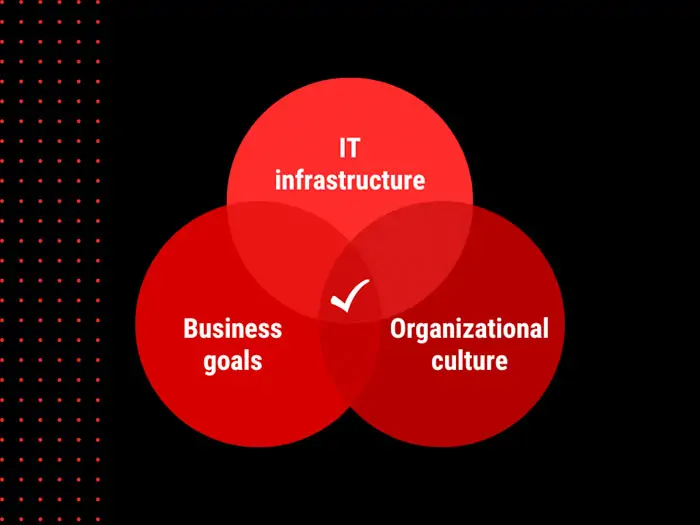
Conduct a thorough assessment of your existing technology infrastructure and business processes. Identify strengths, weaknesses, and areas for improvement.
Determine which processes are essential to retain and which need to be adapted or replaced in the digital landscape. Consider constraints like budgets and timelines.
- Step 3: Align with client needs and market trends
Understand your client base and their evolving needs in the digital age. Leverage data analytics to segment clients, analyze product usage, and identify popular digital services. Align your transformation strategy with these insights to enhance client experiences and drive adoption.
- Step 4: Assess resources and prioritize initiatives
Realistically assess your available resources, including budget, personnel, and technical expertise.
Prioritize transformation initiatives based on their potential impact and feasibility. Focus on achieving early wins to build momentum and secure stakeholder buy-in.
- Step 5: Present a compelling business case
Develop a comprehensive business case that clearly articulates the need for transformation, the proposed strategy, the expected benefits, and the associated costs.
Present this business case to key stakeholders, including the C-suite and board of directors, to secure their approval and support.
Key trends in digital transformation in the finance industry
Several key trends are shaping the future of digital transformation in finance industry:
- Mobile-first banking
Mobile banking has become an essential service, with a rapidly growing user base. The convenience and accessibility of mobile apps are driving this trend, expanding financial services to remote areas and attracting new clients.
- The evolution of payments
The payments landscape has undergone a significant transformation, moving away from cash towards digital solutions like contactless cards, digital wallets, and peer-to-peer platforms.
Technologies like blockchain and open banking APIs are further enhancing security, streamlining transactions, and enabling innovative features like automated bill splitting.

- Data-driven insights and personalization
Advanced analytics of big data is providing valuable client insights, enabling personalized engagement across various channels.
Predictive models and AI-powered hyper personalization, such as fraud detection and targeted offers, are enhancing client experiences and optimizing business strategies. This data also informs portfolio management and risk assessment.
- Embedded finance
Embedded finance seamlessly integrates financial products and services into non-financial platforms, such as retail apps and gig economy platforms.
This contextual integration offers clients convenient access to tailored loans, insurance, and payment plans within their existing digital experiences, benefiting both clients and partner businesses.
Conclusion
The digital transformation in finance industry is revolutionizing banking operations, making them more efficient, secure, and client-centric. By adopting technologies like AI, blockchain, and cloud computing, financial institutions can stay competitive, foster innovation, and deliver exceptional client experiences. However, overcoming challenges such as cybersecurity risks, regulatory hurdles, and legacy system limitations is crucial for a successful transformation journey.


.webp_2026-10-01-18-27-07-971.webp)
.webp_2026-10-01-18-17-11-290.webp)