Introduction
As organizations increasingly adopt cloud computing for its scalability and cost-efficiency, robust data governance has become critical. In 2024, 60% of companies faced data breaches due to inadequate cloud governance, underscoring the need for structured policies to ensure data accuracy, security, and compliance. This document explores how effective data governance enables organizations to maximize cloud benefits while mitigating risks like security breaches and regulatory non-compliance.
Definition
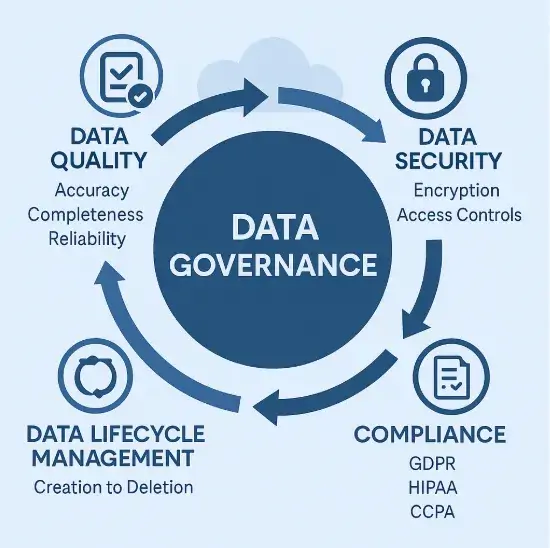
Data governance involves policies, processes, and technologies to manage data consistently, securely, and in compliance with regulations. In cloud environments, it ensures data quality (accuracy and reliability), security (protection from breaches), compliance (e.g., GDPR, HIPAA), and lifecycle management (from creation to deletion). For example, a retailer using AWS to store client data must implement governance to comply with GDPR and prevent unauthorized access.
In cloud environments, it encompasses:
Data Quality: Ensuring accuracy, completeness, and reliability of data.
Data Security: Protecting data from unauthorized access and breaches.
Compliance: Adhering to regulations like GDPR, CCPA, or HIPAA.
Data Lifecycle Management: Managing data from creation to deletion.
Challenges
Cloud environments introduce unique challenges to data governance, including:
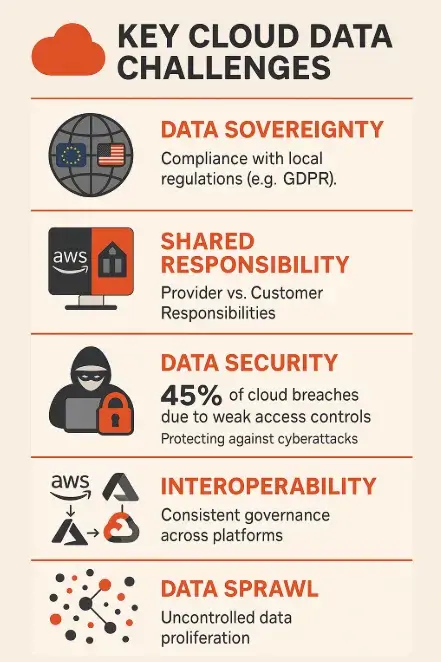
Data Sovereignty and Compliance: Data stored across multiple regions must comply with local laws. For instance, a company storing EU client data in a US-based cloud risks GDPR violations if not properly managed.
Shared Responsibility Model: Cloud providers like AWS secure infrastructure, but clients must govern their data. Misunderstandings can lead to unencrypted sensitive data, causing breaches.
Data Security and Privacy: Distributed cloud systems are vulnerable to cyberattacks. In 2023, 45% of cloud breaches stemmed from weak access controls.
Interoperability and Vendor Lock-In: Using multiple clouds (e.g., AWS and Azure) complicates consistent governance, potentially trapping organizations in one provider’s ecosystem.
Uncontrolled Data Growth: Rapid cloud resource creation can lead to data sprawl, making it difficult to track sensitive data assets.
Core Principles
To address cloud governance challenges, adopt these principles:
Centralized Governance, Decentralized Execution: Define policies centrally (e.g., via a governance council) but allow business units to implement them using tools like Azure Policy.
Automation and Monitoring: Use AWS Config to automate compliance checks and monitor data access in real time.
Data Classification and Tagging: Tag data as "confidential" or "public" using AWS Glue to ensure proper handling across platforms.
Collaboration with Cloud Providers: Leverage AWS’s compliance certifications (e.g., ISO 27001) to align with organizational policies.
Continuous Compliance: Deploy Azure Monitor for real-time audits to maintain GDPR and HIPAA compliance.
Best Practices for Cloud Data Governance
Define Roles and Responsibilities
Establish a Governance Council to set policies, Data Stewards to ensure data quality, and Cloud Architects to align infrastructure with governance standards.
Example: Assign a Data Steward to oversee GDPR compliance for client data in AWS.
Implement Data Security Measures
Use AES-256 encryption for data at rest and TLS for data in transit.
Deploy role-based access control (RBAC) and multi-factor authentication (MFA) via Azure Active Directory.
Monitor threats with intrusion detection systems and audit logs using AWS CloudTrail.
Ensure Data Quality and Integrity
Implement validation and cleansing processes to maintain data accuracy and consistency.
Example: Use Azure Data Factory to clean and validate sales data before analytics.
Adopt a Data Catalog
Use AWS Glue or Azure Data Catalog to track data lineage and metadata, improving visibility.
Automate Compliance Processes
Leverage AWS CloudTrail or Azure Monitor to ensure compliance with standards like GDPR or SOC 2.
Manage Data Lifecycle
Define retention policies (e.g., archive client data after 7 years) and automate deletion using AWS S3 lifecycle rules.
Train Teams
Conduct regular training on cloud risks and governance policies to ensure stakeholder alignment.
Future Trends in Cloud Data Governance
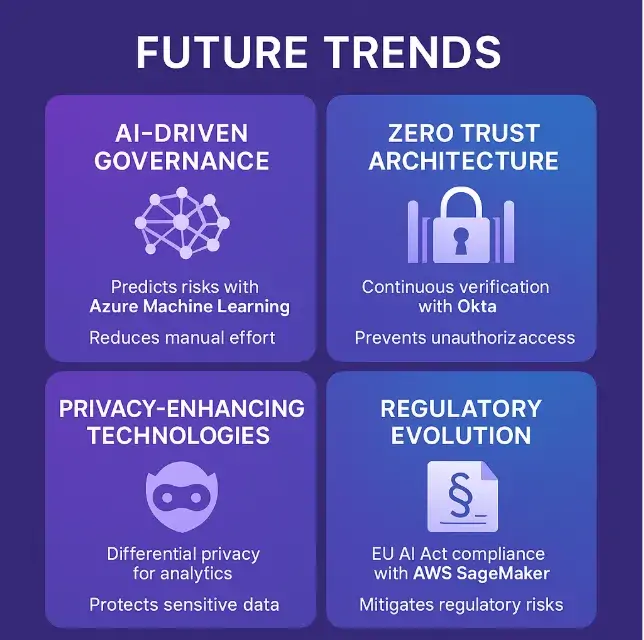
AI-Driven Governance: Machine learning tools like Azure Machine Learning can predict compliance risks and automate data classification, reducing manual effort.
Zero Trust Architecture: Adopt tools like Okta or Microsoft Entra ID for continuous user and device verification to enhance cloud security.
Privacy-Enhancing Technologies: Implement differential privacy in analytics platforms to protect client data while enabling insights.
Regulatory Evolution: Prepare for the EU’s AI Act by integrating transparency tools like AWS SageMaker’s model explainability features into governance frameworks.
Choosing TMA for Your Data Governance
With over 20 years of experience, TMA Solutions is a leading Vietnam-based provider of enterprise-grade technology solutions. Our expertise in big data, cloud, and industry-specific consulting makes us a trusted partner for digital transformation. Our Big Data and Analytics team has empowered global clients with solutions like the TMA Data Platform, which supports on-premises and multi-cloud environments with robust data governance. The following case studies are examples of our successful projects in cloud data governance:
Streamlining Operations with Azure Data Factory
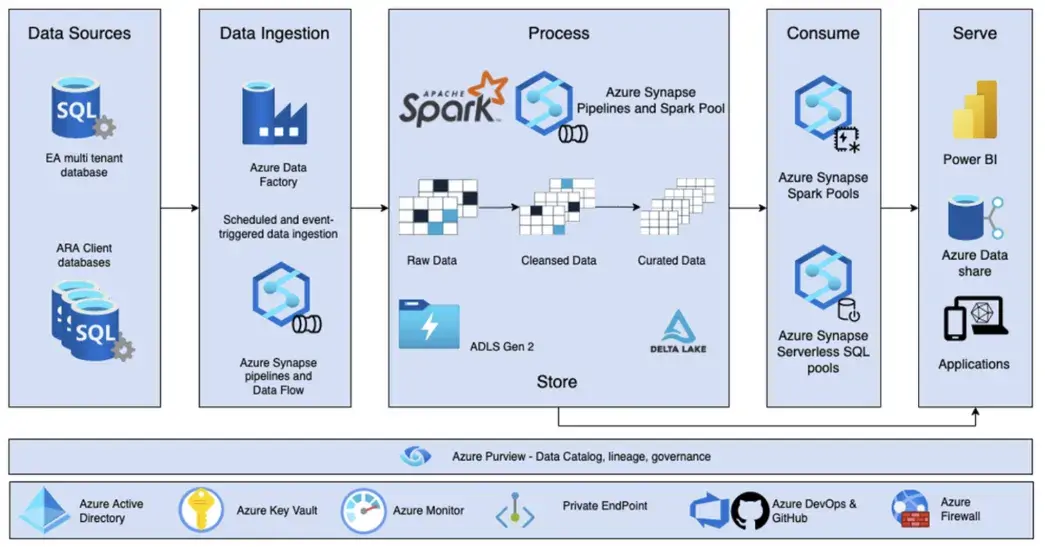
Dynamic Data Integration: Utilize Data Factory to connect multiple data sources, both on-cloud and on-premise, and extract data into a centralized Data Lake for advanced processing.
Data Management: Employ data services to move data from various sources to the Data Lake for cleansing, consolidation, and mining, while building pipelines to handle data from different products
Cloud-based and AI-driven Solution
Cloud Infrastructure: Implemented a scalable cloud system with auto-scaling and load balancing to handle traffic spikes.
Third-Party Integration: Seamlessly integrated payment gateways, logistics providers, and CRM systems to streamline operations.
AI-Driven Client Support: Developed a 24/7 support portal with AI assistance for improved service quality.
Personalized Shopping: Enhanced user experience with customized product recommendations based on client behavior.
Conclusion
Effective data governance in cloud environments is no longer optional—it is a strategic imperative for organizations aiming to leverage the scalability, flexibility, and cost-efficiency of cloud computing while safeguarding data integrity, security, and compliance. By addressing challenges such as data sovereignty, security risks, and uncontrolled data growth through centralized policies, automation, and collaboration with cloud providers, organizations can build a robust governance framework that drives trust and operational excellence. Emerging trends like AI-driven governance and zero trust architecture further underscore the need for proactive, future-ready strategies.
Ready to transform your cloud data governance? Contact TMA Solutions to explore how our expertise can accelerate your digital transformation journey.


