Businesses use more and more packaged software, but many of these tools do not fit their own processes and are hard to connect with each other. Custom software development helps a business build a system that matches the way it works. This article explains what custom software is, compares it with off-the-shelf software, and covers the main types, real examples by industry and the development process step by step.
1. What is custom software development?
Custom software development is the process of designing, building, deploying and maintaining software for one specific business or user group. Off-the-shelf software is made for the mass market. Custom software, on the other hand, is built around the processes, data and business goals of one company.
Demand for custom software is growing fast. According to Grand View Research, the global custom software development market reached about USD 45.4 billion in 2025 and is expected to reach USD 178.9 billion by 2033. Large enterprises held about 60.3% of the market in 2025.
A custom software project usually includes:
- Business analysis and requirements definition
- System architecture and user interface design
- Development, testing and integration with existing systems
- Deployment, maintenance and upgrades over time
_2026-10-29-17-14-10-288.webp)
Custom software development starts with a clear understanding of the company's processes and goals
2. Differences between custom software and off-the-shelf software
While commercial off-the-shelf (COTS) software offers rapid deployment for standardized functions, bespoke software engineering is essential for enterprises with proprietary workflows, complex system interoperability, and long-term autonomy.
Criteria | Custom software | Off-the-shelf software |
Process fit | Built around the company's exact processes | The company has to adjust its processes to the software |
Upfront and long-term cost | Higher upfront cost, but no license fees per user | Low upfront cost, but subscription fees grow with the number of users and over time |
Time to launch | From a few months to more than a year, depending on the scope | Ready to use at once or after a few weeks of setup |
Scalability | Features and capacity grow on the company's own roadmap | Depends on the vendor's product roadmap |
Source code ownership | The company can own the source code if the contract states it clearly | The company only has the right to use the software under a license |
Vendor dependence | Low: the company can change its maintenance partner | High: hard to switch when the vendor raises prices or stops the product |
3. Key benefits of customized software development
Custom software brings value in four main areas: process fit, scalability, security and long-term competitive advantage.
Exact fit with your business processes
The software follows the company's exact workflows, user roles and business rules. Custom software eliminates reliance on disparate workarounds and supplementary spreadsheet dependencies, ensuring all operations run within a single, unified enterprise system. As a result, the company cuts manual work and reduces errors when data moves between systems.
Scalability and smooth integration
The system architecture is designed for the expected growth in users, data and features. The software can connect through APIs with existing systems such as ERP, CRM, payment gateways or IoT devices. This keeps data flowing smoothly between departments, instead of scattered across many different tools.
Stronger security and compliance
With custom software, the company decides how to store data, control user access and encrypt information, instead of relying on the vendor's default settings. Industry security standards, such as HIPAA in healthcare or PCI DSS in card payments, are also built in from the design stage.
Long-term competitive advantage
Custom software allows a company to digitize the processes that make it different from competitors. The company also has full control over its product roadmap and can add new features, such as AI or data analytics, when the market changes. Over time, the system becomes a digital asset that the company fully controls.
_2026-10-29-17-14-10-493.webp)
Custom software connects data across departments in one unified system
4. Types of custom software solutions
Based on its goals and users, custom software usually falls into one of the six common types below.
- Web application: An application that runs in a web browser, such as a customer portal, an internal admin system or an e-commerce platform. Users can access it from any device without installation. An experienced software development team can build both the user interface and the back-end system around the company's own processes.
- Mobile application: An app for iOS and Android that serves customers or field staff. The app can use the camera, GPS and push notifications to increase user engagement.
- Enterprise software (ERP, CRM, HRM): A system to manage resources, customers and employees, designed around the company's structure. This type of software connects data across departments and often forms the base of digital transformation projects.
- Cloud-native/SaaS: An application built on a cloud platform, which is easy to scale as the number of users grows. With a DevOps process, the development team can release updates often without service downtime. This model suits companies that want to sell software on a subscription basis.
- Embedded & IoT software: Software that runs on devices, sensors and controllers, and connects to an IoT platform for central management. This type of software needs close hardware integration and is common in manufacturing, automotive, healthcare and smart buildings.
- AI/ML-powered software: Software that uses AI/ML and data science to predict, classify, recognize images or automate decisions. Examples include chatbots, AI agents, fraud detection systems and predictive maintenance.
5. 10 customized software examples in real life
Each industry has its own problems that packaged software cannot fully solve. The table below lists 10 common examples of custom software.
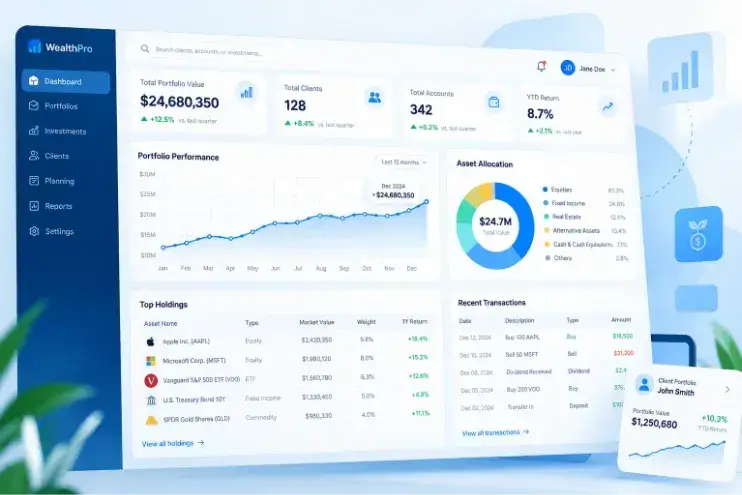
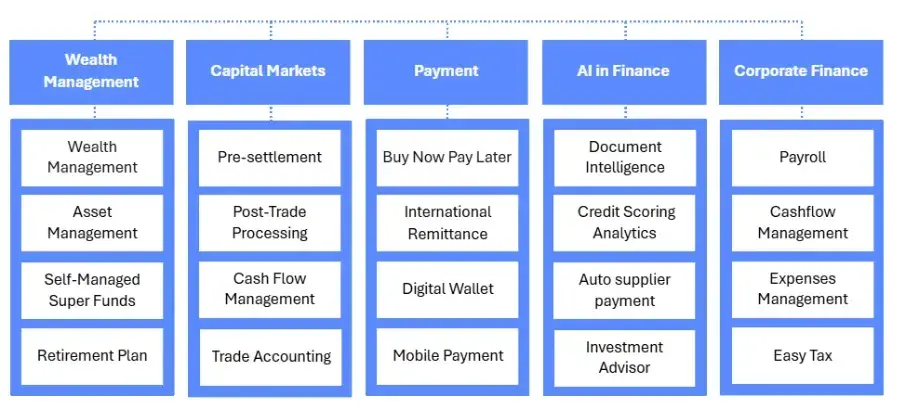
Industry | Example | Problem it solves |
Remote patient monitoring system | Tracks health data all the time, sends early alerts and reduces hospital readmissions | |
Wealth management and digital lending platform | Shortens approval time, reduces paperwork and meets reporting requirements | |
Automated claims processing system | Cuts claim processing time and detects unusual claims | |
Omnichannel sales platform linked to the warehouse and a loyalty app | Syncs stock, orders and customer data between stores and online channels | |
Route optimization and asset tracking system | Lowers transport costs and tracks goods in real time | |
Network management and monitoring system | Detects issues early and automates network operations | |
Embedded software and connected vehicle platform | Updates software over the air and collects vehicle data | |
Predictive maintenance and AI defect inspection system | Reduces machine downtime and finds product defects on the production line | |
Online learning platform with learning analytics | Personalizes learning paths and tracks learner progress | |
Community and messaging platform | Handles a large number of users and moderates content |
6. Customized software development process
A custom software project usually goes through the following six steps:
Step 1: Discovery & Requirements
The project team works with stakeholders to understand the business goals, the users and the current processes. The analysts also define functional and non-functional requirements, as well as budget and time limits.
Output: a requirements specification, a list of user stories and an agreed project scope.
Step 2: Planning & Architecture
The technical team chooses the technology, designs the system architecture and plans the integration with existing systems. This step also divides the project into phases and sprints, with an estimate of the resources needed.
Output: an architecture document and a project plan.
Step 3: Design & Prototyping
The design team creates wireframes, user interfaces and interactive prototypes so that users can try them before coding starts. Feedback at this step helps the team find weak points early and lowers the cost of changes later.
Output: a UI/UX design set, a prototype and a design system.
Step 4: Development & Testing
Developers build features sprint by sprint, while the test team runs functional, performance and security tests at the same time. Each sprint ends with a demo for the client to review.
Output: working software, reviewed source code and test reports.
Step 5: Deployment
The software goes live in the production environment, together with data migration and user training. The project team watches the system closely in the first weeks so that it can fix issues quickly.
Output: a live system in production, operations documents and user guides.
Step 6: Support & Maintenance
After launch, the technical team fixes bugs, applies security updates and improves performance. The company can also add new features based on user feedback.
Output: regular updates, operations reports and an upgrade roadmap.
_2026-10-29-17-14-10-690.webp)
The custom software development process has six steps, and each step has a clear output
This six-step process only works well when the development team has enough experience and resources and works in a consistent way from discovery to maintenance. For this reason, many companies choose one partner for the full product life cycle, instead of several separate vendors.
TMA Solutions is a strong option to consider if you need this kind of partner:
- 29 years of experience, 3,000 developers and more than 1,000 applications developed.
- Services: R&D, MVP development, PoC & prototype, product enhancement, maintenance & support, porting & migration.
- Teams by area: AI/ML & big data (1,000), web-mobile (800), Java (700), Microsoft (600), cloud/DevOps (400), C/C++/embedded/IoT (400).
- An Intensive Agile process, combined with software testing services.
If you plan to build your own system, start by sharing your goals and current processes. TMA's engineers will work with you to assess the scope and propose a suitable architecture and delivery roadmap.
_2026-10-29-17-14-10-868.webp)
TMA Solutions engineers support clients through the full product life cycle
7. Frequently asked questions about customized software development
How long does custom software development take?
The timeline depends on the feature scope, the number of integrations and the size of the team. A simple MVP can be ready in a few months, while a complex enterprise system can take more than a year.
How much does custom software development cost?
The cost depends on feature complexity, the number of integrations, the technology, the engagement model and the location of the development team. Companies should also set aside a budget for unexpected risks. According to research by McKinsey and the University of Oxford on more than 5,400 IT projects, large IT projects run 45% over budget on average. For an accurate quote and fewer surprises, companies should start with a discovery phase to clarify the scope, and then ask for a detailed quote for each work item.
Who owns the source code of custom software?
Ownership of the source code depends on the contract between the company and the development partner. Under US copyright law, software written by an outside contractor does not automatically belong to the client, even when the contract calls it a "work made for hire" (U.S. Copyright Office, Circular 30). For this reason, companies should ask for a clear intellectual property (IP) assignment clause that covers the source code, documents and access to the code repository.
Custom software development gives a company a system that fits its own processes, scales easily, offers more control over security and creates long-term differentiation. In return, the project needs a larger upfront investment and a clear process from discovery to maintenance. For a successful project, a company needs to choose the right type of solution for its real needs and an experienced development partner, not only focus on the technology.
With 29 years of experience and a team of 3,000 developers, TMA Solutions can support companies from the first idea and prototype to operation and product upgrades. Talk to TMA's engineers for advice on the right scope and roadmap for your project.
Contact information:
TMA SOLUTIONS - The leading customized software development company in Vietnam Email: sales@tmasolutions.com Website: https://www.tmasolutions.com/ Linkedin: TMA Solutions TMA Tower address: Street #10, Quality Tech Solution Complex (QTSC), Trung My Tay Ward, Ho Chi Minh City. |


.webp_2026-10-29-17-45-36-295.webp)
.webp_2026-10-29-17-36-36-492.webp)