For years, predictive maintenance (PdM) has been a game-changer for manufacturers. By using data to answer the critical question, "When will this equipment fail?", companies have successfully reduced unplanned downtime and optimized maintenance schedules. But as technology evolves, a new question is emerging: "What is the best possible action we can take right now?"
This question marks the shift from predicting a problem to prescribing a solution. Welcome to the era of prescriptive maintenance (RxM), the next evolution in smart manufacturing that promises not just to prevent failures, but to guide businesses toward the most optimal operational outcomes. It represents a move from being proactive to being truly strategic, leveraging AI to recommend specific actions that maximize efficiency and minimize costs.
What is Prescriptive Maintenance?
Prescriptive maintenance is an advanced maintenance strategy that goes beyond predicting potential failures. It uses artificial intelligence (AI) and machine learning to analyze a situation, evaluate multiple potential courses of action, and then recommend the best specific solution to implement.
In short, it bridges the gap between insight and action. While predictive maintenance tells you what might happen, prescriptive maintenance tells you what to do about it and why it's the best choice. It’s the difference between a weather forecast that predicts rain and a GPS app that not only warns you of traffic ahead but also reroutes you along the fastest alternative path.
From "What Will Happen?" to "What Should We Do?"
The core difference between predictive and prescriptive approaches lies in the questions they answer and the level of intelligence they provide.
Predictive Maintenance (PdM):
- Answers: "When is a failure likely to occur?"
- Function: It identifies potential problems based on historical data and real-time sensor readings. The system alerts a human operator, who must then decide on the appropriate course of action.
Prescriptive Maintenance (RxM):
- Answers: "What is the best action to take to avoid this failure and what will be the outcome of each option?"
- Function: It not only predicts a failure but also runs simulations on various scenarios (e.g., "replace part now," "reduce machine speed," or "continue running until the next planned shutdown"). It then recommends the single best action that aligns with business goals, such as maximizing production, minimizing cost, or ensuring safety.
How Does Prescriptive Maintenance Work?
Prescriptive maintenance is powered by a sophisticated blend of technologies, primarily prescriptive analytics. The process typically involves:
- Data Collection: Like PdM, it starts with collecting vast amounts of data from IoT sensors, maintenance logs, operational parameters, and even external sources like weather or supply chain information.
- Prediction: An AI model first predicts a potential failure or inefficiency, just as in PdM.
- Simulation & Optimization: This is the key step. The system uses advanced algorithms to simulate the outcomes of different maintenance actions. For example, it might calculate the cost of immediate downtime versus the risk of a more catastrophic failure later.
- Recommendation: Based on the simulations, the system provides a clear, actionable recommendation to the maintenance team, often with a justification of why it's the optimal choice.
The Business Value: Beyond Just Preventing Downtime
The impact of prescriptive maintenance extends far beyond simply keeping machines running. It creates a new level of operational intelligence.
- Optimized Decision-Making: It removes the guesswork and human bias from maintenance decisions, ensuring that every action is backed by data and aligned with strategic goals.
- Maximized Resource Efficiency: By recommending the most cost-effective action, it helps optimize labor, spare parts inventory, and production schedules.
- Enhanced Operational Agility: It allows factories to adapt dynamically to changing conditions, making real-time adjustments that improve overall performance.
Laying the Groundwork with TMA Solutions
The journey to prescriptive maintenance is a marathon, not a sprint. It requires a solid foundation of high-quality data and a mature predictive maintenance strategy. This is where TMA Solutions provides critical value.
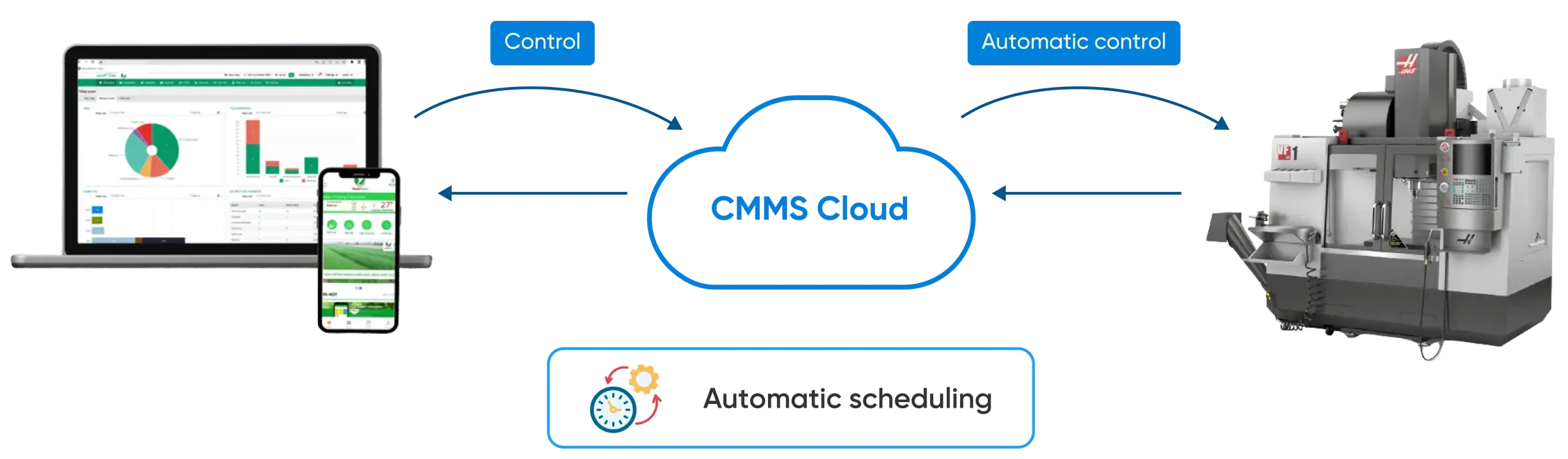
Our Computerized Maintenance Management System (CMMS) is designed to be a foundational pillar of your advanced maintenance journey. It moves your operations from reactive to proactive by automating and predicting equipment failures. The system uses sensor-based monitoring to track key parameters like temperature and vibration, while its AI-powered engine learns from historical data to detect anomalies. This enables proactive scheduling, automatically creating work orders before failures occur and empowering you to master predictive maintenance first.
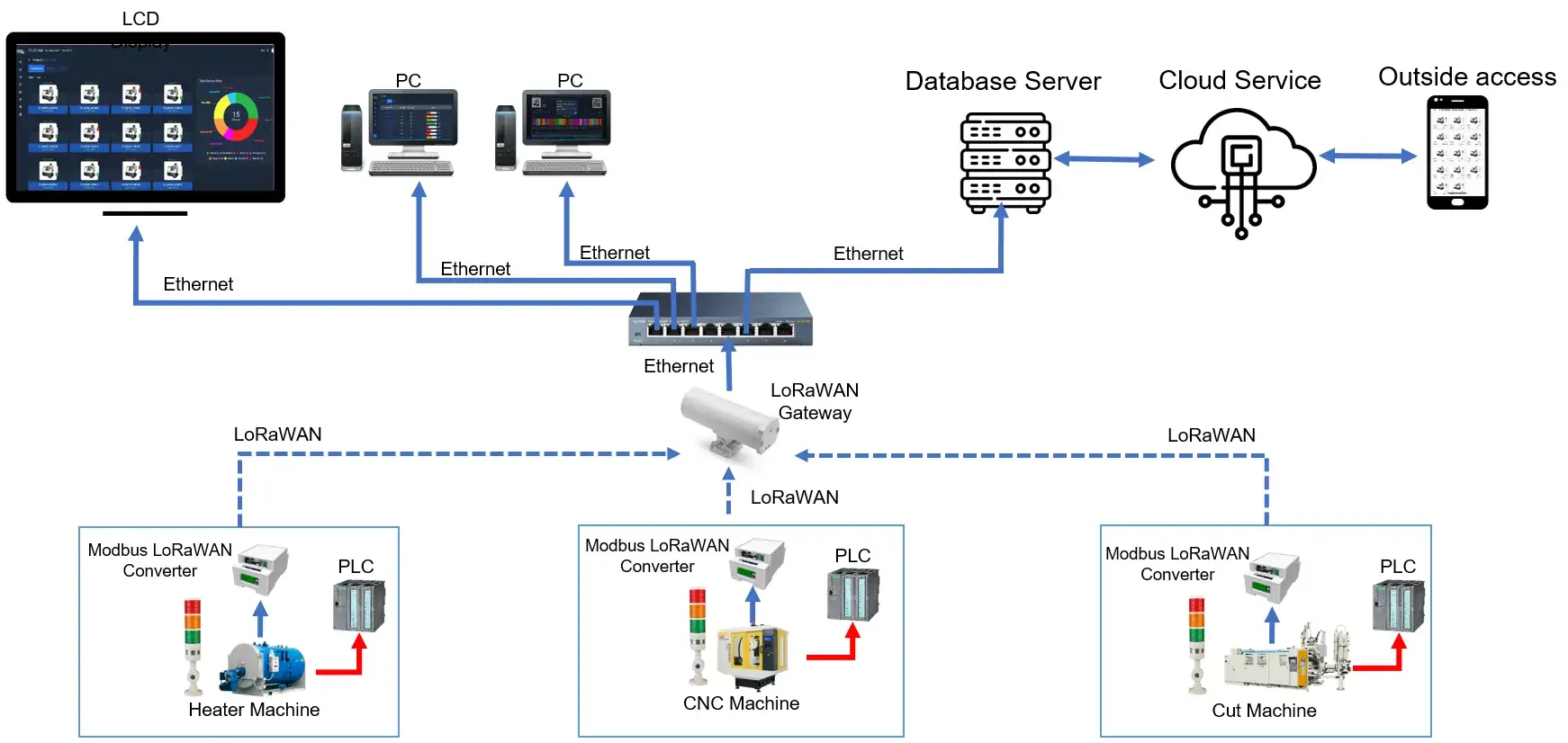
Complementing the CMMS, our Machine Monitoring System (MMS) provides the clean, reliable, real-time data streams that are essential for any future AI-driven analytics. It offers live operational intelligence by continuously calculating machine uptime and downtime, visualizing OEE (Overall Equipment Effectiveness), and enabling remote monitoring. By collecting and centralizing high-quality data from all your equipment, the MMS builds the robust dataset required to power advanced prescriptive models.
Conclusion: The Future of Maintenance is Intelligent Action
If predictive maintenance was about seeing the future, prescriptive maintenance is about shaping it. It represents a fundamental shift from a reactive or even proactive stance to one of continuous, data-driven optimization. As AI and analytics capabilities continue to advance, the ability to not only anticipate problems but also to receive intelligent, automated recommendations will become the new standard for competitive manufacturing.


.webp_2026-10-01-18-27-07-971.webp)
.webp_2026-10-01-18-17-11-290.webp)
.webp_2026-10-01-18-08-26-854.webp)
.webp_2026-10-01-17-47-32-240.webp)