In today's interconnected world, the Internet of Things (IoT) is transforming industries, and the automotive sector is no exception. Automotive IoT, the integration of IoT technologies into vehicles and transportation systems, is ushering in a new era of connectivity, efficiency, and safety. This article delves into the core concepts and explores its key applications, benefits, challenges, and future trends.
Automotive IoT's key considerations
Automotive IoT isn't simply about adding gadgets to cars; it's about creating a comprehensive ecosystem. Key considerations highlighted include:
Cross-platform functionality
In automotive IoT, achieving seamless interoperability is crucial due to the diversity of proprietary codes and protocols used by different Original Equipment Manufacturers (OEMs). Measurements like odometer readings, fuel levels, and Diagnostic Trouble Codes (DTCs) often use OEM-specific formats, necessitating IoT solutions capable of communicating across multiple platforms. To address this, IoT technology must be designed to decode and harmonize these diverse data streams, translating them into actionable insights on the cloud.
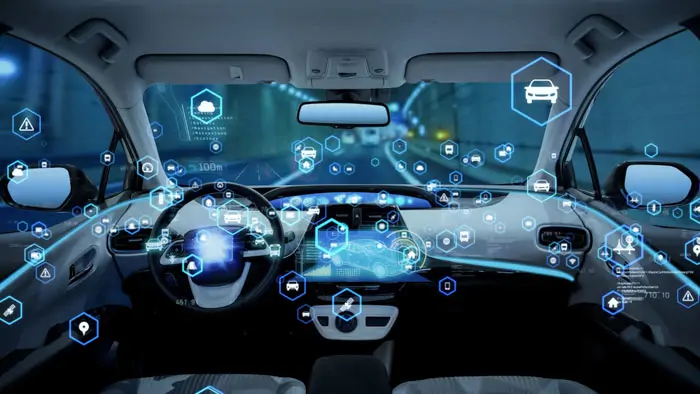
The essence of IoT in automotive lies in connecting disparate systems, data repositories, and third-party devices. This includes Advanced Driver Assistance Systems (ADAS) and external data sources like weather information. An open platform, or "open car," concept is essential for integrating vehicle systems and ensuring compatibility across networks.
Ultimately, the goal is to leverage interconnected data to automate operations, enhance decision-making, and optimize production cycles—all while safeguarding user privacy and data security.
Securing IoT devices
Security remains the foremost challenge in the expanding landscape of IoT in automotive. IoT devices, equipped with processing power and internet connectivity, are inherently vulnerable to cyberattacks. Notable incidents, such as a large-scale Distributed Denial of Service (DDoS) attack using compromised routers and cameras or the remote hacking of a Jeep as reported by Wired Magazine, underline the risks associated with insecure IoT ecosystems.
IoT security is not just an added feature—it forms the backbone of the entire system. Comprehensive measures, including encrypted data transmission, secure storage, robust access controls, and regular penetration testing, are non-negotiable.
Companies must also conduct vulnerability assessments, implement hacking contests, and foster a strong security culture to stay ahead of potential threats. In the IoT automotive realm, maintaining trust hinges on proactive and robust security measures.
Advantages of IoT in the automotive industry
The integration of IoT in the automotive industry offers several key advantages:
Remote device updates
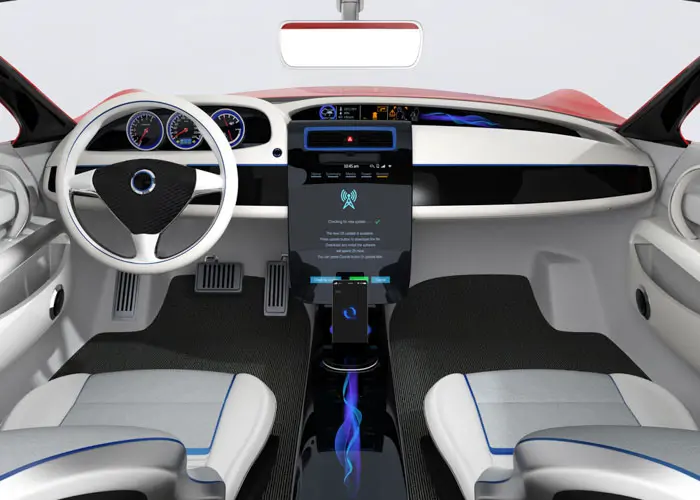
Connected cars leverage IoT connectivity to revolutionize software updates, offering significant advantages for both drivers and manufacturers. Traditionally, updating vehicle software required inconvenient and costly visits to dealerships.
However, with OTA updates, a wide range of components, from minor features like headsets to critical electronic control units (ECUs), can be updated remotely. This not only simplifies maintenance for drivers but also significantly reduces costs for manufacturers. Beyond fixing bugs, OTA updates can enhance vehicle performance, as exemplified by Tesla's updates for battery performance and suspension.
This technology also opens up new revenue streams through subscription-based feature enhancements, such as integrating third-party services like audiobooks. Crucially, OTA updates provide a rapid response mechanism for addressing security vulnerabilities. Manufacturers can deploy patches in a matter of minutes or days, mitigating risks far more efficiently than traditional methods.
Proactive maintenance
Predictive maintenance represents a significant advantage of automotive IoT. By embedding sensors and computer chips throughout connected vehicles, a continuous stream of performance data is collected and processed, often in the cloud, to anticipate maintenance needs before issues arise.
This proactive approach allows for timely interventions, preventing costly breakdowns and extending vehicle lifespan. In a fully connected ecosystem, vehicles can even automatically transmit maintenance alerts to manufacturers or mechanics, streamlining the service process.
Integrating artificial intelligence (AI) further enhances predictive capabilities, allowing for more accurate forecasting and optimized maintenance schedules. The benefits extend to both consumers, who experience reduced repair costs and improved vehicle reliability, and service providers, who can optimize inventory management and resource allocation based on predicted maintenance needs.
Simplifying parking
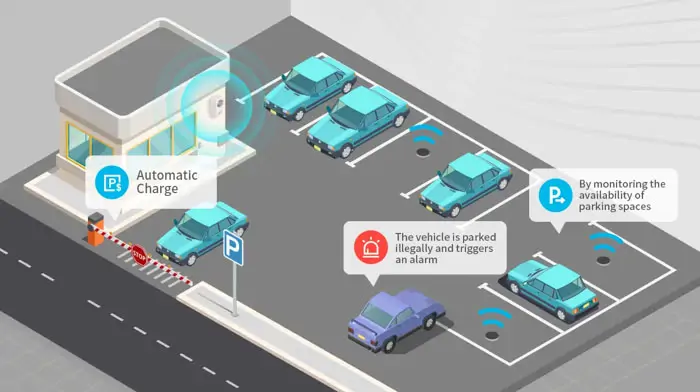
The search for parking consumes significant time and resources for drivers, costing billions annually in lost time, fuel, and emissions. IoT for automotive offers solutions to alleviate this problem, with the smart parking market projected to reach substantial value.
By leveraging connected car data and cloud-based analytics, companies like Otonomo provide real-time information on parking availability. This data not only helps drivers quickly locate open spots but also provides valuable insights for urban planners, enabling them to optimize parking infrastructure and improve overall traffic flow.
In-vehicle entertainment
In-vehicle infotainment systems, now a standard feature in most new cars, are significantly enhanced by IoT connectivity. These systems, ranging from OEM-specific platforms like Kia's UVO and Jeep's Uconnect to mobile-compatible solutions like Samsung's Exynos Auto and Android Auto, offer drivers a range of convenient features, including speech-activated navigation, hands-free calling and texting, and seamless integration with personal smart devices.
This integration, facilitated by IoT, enables access to a variety of apps directly through the car's console, as exemplified by Apple CarPlay's support for services like Spotify, Audible, and Pandora, enriching the in-car experience.
Forecasting traffic conditions
Traffic congestion represents a significant inconvenience and safety hazard. Automotive IoT is addressing this challenge through comprehensive data collection and analysis. IoT sensors deployed in CCTV cameras, along highways, and on bridges continuously gather traffic data to predict congestion points before they occur.
Collaborations between public safety agencies and IoT companies further enhance these efforts. Connected vehicles themselves contribute by exchanging data, including signal timing information, enabling them to predict and report traffic patterns, leading to improved fuel efficiency and enhanced safety.
The increasing availability of such data, coupled with the emergence of autonomous vehicles, promises even more accurate traffic prediction and optimized traffic flow, with studies suggesting potential travel time reductions.
Applications of IoT in the automotive
IoT is transforming the automotive industry, driving innovation while improving quality and reducing costs. Let's explore six key real-time automotive IoT applications in this sector.
Self-driving vehicles
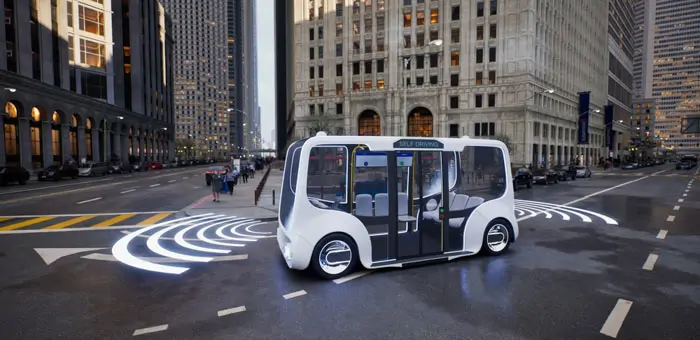
While the vision of fully autonomous vehicles remains a key focus for the automotive industry, current advancements leverage IoT and AI to deliver increasingly sophisticated semi-autonomous features.
Leading automakers like BMW, Tesla, and Waymo are integrating these technologies to assist drivers with tasks such as driving, parking, braking, and lane changing. These IoT-enabled features significantly enhance safety by mitigating the risk of human error, paving the way for the eventual realization of fully autonomous driving.
Fleet management
IoT empowers driver and fleet management by providing real-time vehicle tracking, fuel consumption monitoring, and route optimization, leading to lower operating costs and better scheduling.
It also monitors driver behavior for safety, detecting drowsiness and issuing alerts. Real-time vehicle diagnostics warn of potential problems like low batteries or engine issues, enabling proactive maintenance. Finally, IoT automates trip planning and product delivery, improving service efficiency and client experience.
Real-time data tracking
IoT-enabled telematics provides real-time data on vehicle and driver status. Cloud-connected devices track vehicle location, condition, and driver behavior for effective fleet management.
This technology also allows remote vehicle monitoring and control for individual owners, including features like remote speed limiting and access to vehicle data. Crucially, it provides automatic collision notifications to emergency services and designated contacts, improving response times in accidents.
Updating software
IoT-driven software updates are a crucial advancement in automotive technology, enhancing vehicle safety, performance, and the overall driving experience.
These updates improve key systems, including security features like locking mechanisms and cybersecurity protocols, in-car entertainment systems for a more enjoyable ride, and navigation for efficient routing. By addressing bugs, adding new functionalities, and optimizing existing features, these updates contribute to a safer, more convenient, and higher-performing vehicle.
Vehicle to everything cellular communication
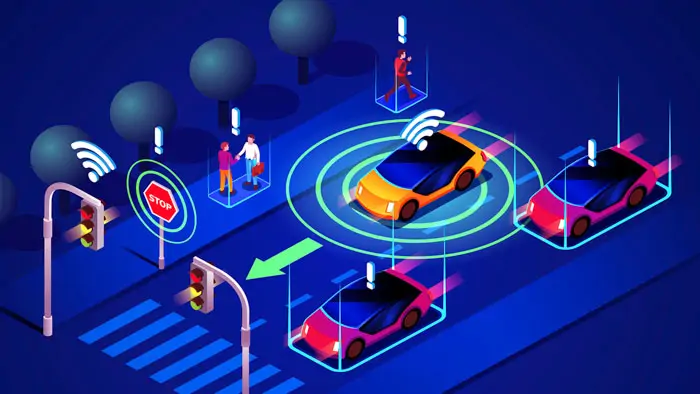
Cellular Vehicle-to-Everything (CV2X) communication represents a significant advancement in automotive IoT, enabling cars to connect with their surroundings and facilitating faster data transmission. CV2X can be categorized into four key areas:
- Vehicle-to-Vehicle (V2V): V2V communication allows vehicles to exchange critical information such as location, speed, and vehicle dynamics. This direct communication is crucial for preventing accidents by providing early warnings of potential collisions and also helps clear paths for emergency vehicles, like ambulances and fire trucks, to navigate through traffic more efficiently.
- Vehicle-to-Infrastructure (V2I): V2I connects vehicles to road infrastructure elements like traffic lights, toll booths, and lane markings. This connection facilitates optimized traffic flow, reducing congestion at intersections and toll plazas. It can also provide real-time information on road conditions and infrastructure status.
- Vehicle-to-Pedestrian (V2P): V2P uses mobile applications to connect pedestrians to the CV2X network. This enables pedestrians to locate nearby taxis, track public transport arrival times, and potentially interact with smart pedestrian crossing systems to improve safety.
- Vehicle-to-Network (V2N): V2N connects vehicles to broader networks, such as weather forecasting services and Intelligent Transport Systems (ITS). This allows for real-time alerts about changing weather conditions, accidents, or other road hazards. V2N also enables seamless integration with smartphones, allowing drivers to use voice commands to control music, navigation, and other features.
Driver state detection and alerting systems
IoT-driven driver condition monitoring uses in-vehicle sensors to collect data on a driver's physical and psychological state, enabling analysis of driving patterns and behavior. This analysis enhances driver support and security while also informing usage-based insurance programs.
More advanced systems integrate active wellness seats that monitor vital signs like heart rate and breathing, providing real-time alerts to prevent accidents caused by driver fatigue or drowsiness.
Challenges in IoT in the automotive
Despite its many benefits, automotive IoT faces several challenges:
Data privacy concerns
The increasing collection of driver data by connected vehicles raises significant privacy concerns. Data points such as driving speed and braking frequency could be valuable to third parties like insurance companies, highlighting the potential for misuse.
While automakers generally control this data, they bear a significant responsibility to protect user privacy. Consumers must also be aware of how their data is being collected and used. Recognizing these concerns, data privacy regulations are evolving rapidly.
Laws like the California Consumer Privacy Act (CCPA) and the European Union's General Data Protection Regulation (GDPR) provide consumers with greater control over their personal data and impose substantial penalties on organizations that fail to comply. These regulations are shaping the landscape of data privacy in the automotive industry and beyond.
Connectivity limitations
While existing safety technologies like automatic emergency braking and blind spot monitoring have significantly improved road safety, vehicle-to-vehicle (V2V) communication promises a true breakthrough.
The ability for vehicles to communicate directly with each other, sharing critical information like braking status, has the potential to prevent accidents and improve traffic flow. However, a major obstacle to widespread V2V adoption is the lack of a standardized connectivity method. The automotive industry has yet to settle on a single dominant technology, whether it be 5G, Wi-Fi, or another standard. This uncertainty creates challenges for automakers and technology providers.
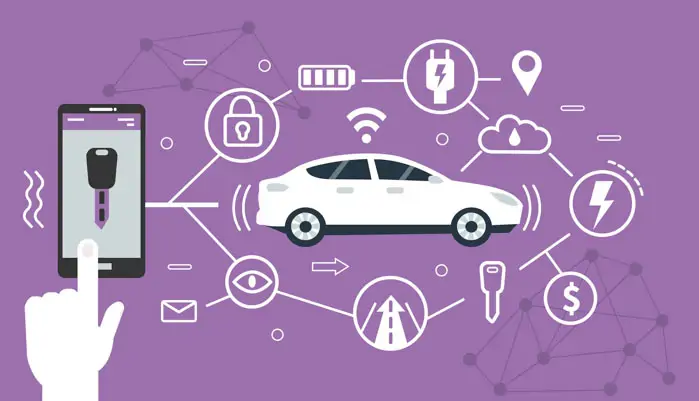
To address this issue, companies like Airbiquity are developing connection-agnostic platforms that can operate across multiple connectivity standards, ensuring compatibility and facilitating the deployment of V2V features regardless of the underlying communication technology.
Automotive operating systems
The relationship between the automotive and technology industries has evolved significantly, particularly concerning software integration in vehicles. Historically, automakers, often driven by liability concerns, were hesitant to relinquish control of core vehicle systems to external tech companies.
This has led to a growing trend of in-house operating system development. Volkswagen, with its VW.OS developed by CARIAD, exemplifies this shift. Other major automakers like Toyota and Mercedes-Benz are also investing heavily in their own software platforms. This reflects a fundamental change in the automotive industry's mindset: software is no longer viewed as a peripheral element but as a core component integral to the vehicle ecosystem.
This shift is also driven by increasing consumer expectations for seamless connectivity and user-friendly experiences in their cars, mirroring the convenience they enjoy with other connected devices.
Conclusion
Automotive IoT is revolutionizing the automotive industry, transforming vehicles into connected, intelligent platforms. While challenges remain, the benefits of improved safety, efficiency, and convenience are undeniable. As technology continues to advance, IoT for automotive will play an increasingly important role in shaping the future of transportation.


.webp_2026-10-01-18-27-07-971.webp)
.webp_2026-10-01-18-17-11-290.webp)
.webp_2026-10-01-18-08-26-854.webp)
.webp_2026-10-01-17-47-32-240.webp)