24/05/2025
Artificial intelligence (AI) is revolutionizing dynamic pricing in the logistics sector. As supply chain volatility grows, logistics companies are leveraging AI and machine learning to analyze vast data and adjust prices in real time. This technology-driven approach is helping carriers and 3PLs remain competitive and profitable amid fluctuating demand and costs. In this article, we explore how AI-powered dynamic pricing is transforming logistics in 2024, from TMA Solutions’ advanced offerings to leading global platforms and emerging trends, and how these innovations drive revenue optimization, market responsiveness, and client retention.
TMA Solutions’ AI-Powered Offerings in Dynamic Pricing
TMA Solutions, a custom AI development company, offers AI-driven tools that enable logistics firms to optimize pricing strategies dynamically. Key offerings include predictive demand forecasting, client segmentation for personalized pricing, and route-based pricing optimization. These solutions use machine learning (ML) and deep learning (DL) to turn data into actionable pricing decisions.
Predictive Demand Forecasting for Proactive Pricing
Anticipating demand swings is crucial in logistics pricing. TMA’s predictive forecasting utilizes ML/DL models to analyze historical freight volumes, market indicators, and seasonal trends. By forecasting demand with high accuracy, logistics providers can adjust prices proactively – for example, raising or lowering rates ahead of peak season or slowdowns. This AI-driven demand insight helps balance capacity and pricing in real time. By predicting demand surges or lulls, companies can optimize load factors and set prices that maximize revenue while avoiding service bottlenecks.

Client Segmentation & Personalized Pricing
Not all clients are alike, and AI helps logistics firms tailor pricing accordingly. TMA’s solutions segment clients by factors like shipping volume, lanes used, and service preferences, using clustering algorithms and behavioral data. This enables personalized pricing strategies for different client segments. For instance, high-volume shippers might get dynamic volume discounts, while time-sensitive clients see premium service pricing. AI models analyze client behavior and price sensitivity to find the optimal rate for each segment. This personalized approach boosts client satisfaction and loyalty by aligning prices with client value. Studies show AI-driven pricing can leverage segmentation to offer tailored rates “reflecting each client’s preferences, purchasing history, and willingness to pay,” thereby enhancing loyalty and revenue. In short, AI empowers logistics providers to present the right price to the right client at the right time, improving retention and sales.

Route-Based Pricing Optimization
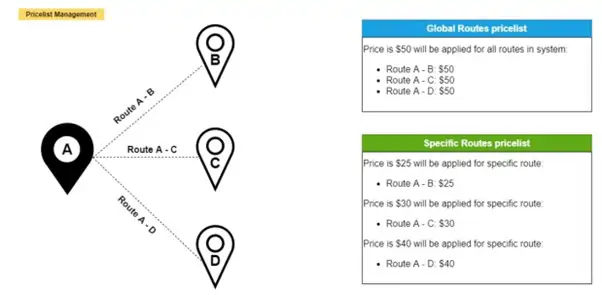
Logistics pricing isn’t one-size-fits-all – it often depends on route specifics. TMA’s route-based pricing optimization uses AI to adjust rates based on route data and conditions. Factors like distance, traffic congestion, fuel costs, and even weather or border delays can be analyzed in real time. AI algorithms can recommend dynamic surcharges or discounts for certain lanes or delivery routes. For example, if a particular route faces heavy traffic or low carrier availability, the system might raise the price for that lane, whereas it might lower prices on underutilized routes to attract volume. An industry trend in 2024 is precisely this kind of AI-informed route pricing: logistics companies “use AI to adjust prices in real time, reflecting the complexities of delivery routes”. By accounting for route difficulty and operational cost in pricing, companies ensure each shipment price aligns with true service cost and market demand. This route-level optimization leads to fair, competitive pricing that protects margins on tough routes and wins business on easier ones.
Key AI Pricing Trends in Logistics for 2024
The year 2024 has brought several notable trends in how AI is applied to logistics pricing:
- Real-Time Pricing Engines: Logistics firms are moving toward pricing that updates in real time rather than on fixed schedules. AI engines ingest live data – load board rates, supply/demand ratios, fuel prices, etc. – and continuously recalculate optimal prices. This real-time approach lets companies capitalize on opportunities (e.g., a surge in demand on a route) and avoid losses when conditions change. By analyzing a wide range of data (competitor rates, market trends, client behavior) at high speed, AI ensures pricing is always tuned to current market conditions. This agility is a competitive advantage, as it aligns prices with the market instantly while safeguarding profit margins. Many 3PLs and carriers are deploying real-time pricing bots into their booking platforms and TMS in 2024, making dynamic repricing a standard practice.
- Integration with Telematics and IoT: Another trend is using telematics and sensor data to inform pricing decisions. GPS-based telematics systems provide real-time visibility into truck locations, capacity, and transit times. By linking this with pricing, AI can adjust rates based on on-ground realities. For instance, if telematics data shows a truck running empty (“empty miles”) or delays on a certain route, the system could lower prices to fill that capacity or add a delay surcharge. In ride-hailing, telematics-driven surge pricing is common – Uber’s platform uses real-time GPS supply/demand data to optimize surge pricing. Now, logistics is following suit. Fleet telematics and IoT sensors (monitoring traffic, weather, and vehicle availability) feed into pricing algorithms. This integration means pricing is not just reacting to market economics, but also to operational conditions in the supply chain. The result is highly responsive pricing that accounts for real-world constraints (like a sudden road closure or a warehouse backlog), improving reliability and utilization.
- Sustainability-Linked Pricing Strategies: In 2024, with sustainability a growing concern, some logistics providers are experimenting with “green” pricing models. Sustainability-linked pricing involves adjusting rates based on environmental impact or incentivizing eco-friendly choices. For example, carriers might offer a “green premium” service – using electric trucks or sustainable fuel – at slightly higher cost for shippers willing to pay more for lower emissions. Studies indicate a segment of clients (both consumers and businesses) is willing to pay a 5–15% price premium for green shipping options, which opens the door to new pricing tiers. Conversely, companies are also looking at internalizing carbon costs: applying carbon surcharges or discounts dynamically. A trend on the horizon is dynamic carbon pricing, where AI systems factor in the estimated CO₂ emissions of a shipment in real time and adjust the price or fees accordingly. For instance, a delivery routed via rail (lower emissions) might earn a discount or credit, whereas one via air freight (high emissions) carries a surcharge. Such strategies align pricing with sustainability goals and can both encourage greener logistics choices and help recoup the investments in clean technology. While still emerging, sustainability-linked dynamic pricing demonstrates the versatility of AI pricing engines – they can optimize not just for profit, but for environmental impact and corporate ESG targets as well.
Benefits: Revenue Optimization, Agility, and Client Retention
AI-powered dynamic pricing is not just a flashy tech upgrade; it delivers concrete benefits for logistics companies and their clients:
- Revenue and Margin Optimization: By continuously finding the optimal price point for each shipment, route, and client segment, AI helps maximize revenue per move. It captures additional value when demand is high while also boosting volume when demand is low by offering competitive rates. This balance ensures healthier margins over time. A McKinsey study noted that dynamic pricing, enhanced by AI, lets companies swiftly respond to market fluctuations, “ensuring competitive pricing while maximizing revenue”. Moreover, automation reduces human error and leakage in pricing. Overall, firms can see higher yields and more consistent profitability.
- Market Responsiveness and Efficiency: Logistics is inherently volatile – weather disruptions, sudden spikes in orders, new competitor rates, etc. AI dynamic pricing engines make companies far more responsive to these changes. Prices can update within minutes of a change in conditions, as opposed to waiting for the next day or week’s repricing cycle. This agility means shippers get timely, market-aligned quotes and carriers utilize their assets efficiently. According to industry experts, such AI systems ensure pricing “aligns with market demand and operational capabilities”, allowing companies to stay competitive amidst fluctuating conditions. Internally, this responsiveness streamlines workflows – pricing managers spend less time crunching numbers and more on strategy. Resources (trucks, warehouse space) are better allocated because pricing helps signal where capacity is needed or can be flexibly priced.
- Improved Client Satisfaction & Retention: Dynamic pricing, when done with client insights, can actually improve the client experience. By leveraging client segmentation and personalization, AI avoids the one-size-fits-all pricing that can alienate clients. Instead, key clients may receive loyalty incentives, and prices feel more rational to the market (e.g., reflecting current fuel costs or speed of service). As noted earlier, personalized pricing enhances client loyalty by giving each client a sense of fairness and value. Faster quote turnarounds via automated engines also please clients – they get immediate rates and can book shipments without delay. Werner’s experience showed higher client satisfaction after implementing AI pricing, due to quicker responses and more consistent pricing outcomes. In short, shippers are more likely to stick with a logistics provider who offers transparent, responsive pricing rather than one with static or opaque rates. This retention, in turn, drives long-term revenue.
Conclusion
In 2024, AI-powered dynamic pricing has moved from a novel concept to a strategic imperative in the logistics industry. Solutions from providers like TMA Solutions, a Vietnam software distributor – spanning demand forecasting, personalized pricing, and route optimization – exemplify how Agentic AI solutions for logistics can transform logistics operations. Leading 3PLs and tech firms are deploying advanced pricing engines that learn from every shipment and market signal, ensuring rates are always optimized for current conditions. Key trends such as real-time pricing, telematics integration, and sustainability-linked rates are further pushing the boundaries of what dynamic pricing can achieve in supply chains.
For logistics companies, the message is clear: embracing AI in pricing brings smarter revenue management, greater agility in the market, and stronger client relationships. An AI-powered dynamic pricing engine can adjust to the ebb and flow of the logistics business, whether it’s anticipating a holiday rush with predictive analytics or tweaking a lane rate due to a sudden capacity glut. The practical payoff is a more resilient and responsive pricing strategy that underpins both profitability and service excellence. As we move through 2024 and beyond, AI-driven dynamic pricing is set to become a cornerstone of logistics management, enabling companies to navigate complexity with data-informed confidence and to deliver value to clients and stakeholders alike.


.webp_2026-10-01-18-27-07-971.webp)
.webp_2026-10-01-18-17-11-290.webp)