AI logistics automation from Vietnam is becoming an important solution. It helps companies manage warehouses in a smart way, improve transport, and forecast demand with more accuracy. With the fast growth of e-commerce and the pressure from global supply chains, this article will explore the opportunities, challenges, and real applications of AI in Vietnam’s logistics sector.
1. Global logistics under pressure: Why automation is urgent?
Global logistics is facing strong pressure from labor, costs and delivery speed. Because of this, the application of automation is becoming increasingly urgent to keep operations stable.
1 - Pressures on global logistics
The logistics industry is under many challenges.
- Labour shortage: In Japan, almost 30% of the population is over 65 years old. By 2030, the trucking industry may lose one-third of its drivers. This makes transport and delivery harder to manage.
- Rising costs: A survey in Q2/2025 shows that 22% of supply chain managers expect transport and logistics costs to grow more than 10%. Fuel prices, international shipping fees, and insurance are adding more financial pressure on companies.
- Delivery speed: Customers expect fast and on-time shipping. But many shipping routes now avoid the Red Sea due to security issues. This change adds up to 2 weeks to delivery time and nearly 1 million USD in extra cost per ship.
2 - The role of automation in logistics
Automation is becoming a key solution to improve logistics. Amazon has already deployed more than 750.000 mobile robots in its warehouses. These robots make sorting and packing faster. At its Shreveport center in the US, order processing costs fell by about 25% after robots were introduced.
In many distribution centers, robots have replaced sorting and moving tasks that once required hundreds of workers. In the US, some warehouses can now run smoothly even during peak seasons without hiring extra temporary staff. This keeps the supply chain stable.
Automation also reduces mistakes. At Amazon’s Chiba center, robots can adjust to product size, which lowers wrong packaging and decreases return rates.
It also helps cut operating costs. Amazon is estimated to save up to 10 billion USD each year by 2030 through robots and AI. This proves that technology not only solves current problems but also brings long-term financial benefits.
2. Current situation of AI in logistics in Vietnam
Below is an overview of the current situation of AI adoption in Vietnam’s logistics sector.
1 - Current adoption
Vietnam’s logistics sector is growing fast, with an annual rate of about 14 - 16%, becoming an important field in trade and import - export. Some large companies such as Viettel Post, VNPost, and Gemadept have started to apply AI in warehouse management, transportation and demand forecasting. In addition, companies like Abivin are developing AI solutions for transport optimisation, showing that the trend of applying technology is gradually spreading in the industry.
2 - Popular areas of AI application
AI is being applied in several key areas:
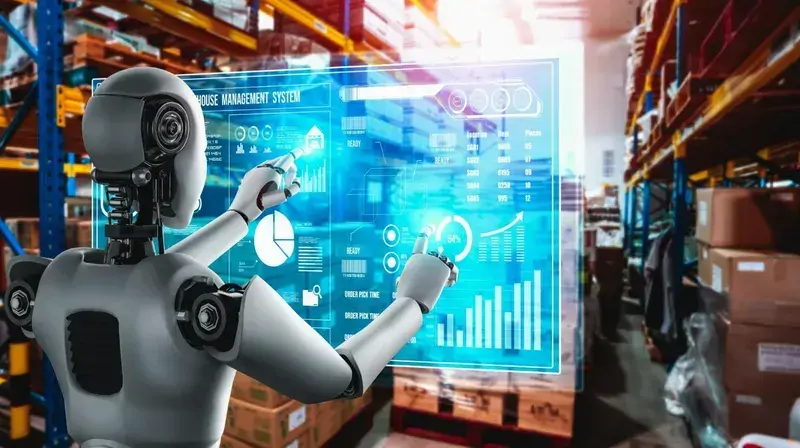
- In warehouse management, smart systems and robots support goods control and arrange storage in a more efficient way.
- In transportation, AI helps optimise routes, predict delivery times accurately, and reduce delays.
- At the supply chain level, AI analyses big data to forecast demand and improve inventory management, helping businesses react flexibly to market changes.
3 - Government and organisational support
The Vietnamese government has issued the National Strategy on Research, Development, and Application of AI by 2030. In this strategy, logistics and transportation are priorities, with applications such as automated toll collection, system optimisation with real-time data, route planning, customer consultation and infrastructure management. This is a key direction to drive digital transformation and open the way for businesses to adopt AI in logistics.
3. Opportunities for applying AI in logistics in Vietnam
Below are the main opportunities and development potential that AI can bring to Vietnam’s logistics industry.
1 - Automated warehouse and inventory management
AI enables demand forecasting and automatic adjustment of inventory levels, helping companies avoid shortages or excess stock. For example, Gemadept has invested in building a modern logistics center with smart management technology to improve productivity and reduce storage costs. In addition, the startup Abivin has developed an AI solution for supply chain management, which can support robots in sorting and picking goods, thereby speeding up order processing.
2 - Quick transportation and route planning
In transportation, AI can optimise routes and predict demand by region. Abivin’s vRoute solution has already been deployed in Vietnam, helping transport and distribution companies cut operating costs by up to 20% thanks to route optimisation and accurate delivery time prediction. At the same time, Viettel Post and VNPost are also applying real-time tracking systems to monitor vehicles and goods, which improves coordination and reduces the risk of late deliveries.
3 - Combining AI with IoT & Big Data
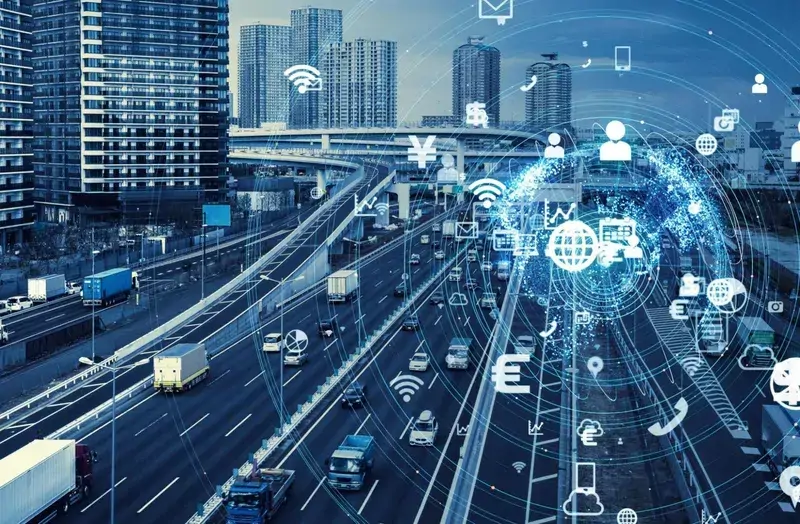
IoT continuously collects data from sensors and GPS devices throughout the supply chain. AI then analyses this big data to predict risks and make quick decisions. Reports show that this trend is attracting the attention of many large logistics companies in Vietnam, aiming to improve forecasting capability and reduce operating costs.
4 - Technology collaboration
AI in logistics requires unified data, strong infrastructure and integrated solutions. This creates opportunities for Vietnamese companies to expand partnerships and build a smart logistics ecosystem.
5 - Demand from e-commerce
Vietnam’s e-commerce market is expected to reach 15.3 billion USD by 2025. This growth puts heavy pressure on logistics but also opens opportunities for AI adoption. The technology helps automate the processing of large order volumes, forecast seasonal demand and optimise transport, which reduces costs and meets the need for fast delivery.
4. Case studies: Vietnam’s AI logistics automation in action
To better understand how AI is transforming the logistics industry, let’s look at some real case studies at TMA.
4.1. Optimizing inventory in real time through Azure demand forecasting solution
TMA applied AI to manage inventory by using the Azure platform. Data from various sources such as sales, warehouses, and market trends is gathered and then processed with Azure Machine Learning to forecast demand. The forecasting results are displayed directly on Power BI, allowing managers to easily monitor the situation in real time. The whole system runs on Azure Kubernetes and RabbitMQ, which makes it scalable and flexible as data volume and demand increase.
Thanks to this solution, the company reduced both stock shortages and excess inventory, keeping goods at a stable level. Decisions are also made faster thanks to clear, visual data. At the same time, the system can expand while still ensuring smooth operation, making it suitable for long-term growth.
>> Find out more about this project at Optimizing inventory in real-time through Azure demand forecasting solution
4.2. Streamlining operations with Azure Data Factory for enhanced efficiency
TMA uses Azure Data Factory and Synapse to connect data from multiple sources, both internal systems and the cloud. All data is centralised into a Data Lake, then cleaned, consolidated, and automatically processed through pipelines. At the same time, TMA deploys Power BI to display real-time data and uses Azure Data Share to securely share information with customers and partners.
This solution gives businesses a more complete and detailed view of their entire product portfolio. Decisions become faster and more accurate because the data is standardised before analysis. In addition, operational processes are streamlined, saving time and improving overall productivity across the organisation.
>> Find out more about this project at Streamlining operations with Azure Data Factory for enhanced efficiency
4.3. Warehouse Management System (WMS) AI Agent (trích từ AI agent factory)
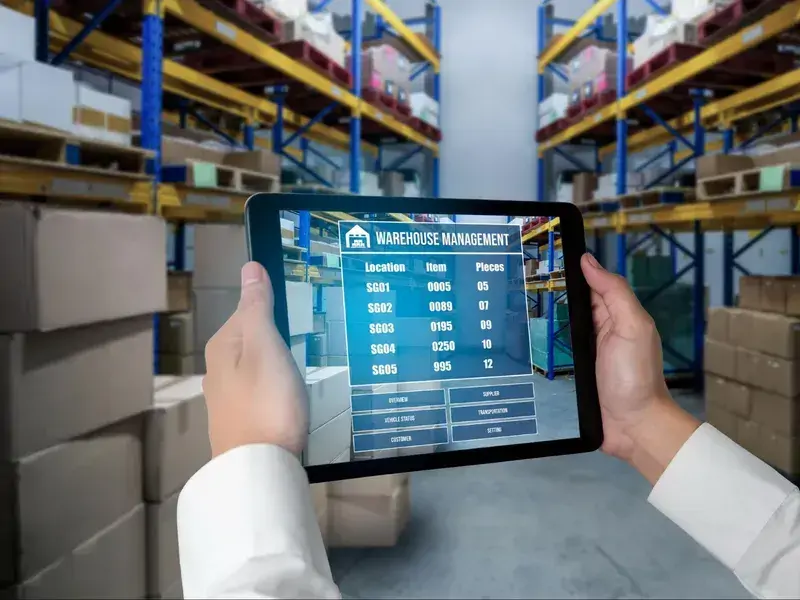
TMA developed an AI Agent to support its Warehouse Management System (WMS). The solution uses OCR and Speech-to-Text technologies to capture and process information and integrates the Google Gemini language model to enable instant search and response. Users can look up inventory by SKU code or product description, view storage locations, check the status of inbound and outbound orders, and quickly generate reports. The system is built with Python and FastAPI for the backend and ReactJS for the frontend.
The AI Agent helps warehouse staff and managers shorten many manual steps. Searches become faster, reports are displayed in real time, and operational quality improves significantly. This also lays the foundation for the system to expand with predictive analytics and automation features in the future.
>> Find out more about this project at Warehouse Management System (WMS) AI Agent
5. Challenges for applying AI in Logistics in Vietnam
Besides the benefits AI brings, its adoption in Vietnam’s logistics sector is also facing many challenges such as:
1 - Fragmented infrastructure and data
One major obstacle in applying AI to logistics in Vietnam is the lack of synchronised technology infrastructure. Many non-urban areas lack high-speed Internet, IoT devices and server systems. In addition, logistics data remains scattered, non-standardised, and not deep enough to train AI models, making implementation difficult.
2 - High investment costs
The cost of implementing AI is not only about software but also includes cloud storage infrastructure, sensors, maintenance, and staff training. According to a VCCI survey, about 67% of logistics companies in Vietnam spend from 1 to 5 billion VND per year (equivalent to 39.000 - 197.000 USD).
3 - Shortage of AI talent
High-quality human resources for AI in logistics are still very limited. Vietnam has over 1 million IT workers, but only about 700 are working in AI and around 300 are considered experts. Moreover, only 6.7% of logistics companies are satisfied with their employees’ skills. This makes it difficult for many businesses to find the right team to implement AI solutions.
4 - Process and management barriers
A 2023 survey of 258 logistics companies in Vietnam shows that leadership has a direct impact on the adoption of digital technologies, including AI. When leaders lack vision or commitment, digital transformation projects are often delayed. At the same time, many employees worry that AI will replace their jobs, leading to resistance and creating difficulties in process improvement and new technology deployment.
5 - Security and legal issues
AI in logistics processes a large amount of data from IoT, OCR, cameras and transport systems, which increases the risk of data leaks. However, Vietnam’s legal framework on data security and cross-border data sharing is still incomplete. This makes many companies hesitant to expand AI adoption, as the risk of legal violations or data loss could cause major financial and reputational damage.
6 - Limited global integration
More than 98% of Vietnamese companies are SMEs, of which 99% face capital difficulties when investing in AI. In addition, logistics costs account for 16 - 18% of GDP, higher than the global average of 10.6%. This shows that the logistics sector is still lacking competitiveness and struggling to meet international standards, which limits deeper integration into global supply chains.

AI logistics automation from Vietnam is creating opportunities for the sector to break through, from boosting productivity to improving customer experience. However, to unlock its full potential, businesses need to invest in technology, develop human resources, and take advantage of supportive policies.
If you are looking for AI solutions to optimise your logistics operations, contact us for a detailed consultation and the right direction.
Contact information:
TMA SOLUTIONS - The leading software outsourcing company in Vietnam Email: sales@tmasolutions.com Website: https://www.tmasolutions.com/ Linkedin: TMA Solutions TMA Tower address: Street #10, Quality Tech Solution Complex (QTSC), Trung My Tay Ward, Ho Chi Minh City. |


.webp_2026-10-01-18-27-07-971.webp)
.webp_2026-10-01-18-17-11-290.webp)