AI in lending is reshaping the lending landscape by streamlining processes, improving credit scoring, and reducing risks for financial institutions. With innovations in machine learning (ML) and data analytics, lenders can now make more accurate and efficient decisions, benefiting both borrowers and financial organizations. In this article, we’ll explore how AI plays a pivotal role in lending, real-world use cases, its benefits, and the challenges associated with its adoption.
Powering loan management with AI in lending
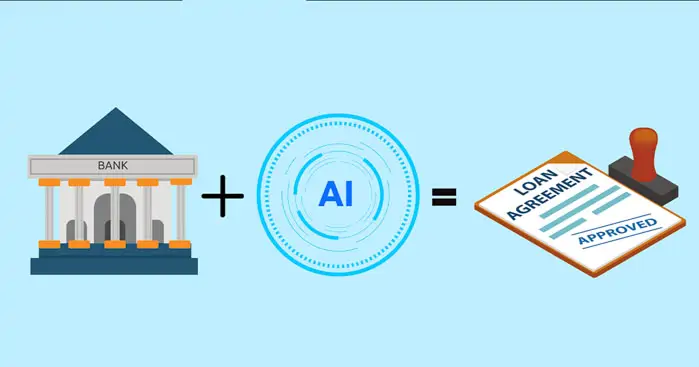
AI in lending has revolutionized the lending process by using machine learning (ML) algorithms to analyze vast amounts of data and make real-time credit decisions.
By evaluating creditworthiness, borrower behavior, and potential risks, AI-based platforms help financial institutions optimize loan approvals, interest rates, and amounts while minimizing defaults. These systems reduce bias by focusing on objective data points rather than subjective human judgment, ensuring fairer credit assessments.

Additionally, the integration of generative AI (Gen-AI) enhances personalization and decision-making by simulating credit scenarios and offering tailored loan products. This technology also automates manual tasks like document verification, enabling faster loan processing and an improved borrower experience.
Key applications of AI in lending
AI technology is reshaping lending workflows and operations – specifically within the domain of AI in lending – enhancing key processes like credit scoring, loan approvals, fraud detection, and collection management. Here’s how AI transforms these critical areas in lending.
AI-powered credit scoring
Traditional credit scoring systems rely heavily on historical financial data, often disadvantageous to new borrowers or those with unconventional financial backgrounds. This limits financial inclusion and increases errors in credit evaluations for new clients.
AI-driven credit scoring models address this gap by considering real-time indicators such as income trends, potential earning capacity, and employment prospects. By analyzing a broader range of data, AI enhances accuracy and opens lending opportunities for previously underserved populations.
Accelerating loan approvals with AI technology
The traditional loan approval process involves significant manual effort—collecting documents, verifying information, and awaiting manager approvals, which can take days or even weeks.
AI-powered systems streamline this process by automating document collection, verification, and routing. Advanced document processing tools extract key details, validate authenticity, and send applications through approval pipelines more efficiently. The result? Faster approvals and an enhanced client experience.
Adoption of AI in fraud detection
- Fraud Scores: NLP and ML analyze transaction patterns and assign fraud scores to assess risk, flagging suspicious activities for review or cancellation.
- Fraud Investigations: AI scans thousands of loan documents in real-time, flagging inconsistencies for further manual investigation, saving significant man-hours.
- Purchase Profiles: AI creates detailed client purchase profiles to segment users and monitor unusual transactions.
- KYC Verification: AI-based KYC solutions verify user IDs, match fingerprints, and ensure borrower authenticity before loan approvals.
Enhancing collection strategies with AI-driven insights
Effective collection management involves proactive measures to prevent loan defaults. AI helps lenders identify at-risk accounts by analyzing transaction histories and repayment patterns.
AI-driven collection strategies include:
- Personalized Outreach: Chatbots and virtual agents provide tailored payment reminders and 24/7 client support.
- Custom Repayment Plans: AI generates borrower-specific repayment options to accommodate financial challenges and facilitate successful repayments.
- Automated Follow-ups: AI phone agents conduct timely follow-ups, improving borrower engagement and reducing delinquency rates.
Understanding the advantages of AI in lending
The financial lending industry faces ongoing challenges, and AI in lending transforms by automating processes, improving the accuracy and speed of decisions, and enhancing client experiences.
Streamlined lending operations through automation
Traditional lending workflows involve labor-intensive tasks prone to human error, causing delays in credit assessments and approvals. AI automates key processes, such as underwriting and financial analysis, by extracting insights from diverse data sets.
By identifying patterns and standardizing workflows, AI ensures consistency and enhances compliance. The result is a faster and more reliable loan approval process that reduces costs and improves operational efficiency.

Achieving accuracy in credit assessments
Manual credit assessments can lead to errors that affect loan decision accuracy. AI-powered tools analyze complex financial statements within minutes, offering a deeper understanding of a borrower’s creditworthiness.
By automating data extraction and validation, AI improves data quality and ensures more accurate financial spreads, allowing lenders to make more informed decisions.
Proactive risk management with AI
Monitoring portfolio health and ensuring compliance can be resource-intensive when done manually. AI streamlines compliance tracking by automating document collection, validation, and covenant monitoring.
With continuous risk assessment, AI solutions help identify potentially high-risk loans early, allowing lenders to take preventive measures and improve overall portfolio performance.
Faster loan approvals for a superior client experience
In today’s competitive financial landscape, clients expect quick and personalized services. AI accelerates the lending process by automating credit application reviews and delivering instant insights.
This enables real-time decision-making and faster loan approvals, enhancing client satisfaction. AI-driven client data analysis also allows lenders to provide tailored financial advice and product recommendations, improving the overall banking experience.
Optimized resource allocation and productivity gains
Repetitive tasks, such as credit memo preparation and document verification, often tie up valuable staff resources.
By automating these processes, AI frees up personnel to focus on high-value activities, such as client engagement, strategic planning, and cross-selling opportunities. This improves productivity and empowers financial institutions to allocate resources more effectively, driving business growth and competitiveness.

A McKinsey Global Institute report estimates that generative AI could contribute $200 billion to $340 billion in value across the banking sector through productivity gains alone. This highlights the strategic importance of adopting AI-driven solutions in lending to boost efficiency, accuracy, and scalability.
Challenges in implementing AI in lending
Implementing AI in lending and loan management offers numerous advantages, but it also presents significant challenges. Financial institutions must address these concerns to harness AI's full potential while ensuring compliance, fairness, and operational efficiency.
Data privacy and security concerns in AI
AI lending systems require access to sensitive financial data for credit risk analysis and fraud detection. However, this reliance on data raises privacy concerns, especially if the system is not compliant with regulatory standards such as GDPR, SOC-2, and CCPA.
A data breach could lead to legal repercussions and damage to the institution's reputation. Ensuring robust data protection protocols and meeting regulatory requirements is critical to maintaining trust and securing client information.
Mitigating bias and ensuring fairness
AI algorithms are trained on historical data, which can contain biases that perpetuate unfair treatment. For instance, if past lending data is skewed against certain demographic groups, the AI model may unintentionally replicate these biases.

Addressing this issue requires the use of diverse, unbiased data sets, transparent algorithm development, and rigorous testing. By implementing fair lending practices and fostering algorithmic accountability, financial institutions can mitigate the risk of discriminatory outcomes.
Addressing transparency and interoperability gaps
Opaque AI models, often described as "black boxes," can erode trust in lending decisions due to their lack of explainability. Human oversight and detailed reporting mechanisms are necessary to ensure transparency and accountability in the decision-making process.
Additionally, integrating AI systems with legacy infrastructure remains a significant challenge. 56% of mortgage lenders cite interoperability as their primary concern. To avoid data silos and inefficiencies, organizations must prioritize AI solutions with robust integration capabilities that can seamlessly connect with existing platforms.
Ensuring data quality and availability
AI and machine learning models require large volumes of accurate, high-quality data for training and optimization. However, incomplete or inaccurate data can limit the effectiveness of AI in lending processes, resulting in unreliable predictions and increased risks.
Financial institutions must invest in data enrichment strategies and partnerships to access comprehensive datasets that enhance AI model performance.
Managing implementation costs and ensuring ROI
Deploying AI-driven loan management systems involves significant upfront costs, including software, hardware, maintenance, and ongoing operational expenses. Additionally, regular updates, staff training, and monitoring contribute to long-term costs.
Institutions must carefully evaluate their return on investment (ROI) and select AI solutions that align with their budget and business goals. Implementing scalable and cost-effective AI systems can help financial organizations achieve sustainable growth while balancing costs.

Conclusion
AI in lending has revolutionized the way financial institutions operate, offering faster loan processing, personalized credit decisions, and improved risk management. However, to fully harness its potential, lenders must address challenges related to data security, regulatory compliance, and algorithmic fairness. By adopting best practices and leveraging AI responsibly, financial institutions can enhance loan management, reduce operational costs, and offer borrowers a more seamless experience.


.webp_2026-10-01-18-27-07-971.webp)
.webp_2026-10-01-18-17-11-290.webp)