Artificial intelligence (AI) is no longer a futuristic concept but a driving force reshaping how banks operate and serve their clients. From automating routine tasks to delivering personalized financial insights, AI in banking is enabling banks to enhance efficiency, mitigate risk, and create seamless client experiences. This article explores the diverse ways banks are leveraging AI technologies, delving into specific applications, the underlying techniques, and the critical challenges they must navigate to fully realize AI's transformative potential. Let’s dive in!
The growing adoption of AI in banking
The financial sector has historically struggled with innovation, with traditional banks being 40% less productive than digitally native firms, according to McKinsey. Meanwhile, fintech startups are rapidly adopting AI, pressuring traditional banks to innovate.
Investment banks use natural language processing (NLP) to analyze vast data sets for better investment and wealth management decisions. Additionally, clients now expect digital tools, such as mobile apps with personalized financial insights and virtual assistants. AI adoption helps banks enhance the client experience to meet these demands.

AI's impact grows when paired with automation. For example, combining AI with robotic process automation (RPA) enables faster, smarter compliance processes, such as verifying client data for KYC and AML checks. This improves both efficiency and regulatory adherence, showcasing the transformative role of AI in banking.
AI transforming banking key benefits
AI in banking is revolutionizing the banking industry, offering significant benefits across various operations and client interactions:
Strengthening cybersecurity and fraud prevention
As cyberattacks become increasingly sophisticated with the use of AI, banks are leveraging AI-powered solutions for enhanced cybersecurity and fraud detection. These systems provide real-time threat detection, protecting both the institution and its clients from evolving threats like AI-generated audio fraud and advanced phishing attacks. AI also plays a crucial role in combating financial crimes such as money laundering and impersonation.
Enhancing API security
Application Programming Interfaces (APIs) are essential for modern banking, enabling seamless integration with third-party applications. AI enhances API functionality by automating repetitive tasks and implementing robust security measures, ensuring secure and efficient data exchange between systems.
Enabling embeddable banking and personalized services
AI is driving the growth of embeddable banking, allowing banking services to be integrated into non-traditional platforms. By analyzing market data, predicting creditworthiness, and personalizing services, AI enables retailers and other companies to offer tailored financial products and experiences to their clients.
Empowering clients with intelligent tools
AI-powered tools are enhancing client service and financial management. Sophisticated chatbots and virtual assistants provide instant support and help clients resolve issues independently. AI-driven budgeting apps empower clients to better manage their finances and achieve their savings goals.

Identifying new market opportunities
AI-driven predictive analytics provides valuable insights into client behavior and market trends. By analyzing vast datasets, banks can identify new growth opportunities, anticipate client needs, and proactively address client churn risk.
Streamlining credit scoring and lending decisions
AI and machine learning algorithms are transforming credit scoring and lending processes. By rapidly analyzing large amounts of client data, AI enables faster and more accurate credit decisions, streamlining credit card applications, loan approvals, and other client requests.
Key applications of AI in banking
AI in banking is transforming various aspects of banking operations and client experience. Here are some key applications:
Speech-to-text transcription
AI-powered speech recognition converts spoken interactions into text, offering valuable insights from client service calls. Banks can analyze these interactions to improve contact center performance and elevate client experiences.
Emotional intelligence in financial texts
Natural Language Processing (NLP) tools assess emotional sentiment in financial texts, such as investment research and client chats, helping banks gauge public and client sentiment for better decision-making.
Unconventional pattern detection
AI detects unusual patterns, such as fraudulent transactions, financial crimes, and cybersecurity threats, enabling banks to address issues swiftly and mitigate potential risks.

Enhanced AML capabilities
AI solutions enhance anti-money laundering (AML) efforts by identifying suspicious activities in retail and commercial banking with greater speed and accuracy.
Intelligent product recommendations
AI delivers tailored financial product recommendations based on client journeys, peer interactions, risk appetite, and financial goals, driving client engagement and cross-selling opportunities.
Multilingual content automation
Dynamic machine translation helps financial institutions offer multilingual content, such as financial reports and app interfaces, expanding their global reach and improving client interactions.
Document data extraction
AI extracts data from both structured and unstructured documents, streamlining processes like loan approvals and investment research by improving data accessibility and analysis.
Image-based fraud detection
AI uses image and video analysis for identity verification during client onboarding, reducing fraud risks and enhancing the authentication process.
AI-driven client service
AI-powered client support tools, such as virtual banking assistants, provide human-like interactions that improve user experiences, lower operational costs, and free up client service teams for more complex tasks.
Data-driven decision making
AI applies data science to analyze client behavior, risks, transactions, and trades, predicting future outcomes with precision. These insights enhance fraud detection, risk management, and client needs forecasting.
Forecasting financial events
Predictive modeling leverages historical data to anticipate financial events, improving decision-making in fraud prevention, credit risk assessments, and client behavior predictions.

Advanced cybersecurity defense
AI fortifies cybersecurity by monitoring network traffic in real time, detecting anomalies, and automating threat responses to combat cyberattacks effectively.
Gen AI for superior user interactions
Generative AI creates advanced conversational interfaces and search tools, enabling personalized and efficient resolutions for client issues, such as credit card inquiries, by synthesizing relevant data in real time.
How banks should integrating AI in banking
Implementing AI in banking requires a strategic and phased approach. Here's a step-by-step guide based on insights from the IBM Institute for Business Value's 2024 Global Outlook for Banking and Financial Markets report:
- Step 1: Define AI governance and risk profile
Begin by thoroughly assessing your bank's specific needs and defining a clear AI governance framework. This involves identifying potential risks associated with AI deployment and establishing robust security measures to mitigate those risks. Each bank must determine its own acceptable level of risk and tailor its AI strategy accordingly.
- Step 2: Prioritize high-impact use cases
Focus on implementing AI for specific business use cases that align with organizational goals and deliver measurable impact. Start with high-priority areas such as client-facing chatbots, personalized investment strategies, fraud prevention, or creditworthiness scoring.

- Step 3: Select a robust and flexible AI platform
Choose an AI platform that can support various AI models and functionalities. Consider whether to use open-source models, build models in-house, or adopt a hybrid approach. The chosen platform should be scalable, secure, and adaptable to evolving needs.
- Step 4: Adopt a hybrid cloud architecture for AI deployment
To support the demands of AI applications, adopt a hybrid cloud architecture. This approach allows for flexibility and resilience by enabling banks to utilize both public and private clouds, optimizing resource allocation, and ensuring responsiveness for real-time digital banking services.
- Step 5: Implement pilot projects and learn from initial deployments
Before full-scale deployment, conduct small-scale tests and pilot projects to assess the impact and identify potential challenges. These initial deployments provide valuable insights for refining your AI strategy, determining necessary infrastructure adjustments, and preparing for wider implementation.
- Step 6: Build an "AI factory" for continuous innovation
Once a successful AI strategy is established, create a dedicated function or "AI factory" to integrate AI into core operations, development processes, and business methods. This fosters a culture of continuous AI innovation and ensures that AI becomes a central component of the bank's strategy.
Challenges of AI implementation in banking
While AI in banking offers significant opportunities for the banking sector, its implementation presents several key challenges that must be addressed:
- Increased cybersecurity vulnerabilities
Although AI enhances certain security measures, it also introduces new vulnerabilities. Open AI tools and models can become attractive targets for cyberattacks. This necessitates a robust AI governance framework that balances innovation with proactive risk management to protect sensitive data and systems.

- Legal and operational uncertainties related to data usage
Training AI models requires substantial datasets, and the use of publicly available data raises legal questions, particularly regarding copyright infringement. Using proprietary data, such as client interaction records or internal research, can mitigate these legal risks but may limit the scope of training data.
- Accuracy and interpretability concerns of AI outputs
AI models operate by detecting patterns in data, not by "understanding" the meaning behind them. This lack of inherent understanding makes it challenging to control the accuracy of their outputs and requires careful validation and human oversight to identify and correct potential errors. The lack of transparency in how some AI models arrive at their conclusions (the "black box" problem) further complicates this issue.
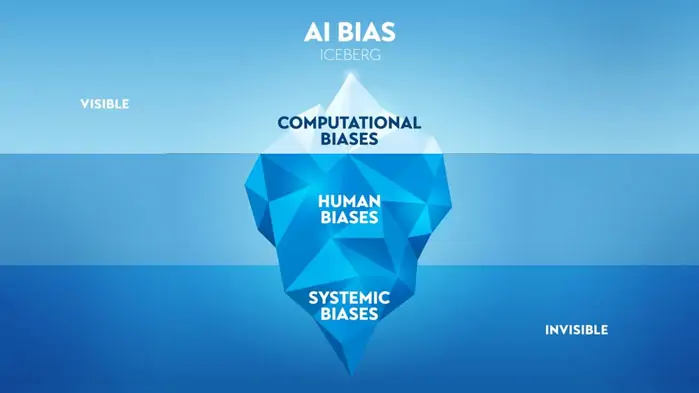
- Bias in AI models
AI models trained on human-generated data can inherit and perpetuate existing biases. This is a critical concern in banking, particularly in areas like marketing and creditworthiness assessments, where biased algorithms can lead to unfair or discriminatory outcomes for certain demographic groups. Addressing this requires careful data selection, bias detection techniques, and ongoing monitoring of model outputs.
Shaping the future with AI in banking
As digital transformation accelerates, banks face increasing pressure to offer automated yet personalized financial services. Clients expect self-service tools that provide convenience while maintaining a human touch. To meet these demands, AI in banking is becoming indispensable.
To stay competitive, financial institutions are investing in AI to deliver smart, personalized experiences that foster client loyalty by helping them make informed financial decisions through smart insights and recommendations.
In the future, banks will use AI to adopt new operating models, enhance automation, and boost profitability. Their ability to deploy AI-driven innovations faster than competitors will shape the next era of retail and commercial banking.
Conclusion
AI is fundamentally reshaping the banking industry, offering unprecedented opportunities for innovation and growth. By strategically implementing AI in banking solutions and addressing the associated challenges with robust governance frameworks, banks can unlock significant value: optimizing operations, mitigating risks, delivering personalized client experiences, and gaining a crucial competitive edge. As AI technologies continue to evolve, banks that prioritize responsible and strategic AI adoption will be best positioned to thrive in the increasingly digital and data-driven future of finance.


.webp_2026-10-01-18-27-07-971.webp)
.webp_2026-10-01-18-17-11-290.webp)
.webp_2026-10-01-18-08-26-854.webp)
.webp_2026-10-01-17-47-32-240.webp)