Home
Search
Found 797 results for “ “ keyword
icon
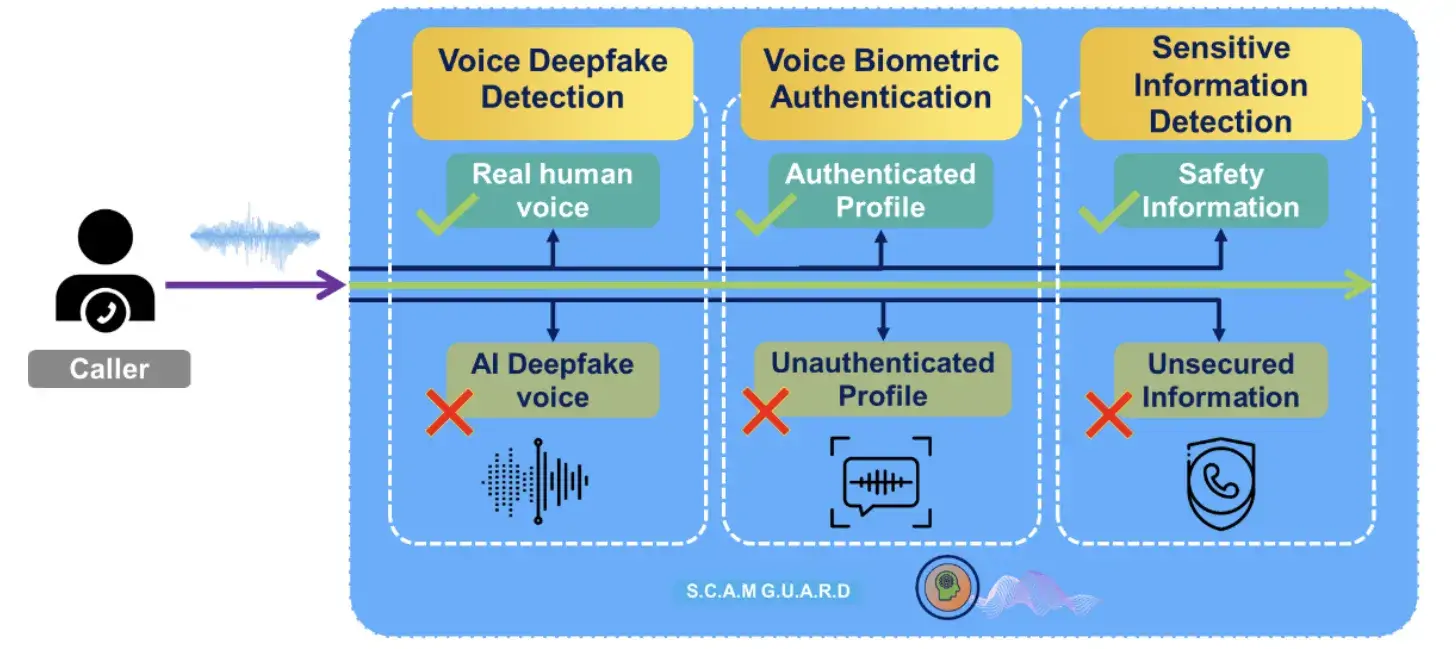
Voice Fraud Call Detection with AI Technology TMA Solutions developed an AI-powered system to detect and block voice fraud in real time, using deepfake detection, voice biometrics, and instant alerts to enhance call security and protect users from AI-generated scams. Solution Highlights AI Voice Scam Detection: Identifies and blocks fraudulent calls using AI-generated or cloned voices. Real-Time Analysis & Alerts: Monitors ongoing calls and provides instant notifications of suspicious activity. Enterprise-Ready Architecture: Scalable, secure, and compliant for seamless integration into telecom and enterprise systems. Problem Statement With the rise of AI voice cloning, fraudsters can now imitate real human voices, making scam calls nearly indistinguishable from legitimate ones. Traditional telecom security tools fail to detect these threats in real time, leading to financial loss, identity theft, and declining user trust. TMA developed an AI-driven Voice Fraud Detection system designed to proactively identify and prevent AI-generated voice scams through advanced analysis and authentication. Key challenges addressed: AI Voice Cloning Threats: Detecting synthetic or manipulated voices in real-time conversations. Caller Authentication: Verifying legitimate users through voice biometrics. Sensitive Data Protection: Detecting attempts to extract personal or financial information. Operational Integration: Enabling seamless adoption within existing VoIP and enterprise systems. Solutions TMA developed an AI-driven Voice Fraud Call Detection system designed to identify and prevent voice-based scams through advanced voice analysis and real-time monitoring Key features include: Voice Deepfake Detection: Identifies synthetic or manipulated voices to prevent AI-cloned scam calls. Voice Biometric Authentication: Verifies caller identity through unique voice signatures. Sensitive Information Detection: Monitors conversations in real time to detect attempts to collect personal or financial data. Real-Time Alert System: Instantly notifies users or systems when suspicious voice activity is detected. Benefits The Voice Fraud Call Detection Solution brings several key benefits Improves voice-based threat detection accuracy through AI-driven audio analysis. Enhances real-time response capabilities with immediate alerts and dynamic monitoring. Supports enterprise integration within existing VoIP and call center systems. Lays the foundation for scalable, privacy-compliant voice security adaptable to future telecom environments....
icon
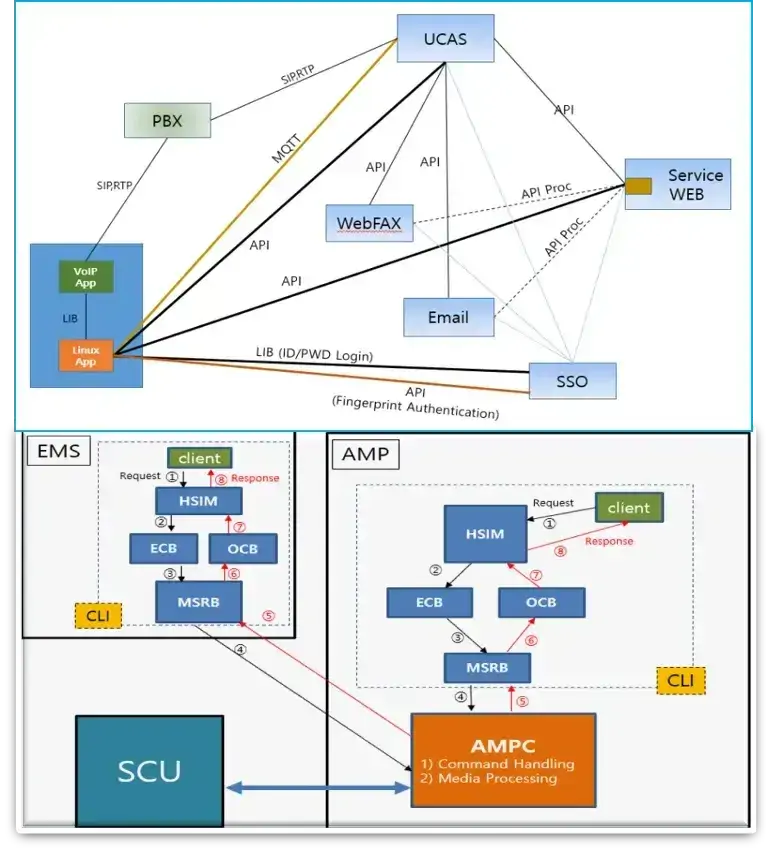
VoIP Secured Communication System TMA Solutions developed a VoIP secured communication system for national use, including military, government, and emergency services. The system includes a VoIP Call Server, Advanced Media Platform, and secure mobile/web applications, delivering enhanced security, reliability, and performance. Location Korea Client Needs The client requested the development of a complicated VoIP secured communication system, which includes: VoIP Call Server Advanced Media Platform Element Management Server Call Dispatcher Linux Application in specific Intel hardware Web/Mobile Applications Mission Critical Push To Talk function (MCPTT) which is applied for secured national communication purposes: broadcast Emergency Audio/Video command, make Secured Calls, operate a situation hotline, send faxes and emails. Solutions Provide full services of software architect, development, testing, maintenance and production support Architect & Development of below components Develop VoIP Call servers (including SCU – Signal Controller Unit) Architect & develop AMP platform, including AMPC (like MRFC) Built Element Management Server Architect and develop embedded module and Linux applications on special hardware in Intel and ARM architectures. Develop backend servers: API, fax, web, storage. Develop mobile and web applications Testing Fully control testing process Perform each component test. Perform integration testing and system testing Production Service Provide corrective content and maintenance activities Product demo support Technologies: Signaling and media protocols, multi-process, multi-thread, HA, LB, pipelines, queues, shared mem, synching mechanism Programming: C/C++, QT/QML, Python, Java/Swing, Flutter Platform: Linux on IA, Gooroom Linux, Android, iOS, LTE termina Benefits Delivered complete system architecture for key products, including the Advanced Media Platform (AMP) and Linux-based applications. Achieved on-time system development and delivery despite limited project resources, ensuring efficient project execution. Supported the client in successful system implementation across multiple customer sites, enhancing reliability and performance in real-world operations. Project Highlights Responsible mainly for system architecture and development of a VoIP secured communication system, which is used for national secured communication purposes (military, government operation, emergency situations). This is a complicated systems with many components, from VoIP call server and media platform to web/mobile applications About Client Industry Telecommunications...
icon
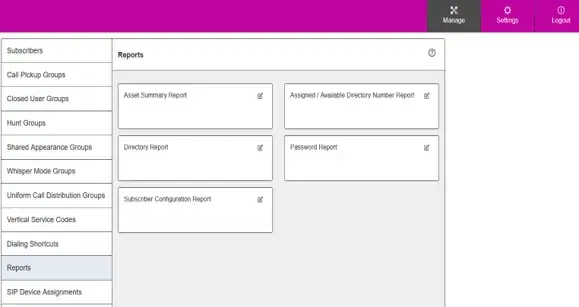
Vulnerability Scan Performed a full vulnerability scan for a Carrier VoIP Provisioning Portal Server to identify security risks, strengthen network and OS protection, and ensure telecom compliance. Solutions Test methodology: Testing Approach: White box Test Category: Web Application and OS Security Test Scope: Web UI, Underlying OS, Network Exposure Tools Used: Nessus Professional Test procedure: Preparation Phase Reviewed system architecture, deployment diagram, firewall policies, and patch history. White-box inputs included admin credentials, OS type (Linux), installed software list, and version history. Network and Host Discovery Used Nessus to enumerate open ports, active services, and network-exposed endpoints. Mapped potential attack surfaces, including auxiliary services. Vulnerability Scanning Executed in-depth scans targeting: OS-level known vulnerabilities (CVEs) Middleware and application server components (Apache, Tomcat, etc.) TLS/SSL configurations Authentication mechanisms and session management Report Generation & Analysis Generated categorized reports (Critical, High, Medium, Low). Validated key findings through manual inspection to eliminate false positives. Risk Assessment Evaluated the business impact of discovered issues. Provided actionable recommendations with prioritized remediation steps. Benefits Proactive Threat Identification: Uncovered exploitable CVEs before attackers could act. Improved Compliance: Helped the client align with telecom security standards (ISO 27001, ETSI EN 303 645). Secured Data in Transit: Recommended TLS enhancements that hardened the system against MITM attacks. Prevented RCE Attack Path: Early detection of the Log4j vulnerability likely prevented a severe breach. Project Highlights Performed a vulnerability scan for a Carrier VoIP Provisioning Portal Server, a web-based interface that provided secure subscriber provisioning, device provisioning, and system resource management for VoIP Communication Services and Networks. About Client Industry: Telecommunications Location: North America Client Needs The client requested a full vulnerability scanning process for the system network and operating system of a Carrier VoIP Provisioning Portal Server, including: Test methodology Test procedure Summary of identified issues Recommended solutions...
icon
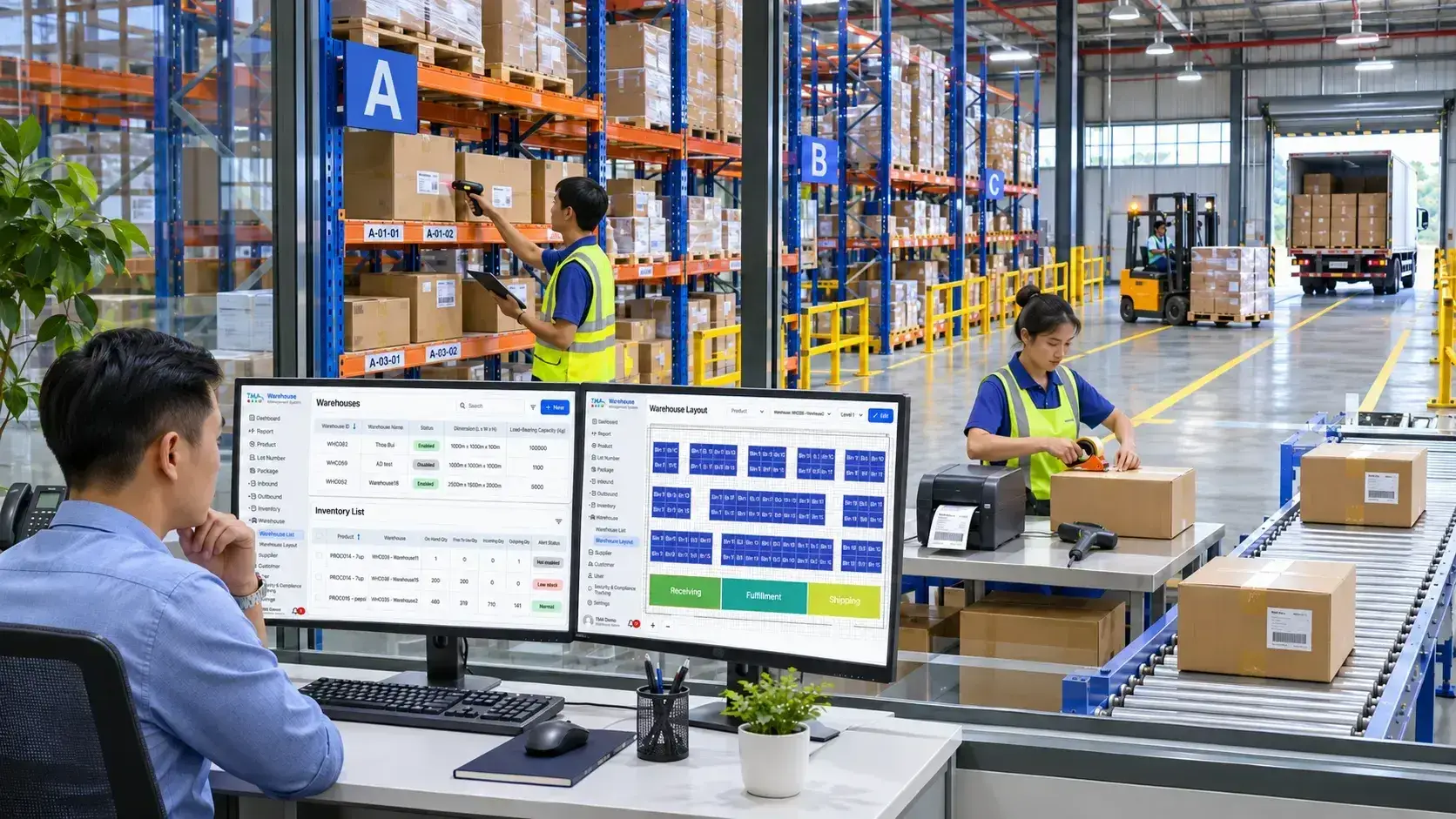
Warehouse Management System A Vietnamese logistics and supply chain provider needed a more efficient way to manage inventory and warehouse operations across multiple distribution centers. TMA developed a centralized Warehouse Management System that improves inventory visibility, streamlines fulfillment processes, and connects warehouse operations with surrounding business systems. About client Industry: Logistics & Supply Chain Location: Vietnam Client overview: The client is a Vietnamese logistics and supply chain service provider operating a network of distribution centers. Its warehouse operations require effective coordination of inventory, storage locations, order processing, and fulfillment activities across multiple sites. Client challenges Limited inventory visibility: Difficulty maintaining a unified view of inventory across multiple warehouses can make it harder to assess stock availability and plan inventory allocation. Complex warehouse management: Managing areas, shelves, bins, and stock locations becomes increasingly difficult at scale. Inefficient order fulfillment: Fragmented picking, packing, and shipping processes can slow operations and increase errors. Disconnected business systems: Limited integration with ERP, e-commerce, and delivery platforms creates duplicated work and inconsistent data. Limited operational insights: Insufficient reporting makes it harder to monitor performance and support timely decisions. Solutions Multi-location inventory management: Provides a centralized view of inventory across warehouses, helping teams monitor stock availability across multiple distribution centers. Warehouse layout management: Allows users to define warehouse layouts with areas, shelves, and bins to organize and manage storage locations. Real-time stock monitoring and tracking: Supports real-time inventory tracking with barcode and QR code scanning to help teams monitor stock levels and track inventory. Business system integration: Connects warehouse operations with ERP, e-commerce, and delivery systems through APIs to support data synchronization. Order fulfillment and operational reporting: Streamlines picking, packing, and shipping processes while providing operational reports. Benefits Improve inventory accuracy and real-time stock visibility Optimize stock levels and warehouse space utilization Accelerate order fulfillment with more efficient warehouse operations Support better planning and decision-making through operational insight...
icon
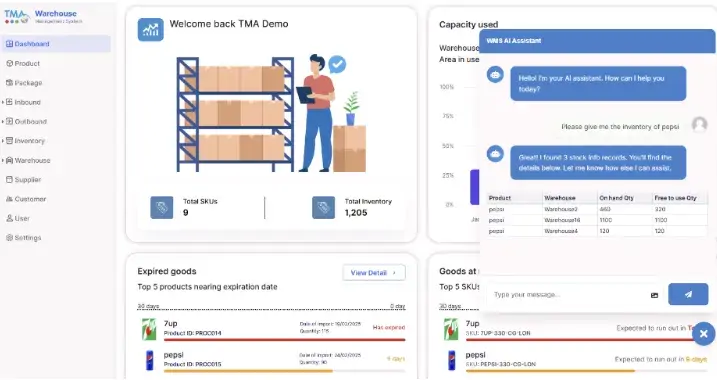
Description The current Warehouse Management System (WMS) requires warehouse staff and managers to go through multiple steps to retrieve information or complete simple tasks. The AI Agent is designed to streamline these processes by enabling instant searches, delivering real-time reports, and significantly improving operational efficiency. This solution also lays the foundation for predictive analytics and automation in future phases. Functions Query inventory by SKU or product description. Retrieve storage location information for goods. Check the status of inbound and outbound orders. Generate quick reports (e.g., top SKUs by stock quantity, SKUs running low). Technologies AI techniques : ORC, Speech-to-Text LLM : Google Gemini Backend : Python, FastAPI Frontend : ReactJS Warehouse Management System (WMS) AI Agent The current Warehouse Management System (WMS) requires warehouse staff and managers to go through multiple steps to retrieve information or complete simple tasks....
icon
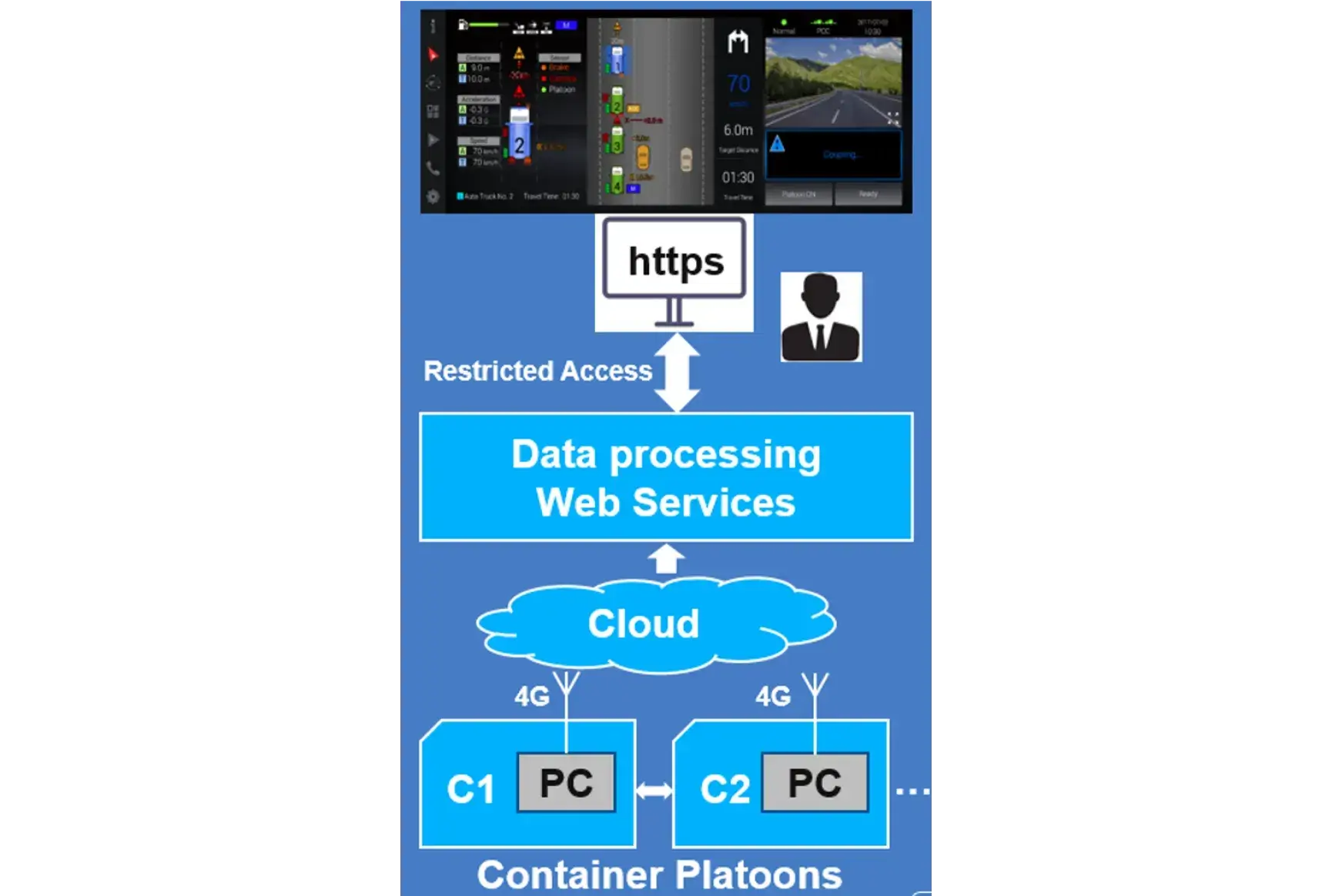
Web HMI for Automatic Vehicle Platoon TMA Solutions developed a complete vehicle platoon management system, including in-vehicle software, a cloud backend, and a web-based HMI for real-time monitoring. Project Highlights Develop a vehicle platoon management system which includes: In-vehicle system, on-cloud server and a web application for monitoring purposes from users Delivered a fully tested solution ensuring secure communication, data traceability, and scalable cloud infrastructure About Client Industry: Automotive Location: United States Client Challenges Client required a comprehensive vehicle platoon monitoring and management system, but faced several challenges in achieving seamless communication and real-time coordination across all components: In-Vehicle System: Lacked a unified method to process and securely transmit data from vehicle ECUs to the cloud, limiting visibility and synchronization between vehicles. Cloud Infrastructure: Had no centralized platform for storing, processing, and analyzing high-frequency telemetry data, making it difficult to ensure data consistency and traceability. Access and Security: Required reliable user authentication, access control, and session tracking to prevent unauthorized access to sensitive fleet data. Web Monitoring Application: Needed an intuitive web interface for operators to monitor vehicle platoons, detect abnormal behavior, and visualize real-time metrics from multiple sources. Solutions Project delivered below outputs: In-Vehicle System: CAN parser and UDP message parser to collect vehicle ECU data Data processing and secure data transmission to the cloud Real-time vehicle platoon position monitoring and synchronization Monitoring critical parameters such as vehicle speed, fuel level, automatic travel time, and steering control Distance calculation between vehicles to maintain platoon safety Vehicle/platoon view switching for fleet management scenarios Connection and sensor status monitoring for predictive maintenance On-Cloud Server: Data processing pipeline for high-frequency vehicle telemetry Access management, login security, and user session tracking Timestamping and logging for every transaction to ensure traceability Data storage and retrieval for historical analytics Technologies In-Vehicle & Communication: CAN Bus, UDP/TCP, secure data transmission modules Tools: OpenStreetMap, Eclipse Platform: CenOS, AWS Language: Java, NodeJS, Angular, HTML5/CSS Benefits Automated and intelligent fleet tracking Enhanced platoon safety and operational efficiency Real-time visibility for faster decision-making Reduced manual monitoring and maintenance costs...
icon
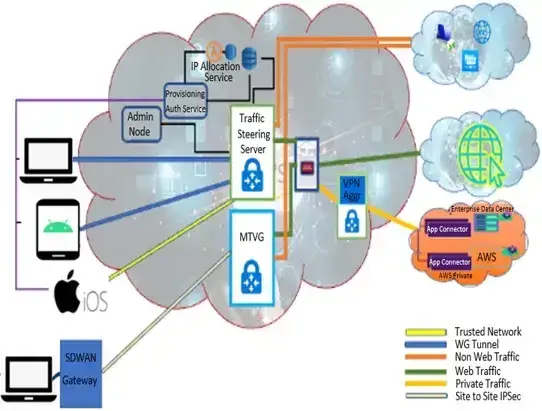
Zero Trust Secure Application Access Solution TMA Solutions partnered with a U.S. high-tech company to deliver a full Zero Trust Network Access (ZTNA) platform. The clientless solution secured access to private apps across cloud and on-premise environments, improving security, scalability, and user experience—all handled end-to-end by TMA. Project Highlights This project involved the comprehensive design, development, and testing of a cutting-edge Zero Trust Network Access (ZTNA) security platform for a leading high-tech company based in the US. The solution provides secure, clientless access to private applications across both public and private data centers, significantly enhancing enterprise security posture and operational efficiency. A key highlight is the full lifecycle management of the project, from initial design to final deployment, handled entirely by the outsourcing partner About Client Our client is a prominent high-tech company based in the United States, specializing in advanced network security and cloud solutions. They are at the forefront of innovation, constantly seeking to provide robust and scalable security infrastructure to their global clientele. Industry CyberSecurity Client Challenges / Problem Statement The client faced several critical challenges in providing secure access to their private applications: Traditional VPN Limitations: Reliance on traditional VPNs was proving cumbersome, difficult to manage at scale, and presented a broader attack surface, conflicting with modern security paradigms. Need for Clientless Access: There was a strong demand for a solution that allowed users to securely access private applications without the need for cumbersome client software installations, especially for third-party access or BYOD scenarios. Distributed Infrastructure: Applications were hosted across diverse environments, including public cloud (AWS, GCP) and private data centers, requiring a unified and consistent security policy. Enhanced Security Posture: The client aimed to implement a Zero Trust model, where no user or device is implicitly trusted, regardless of their location, requiring granular access control and continuous verification. Scalability and Multi-Tenancy: The solution needed to support a multi-tenant architecture and scale efficiently to accommodate a growing user base and diverse application landscape. Location US Success Stories Rapid Deployment & Adoption: The well-defined architecture and efficient CI/CD pipelines enabled rapid deployment of the ZTNA solution, leading to quick adoption across the client's organization and its partners. Seamless Integration: The solution seamlessly integrated with existing identity providers and application infrastructure, minimizing disruption during rollout. Positive User Feedback: Users reported a significantly improved experience with secure application access, highlighting the ease of use and reliability of the clientless approach. Strengthened Security Posture: Post-implementation audits confirmed a substantial improvement in the client's overall security posture, with granular access controls and continuous verification effectively preventing unauthorized access. Strategic Partnership: The successful delivery of this complex project solidified the outsourcing partnership, leading to further collaborations on critical security initiatives. Technologies The project leveraged a robust and modern technology stack to deliver a high-performance and secure ZTNA solution: Core Tools & Frameworks: WireGuard Framework: Utilized for its modern, high-performance, and secure VPN protocol. C#: Primary language for backend logic and application development. Kotlin: Used for Android application components. Swift: Used for iOS application components. Automation Frameworks: Pytest: For robust unit and integration testing in Python. Selenium: For automated web application testing. Appium: For automated mobile application testing (iOS and Android). Saucelabs: Cloud-based platform for automated testing across various browsers and devices. Deployment Platforms: Operating Systems: Windows, MacOS, iOS, Android, Linux (for various components and client support). Virtualization/Cloud: VMware (for on-premise deployments), AWS (Amazon Web Services) for cloud infrastructure and scalability. CI/CD & Infrastructure as Code: Jenkins: For continuous integration and continuous delivery pipelines, automating build, test, and deployment processes. Terraform: For infrastructure as Code (IaC), enabling automated provisioning and management of infrastructure resources on AWS and other platforms. Benefits The successful implementation of this ZTNA solution brought significant benefits to the client: Enhanced Security: Adopted a true Zero Trust model, drastically reducing the attack surface and mitigating risks associated with traditional perimeter-based security. Improved User Experience: Provided seamless, clientless access, simplifying user onboarding and access to applications from any device, anywhere. Operational Efficiency: Automated infrastructure provisioning and CI/CD pipelines streamlined development and deployment, reducing manual effort and errors. Cost Savings: Optimized resource utilization through cloud-native architecture (AWS) and efficient development practices. Scalability and Flexibility: The multi-tenant design and cloud-agnostic approach (VMware, AWS) ensured the solution could scale to meet future demands and adapt to evolving infrastructure needs. Reduced Management Overhead: Centralized policy enforcement and clientless access simplified IT administration and security management. Features / Solutions The implemented ZTNA solution addressed the client's challenges with the following key features and components: Zero Trust Network Access (ZTNA): Established a "never trust, always verify" approach, granting access based on identity, device posture, and context, rather than network location. Secure Web & Non-Web Gateway: Provided secure access for both web-based and non-web (e.g., SSH, RDP) applications, ensuring comprehensive coverage. Clientless Access: Enabled seamless and secure access to private applications directly through a web browser, eliminating the need for client-side software installation. Secure Traffic Steering: Intelligently routed traffic to ensure optimal performance and security, directing user requests through the ZTNA gateway. Firewall as a Service (FWaaS) : Integrated firewall capabilities to enforce security policies and filter malicious traffic at the edge. Multi-Tenant VPN Gateway: Designed to support multiple distinct tenants, providing isolated and secure access environments for different organizational units or customers. Comprehensive Development & Testing: The outsourcing partner took full responsibility for the entire development lifecycle, including design, coding, rigorous testing, and quality assurance. ...

11 km From Tan Son Nhat international airport 16 km From the city center 8 Bus routes United States & Canada +1 844 224 4188 +1 802 735 1392 (Mr. Minh Nguyen) Europe +33 7 44 77 49 24 (Mr. Jordan Baumgartner) Japan +81 50 5490 9867 (Mr. Yasuhisa Yoneda) Vietnam +84 28 3995 1060 (Ms. Phuong Tran) +84 28 3990 2680 (Mr. Andy Pham) Singapore +84 946 177 624 (Mr. Cuong Bui) Australia +61 411 276 342 (Mr. Huy Ly) Contact Us Business Enquiries Business Enquiry mailto:sales@tmasolutions.com sales@tmasolutions.com contact-map Our business contacts General Enquiry mailto:info@tmasolutions.com info@tmasolutions.com TMA Tower address Street #10, Quality Tech Solution Complex (QTSC), Trung My Tay Ward, Ho Chi Minh Citycontact-footer (Map) sales@tmasolutions.com Our business contacts info@tmasolutions.com Street #10, Quality Tech Solution Complex (QTSC), Trung My Tay Ward, Ho Chi Minh City (Map) Career Enquiry mailto:recruit@tma.com.vn recruit@tma.com.vn (HR Department) recruit@tma.com.vn (HR Department) Direction to TMA Tower Street #10, Quality Tech Solution Complex (QTSC), Trung My Tay Ward, Ho Chi Minh City ...