Home
Search
Found 797 results for “ “ keyword
icon
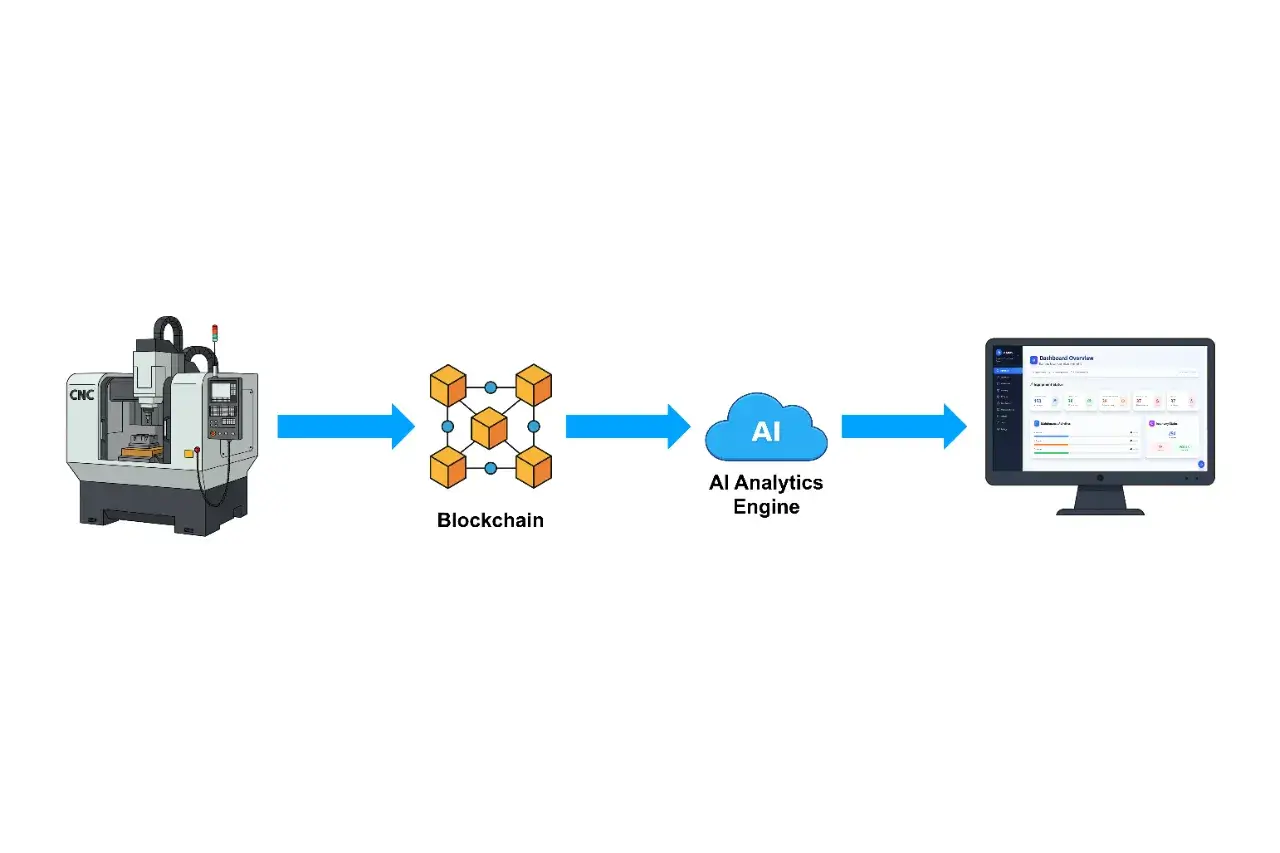
Transforming factory management with an intelligent predictive maintenance platform Smart Computerized Maintenance Management System (SCMMS) is an innovative, AI-powered platform designed to provide a centralized command center for all manufacturing operations, enabling managers to prevent costly failures, optimize processes, and drive production efficiency. Solution Highlights Leverages an advanced AI engine to provide predictive analytics, operational insights, and an intelligent assistant for factory management. Centralizes all factory operations into a single, integrated platform for real-time monitoring of equipment, maintenance, and inventory. Shifts maintenance strategies from reactive to proactive, significantly reducing costly downtime and optimizing resource allocation. Problem Statement Modern manufacturing facilities face immense pressure to increase efficiency, reduce costs, and maintain operational continuity. Key challenges include unplanned equipment downtime leading to production losses, a lack of real-time visibility into the factory floor, and the high costs associated with a reactive, "break-fix" maintenance culture. Furthermore, critical data is often fragmented across multiple systems, hindering informed, data-driven decision-making. To address these challenges, the Smart Computerized Maintenance Management System (SCMMS) was developed. It is an innovative, AI-powered platform designed to provide a centralized command center for all manufacturing operations, enabling managers to prevent costly failures, optimize processes, and drive production efficiency. Solutions An intelligent, all-in-one platform for comprehensive factory management AI-Powered Command Center: Utilize a central dashboard with real-time KPIs and an interactive 3D "digital twin" of the factory floor for complete operational visibility. An integrated AI Assistant allows users to perform tasks and retrieve information using natural language. Proactive Maintenance & Asset Management: Shift from a reactive to a proactive strategy by scheduling maintenance based on real-world data and pre-set intervals. The system manages the entire lifecycle of equipment and prevents production halts with automated low-stock alerts. Secure, Data-Driven Foundation: Secure critical operational data from IoT sensors on a Blockchain ledger, ensuring data integrity and trust. The system's advanced analytics engine and AI Knowledge Center transform raw data into actionable insights and provide a central hub for operational procedures. Benefits The SCMMS platform delivers tangible business results Up to 25% Reduction in Downtime: Maximize uptime with predictive maintenance scheduling. 50% Faster Problem Solving: Resolve maintenance issues using real-time data and AI-powered insights. $45,000 Average Annual Savings: Optimize operational costs and achieve significant cost reductions. 99.5% Quality Adherence: Enhance compliance and ensure top-tier production standards with verifiable data trails. ...
icon
Benefits Improved Order Management: Streamline order processing enables more efficient fulfillment and minimizes delays. Enhanced Client Experience: Improve delivery scheduling options and faster issue resolution provide greater reliability and flexibility for users of the platform. Project Highlights Real-Time Inventory Management: Real-time data on stock and shipment statuses minimizes losses and ensures accurate order fulfillment. Optimized Delivery Management: Enhanced scheduling and tracking improve delivery processes and route efficiency. Real-time Shipment Tracking: Instant notifications keep clients updated on delivery progress, boosting transparency and trust. About Client A technology-driven company that specializes in innovative solutions for logistics and freight management, focusing on delivering seamless and efficient services for both individuals and businesses. Industry: Logistics Location: US Client Challenges The client faces several challenges in providing reliable freight solutions: Reliability Issues: Frequent delays, lost shipments, and unfulfilled delivery promises result in client dissatisfaction, undermining trust in the service. Inefficient Delivery Scheduling: Lack of a system for scheduling and tracking deliveries impacts overall service quality. Lacking Real-Time Updates: The absence of real-time delivery updates leads to delayed issue resolution, affecting client experience. Solutions Improved Inventory Management Systems: Integrate advanced inventory management systems that provide real-time data on stock levels and shipment status, which reduce the risk of lost shipments and help manage orders more effectively. Robust Delivery Management System: Develop a comprehensive delivery management system that allows for effective scheduling, tracking, and route optimization. Real-Time Tracking and Notifications: Introduce a real-time tracking feature that provides clients with updates on their shipment status, including estimated delivery times and any delays. Transforming freight management with enhanced delivery & inventory solution Transforming freight management by implementing real-time inventory and delivery solutions, optimizing logistics efficiency and enhancing client satisfaction....
icon
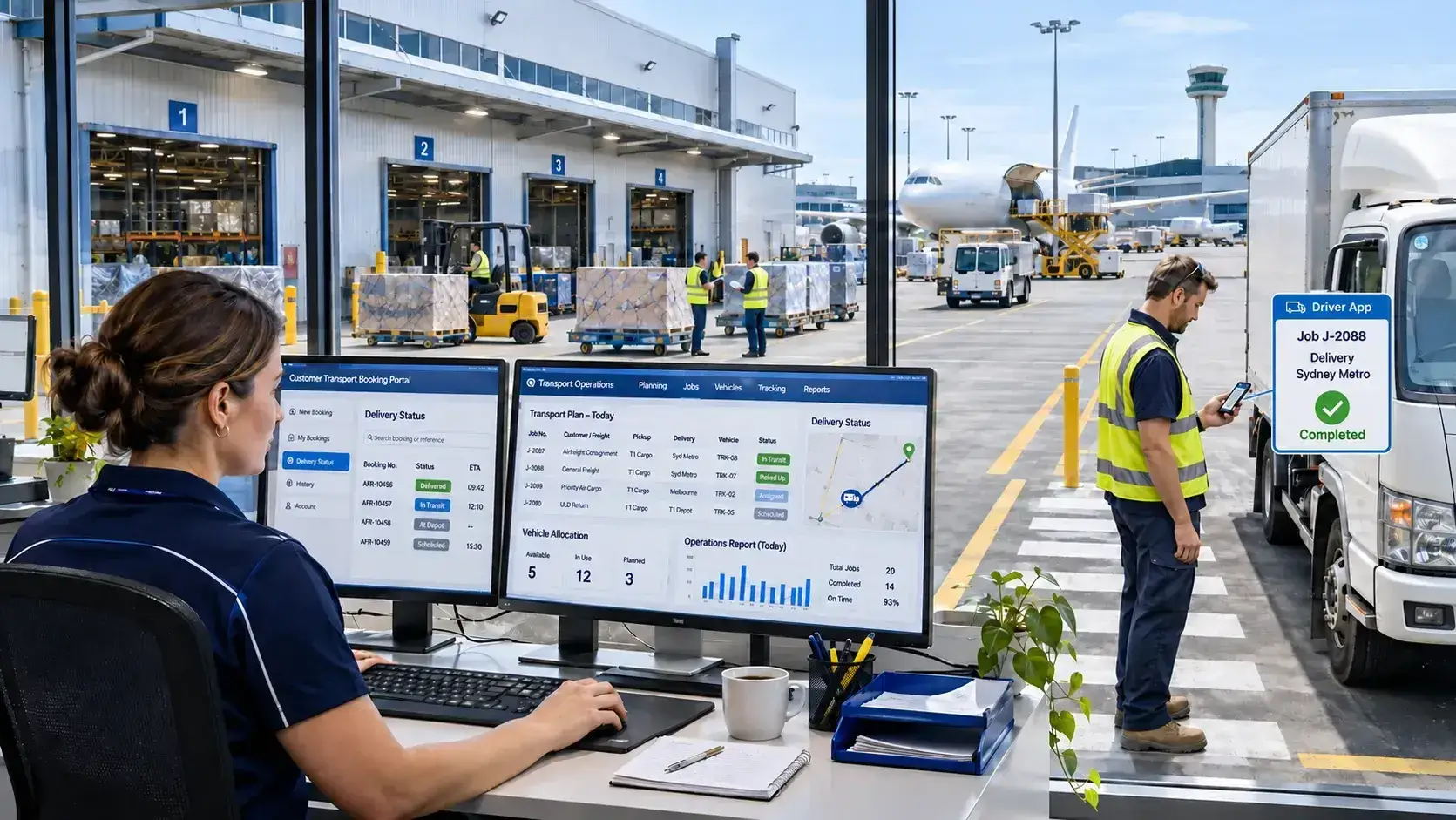
Transportation Management System An end-to-end Transportation Management System combining customer-facing, administrative, and driver applications with third-party integrations to support more streamlined transportation operations and better operational visibility. About client Industry: Airside Logistics & Transportation Services Location: Australia Client overview: The client is an Australian airside resource company providing specialist handling and transportation services to the airfreight, airport, and airline industries. Its operations require coordination between customers, administrative teams, drivers, deliveries, and external logistics systems. Client challenges Limited third-party integration: The existing environment required stronger connectivity with logistics platforms such as foundU, CargoWise, Thermoking, Gearbox, and Verizon. Advanced transportation requirements: The client needed additional operational capabilities, including job pooling, job merging, and rate-card management. Fragmented operational processes: Customers, administrators, and drivers required different tools to complete their daily tasks efficiently. Limited real-time visibility: Transportation teams needed better access to delivery status and operational information. Solutions Enterprise and logistics system integration: The solution integrates warehouse operations with surrounding business platforms through APIs, enabling consistent data exchange across the logistics ecosystem. Advanced transportation functions: The solution supports job pooling, job merging, and rate-card management to address the client’s operational requirements. Driver mobile application: The mobile application enables drivers to receive jobs, track deliveries, and log work hours. Customer self-service portal: The web-based Customer Portal provides customers with a centralized interface for managing transportation requests and tracking deliveries. Centralized administration portal: The Admin Portal enables operational teams to manage users, customers, drivers, transportation activities, and reporting through a centralized platform. Benefits Streamlined order & delivery management: The solution supports a more efficient process for managing customer orders, transportation activities, and deliveries. Improved operational visibility: Real-time tracking and detailed reports provide clearer visibility into delivery activities and transportation operations. Simplified user administration: Centralized management of customers, users, and drivers reduces the complexity of daily administrative tasks. Better driver coordination: The mobile application makes it easier for drivers to receive jobs, track deliveries, and log work hours. ...
icon
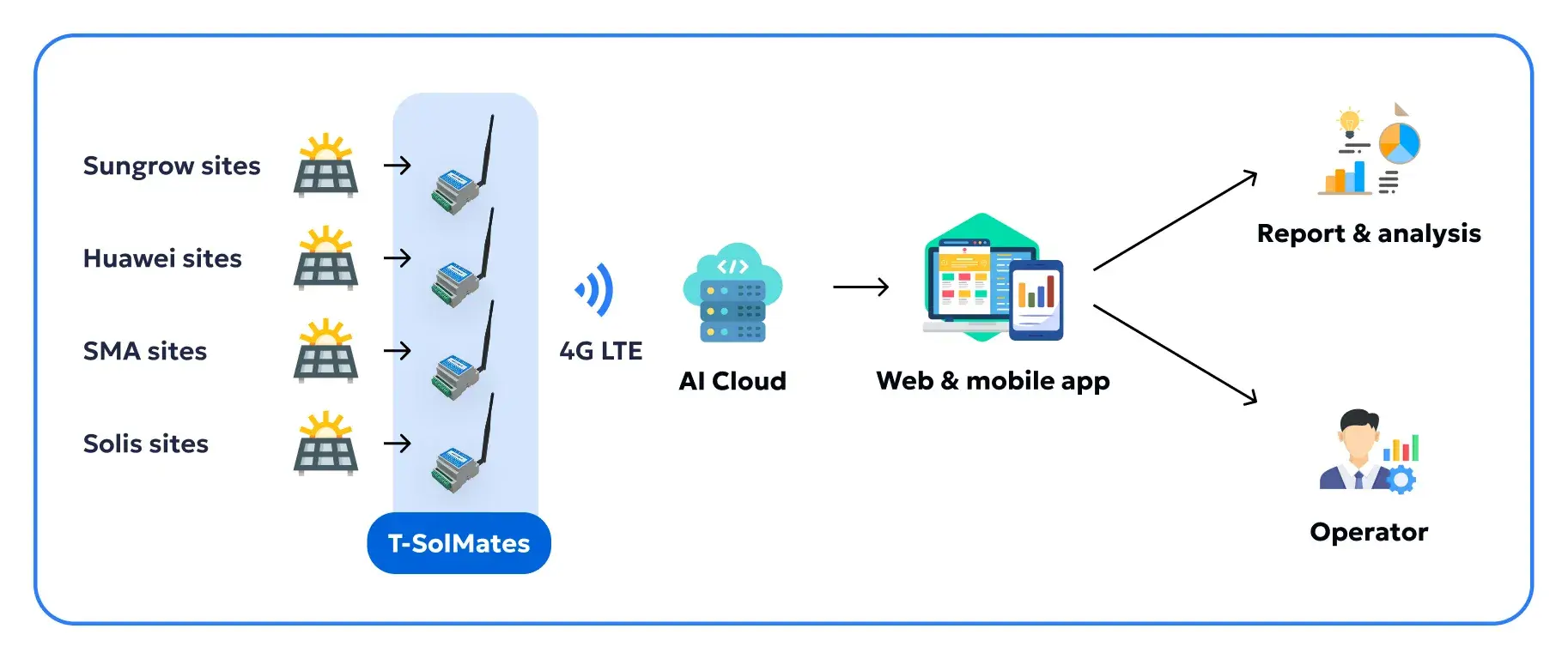
Project Highlights Successfully deployed a centralized monitoring and control system for a complex solar setup involving multiple inverter brands across distributed locations. First-time implementation of a solution supporting Wi-Fi, 4G LTE, Ethernet, and LoRaWAN simultaneously, ensuring flexible integration with existing infrastructure. Seamlessly integrated into real-world O&M workflows , including maintenance routines, power output control, and interaction with grid operators. Fully met technical requirements mandated by local authorities for remote power control of grid-tied solar systems. Established a scalable foundation for future expansion to multiple sites without replacing existing inverters or changing network infrastructure. About Client With over 25 years of specialized experience in the production, trading, and installation of construction materials, I have developed strong capabilities in both fabrication and system integration. I have a proven track record of successfully executing numerous large-scale industrial and infrastructure projects throughout Ho Chi Minh City. Industry: Infrastructure & Building Materials Manufacturing Location: Viet Nam Client Challenges The existing data logging system lacks logging and remote control capabilities. While it can assist with load balancing and protecting electrical wiring, it does not provide the visibility or control needed for efficient system management. Solutions A new datalogger that supports multiple type of solar inverters at the same time allows end users to control the inverters remotely and log the inverter data. Benefits Reduced maintenance response time by 70% thanks to real-time fault alerts, eliminating the need for routine manual inspections. Centralized control of 500+ inverters across multiple sites via a single dashboard, improving operational efficiency and reducing human error. Recovered up to 8–12% of energy losses monthly by detecting inverter downtime and underperformance early. Enabled compliance with remote power control regulations , avoiding government penalties and ensuring uninterrupted grid connectivity. Cut on-site maintenance costs by 40% through remote diagnostics and control functions. Improved energy balancing across systems with intelligent load adjustment based on real-time production and consumption data. On-site Installation T-SolMate - Remote inverter controller TMA Solutions' T-SolMate is a remote inverter controller that helps clients manage and monitor complex solar power systems. By replacing an outdated system that lacked remote control, T-SolMate allows users to control multiple inverter types simultaneously. This has led to a 70% reduction in maintenance response time and a 40% cut in on-site costs. The solution also helps recover 8-12% of monthly energy losses while ensuring compliance with local regulations....
icon
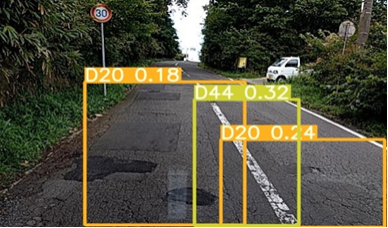
Vehicle Traffic Management TMA Solutions developed a large-scale Vehicle Traffic Management System capable of processing over 80GB of real-time traffic data every 120 seconds. The solution leverages AI and Big Data to deliver live traffic insights, enhance urban planning, and improve road safety through automated damage detection. Technologies: Big Data & Cloud : Apache Spark, Apache Hadoop, AWS Lambda, Azure Services Mapping & Navigation : Mapbox, OSRM, Cloud DB integration Web & Backend : HTML, ReactJS, NodeJS, SpringBoot, Python Data Science & AI : TensorFlow, YOLOv5, LabelMe, ML-based classifiers Annotation & Computer Vision : Bounding Box & Segmentation for multi-class road damage detection Project Highlights Develop a vehicle’s traffic management system on map which likely receives 80GB+ collected data of vehicles, mobile applications, camera, sensors and devices on roads every 120s. TMA provided services of development and full testing About Client Benefits Massive Data Handling : Successfully processed 80GB+ of traffic data every 120s with scalable infrastructure Real-time Insights : Enabled sub-minute updates to maps, traffic lights, and lane controls Road Safety Improvements : Early detection of road damages (potholes, repair patches, manholes) reduced accidents and vehicle wear Industry: Logistics & Transportation Location: US Client Needs Client required a vehicle traffic management system which is capable of processing and analyzing massive streams of real-time road and vehicle data to: Ingest 80GB+ of collected data every 120 seconds from vehicles, mobile applications, road-side cameras, sensors, and devices. Collect, parse, label, and classify incoming traffic data in real-time. Analyze the data to update digital maps, traffic light systems, lane control, and detect road surface damages. Provide meaningful information to drivers, city administrators, and government agencies for traffic monitoring, urban planning, and road maintenance Solutions Project delivered below outputs: Research and develop Data Collectors, Data Classifier, Big Data Processing Pipeline, Big Data Services for traffic monitoring and management Research and develop Big data warehousing and analyzer to get info from millions vehicles and devices to provide meaningful information for driver and government Develop a web for traffic management on map: jam, single spot, road and lane density, road damages Use OSRM to correct geo-coordinates into Cloud DB based on driving direction. Draw trajectory line based on detected coordinates Perform solution functional testing and system testing ...

icon
Video Management System (VMS) TMA Solutions developed an AI-powered Video Management System (VMS) designed to revolutionize industrial safety and security. By integrating real-time threat detection, facial recognition, and intelligent analytics, the system proactively monitors for violations such as PPE non-compliance, speeding, and potential collisions. Problem Statement Industrial environments such as manufacturing plants, construction sites, and warehouses face significant challenges in maintaining a safe and secure workplace. Traditional surveillance methods, which rely on manual monitoring by human operators, are often ineffective due to factors like human error, fatigue, and delayed response times. This reactive approach leads to missed critical incidents, increased risk of accidents, and a lack of actionable data to proactively improve safety protocols. Recognizing these critical gaps, our team developed an advanced AI-powered Video Management System (VMS). This innovative solution is designed to automate surveillance, provide instant alerts for policy violations, and deliver comprehensive analytics to help organizations prevent incidents, reduce operational risks, and ensure a safer working environment. Solutions An intelligent VMS that automates safety and security monitoring Real-time Threat Detection: Utilizes AI algorithms to automatically detect a wide range of violations, including PPE non-compliance, speeding vehicles, unauthorized zone access, and potential collisions. Centralized Command & Control: Provides a unified dashboard to monitor live camera feeds, manage access control using facial recognition, track active alerts, and oversee all operational zones from a single interface. Data Analytics & Reporting: Collects and analyzes incident data to identify risk patterns, generate performance reports, and provide actionable recommendations for enhancing safety procedures over time. Benefits The AI-powered VMS delivers significant operational advantages Up to 90% Incident Reduction: Proactively identifies and alerts on potential hazards before they escalate, significantly reducing the frequency of workplace accidents. 100% Safety Compliance: Automates the monitoring of safety protocols such as PPE usage and speed limits, ensuring full adherence to company policies. Under 1 Second Response Times: Delivers instant alerts with video evidence, enabling immediate action to minimize risk and resolve incidents faster. Solution Highlights Uses advanced AI to monitor threats, such as speed violations, PPE violations, and potential collisions in real-time. Integrates facial recognition, personnel traceability, and intelligent zone-based rules into one platform. Provides a single command center for all alerts, camera feeds, and actionable reports to drive faster, smarter responses. ...
icon
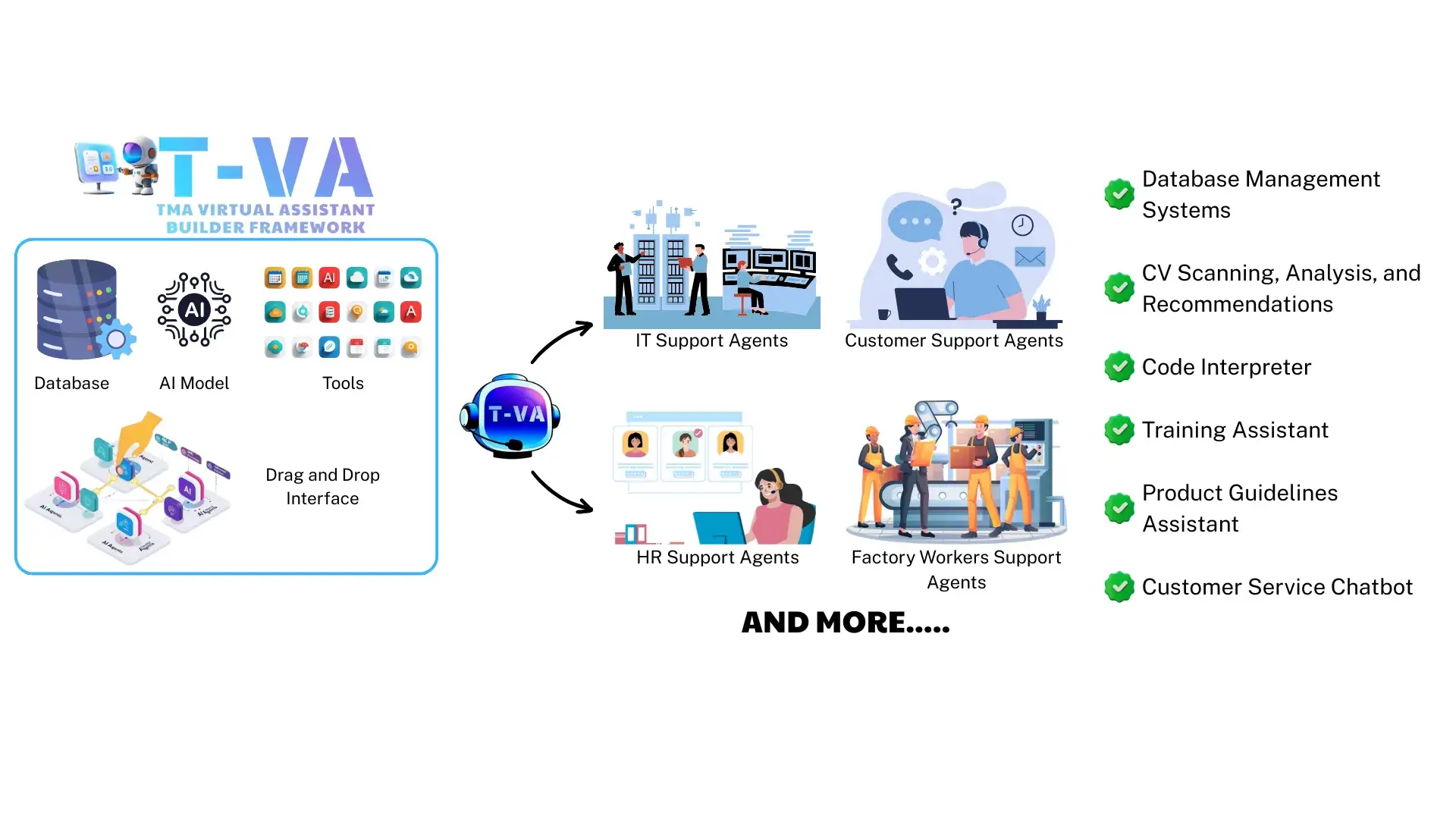
Solution Highlights A low-code, drag-and-drop interface speeds up development and deployment cycles. Centralized knowledge base ensures AI agents provide consistent, accurate, and context-aware responses. Platform to build, manage, and govern AI agents reduces duplicated effort and significantly improves overall efficiency Problem Statement Enterprises currently face significant challenges in developing and scaling AI solutions, including fragmentation, duplicated efforts, and slow innovation cycles. Recognizing these difficulties, TMA Solutions developed T-VA (Virtual Assistant Builder) - an advanced platform enabling organizations to centrally build, manage, and operate smart AI assistants, addressing traditional efficiency and process issues. Solutions A unified AI platform designed to streamline the entire lifecycle of building, managing, and governing enterprise-grade virtual assistants. Intuitive agent builder: Allows users to rapidly design, build, and deploy AI agents using a visual drag-and-drop interface, with the flexibility to add custom Python code for complex logic. Centralized workspace hub: Empowers agents with consistent and accurate information by connecting them to a central, RAG-powered knowledge base that supports various file types and secure, team-based access. Unified management and integration: Provides a single console to manage, monitor, and govern all AI agents, reducing duplicated effort and enabling seamless integration into existing applications via standardized APIs. Benefits The T-VA platform brings several key benefits: Drastically reduces 50% time and effort to launch AI agents with a low-code interface and reusable components, boosting innovation. Delivers a reliable, high-quality user experience via a centralized knowledge base and standardized tools. Offers a unified framework for central management and monitoring, ensuring secure compliance as you scale from 1 to hundreds of AI agents. Virtual Assistant Builder A unified AI platform designed to streamline the entire lifecycle of building, managing, and governing enterprise-grade virtual assistants....
icon
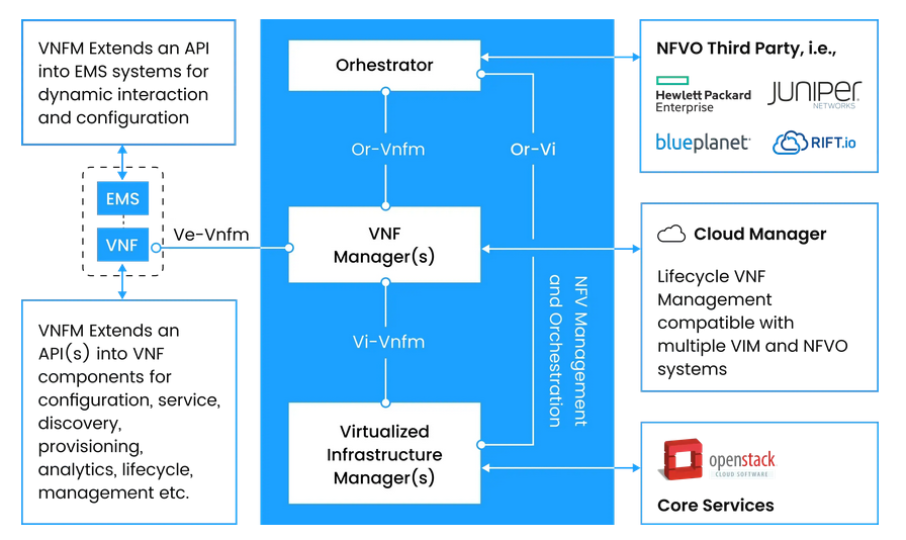
Virtual Network Function Manager (VNFM) This case study showcases how a Tier-1 North American telecommunications provider modernized its network by automating the lifecycle management of Virtual Network Functions (VNFs). By deploying Ribbon's virtualized Session Border Controller (SBC) and Policy Server, the client achieved a 60% reduction in operational costs, a 95% improvement in network reliability, and faster service deployment and scalability. Project Highlights Drastic Cost Reduction : Achieved around 60% reduction in operational spending by fully automating the network management lifecycle. Accelerated Service Agility : Shortened the time-to-market for new customer services. Massive Reliability Improvement : Enhanced network uptime and resilience by 95% through automated, self-healing capabilities. Client Challenges Customer Pain Points & Problems The client's primary challenge was their dependency on an aging, hardware-based voice network. This legacy infrastructure was: Expensive to Operate : Required significant manual effort for maintenance, scaling, and updates, leading to high operational costs (OpEx). Slow to Adapt : Scaling the network to meet traffic demands or launching new services was a slow, cumbersome, and costly process. Prone to Disruptions : Lacked the automated resiliency needed to prevent and quickly recover from service outages, posing a risk to customer satisfaction. Challenges in the Current Sector These problems are common across the telecommunications sector as providers transition from rigid physical hardware to flexible, software-based solutions (NFV). The key industry challenge is managing this complexity while simultaneously reducing costs and increasing the speed of innovation to stay competitive. Solutions The solution is centered on modernizing the client's voice network by deploying Ribbon's virtualized Session Border Controller (SBC) and Policy Server (PSX). The entire lifecycle of these Virtual Network Functions (VNFs) was managed by our VNFM platform. Key elements of the solution included: Full Automation: The VNFM platform automated all operational processes, including initial deployment, configuration, software updates, and decommissioning. Auto-Scaling : The system was configured to monitor network traffic and automatically scale resources up or down to meet demand in real-time. Auto-Healing : The platform proactively monitored the health of the Ribbon VNFs and was capable of automatically recovering from failures to ensure service continuity without manual intervention. Benefits How the Solution Solved Problems The solution directly addressed the client's primary pain points by replacing slow, manual processes with intelligent, zero-touch automation. This eliminated the operational bottlenecks of their legacy hardware, allowing them to manage a more complex, virtualized environment with greater efficiency and reliability. Quantifiable Improvements Cost & Effort Reduction : Lowered operational spending by around 70% and enabled the use of less hardware, reducing data center costs. Performance & Speed : Launched new services faster and managed major traffic surges without service degradation. Reliability : Improved network reliability by 95% by automating failure recovery. Location: North America About The Client The client is a leading Tier-1 Communication Service Provider (CSP) based in North America, serving a large base of both enterprise and residential customers. They are a major player in the telecommunications market, focused on delivering reliable voice and data services. Industry: Telecommunications...