AI is transforming how organizations operate. Unlike past digital transformation efforts focused on digitizing processes, today's leading enterprises are embracing the AI-first model — redesigning workflows around intelligence, not just automating them. Driven by advances in Generative AI, machine learning, and AI agents, AI is no longer a supporting technology but a core component of how business processes are designed, executed, and optimized.
Introduction
Artificial Intelligence is changing the way organizations operate. While digital transformation initiatives over the past decade focused on digitizing processes and moving workloads to the cloud, a new transformation wave is emerging. Today, leading organizations are embracing the concept of the AI-first enterprise, redesigning business processes around intelligence rather than simply automating existing workflows.
The shift is being driven by rapid advances in Generative AI, machine learning, predictive analytics, and AI agents. The World Economic Forum highlighted that organizations achieving the strongest AI outcomes are more likely to redesign workflows and operating models as they deploy AI, moving beyond task-level automation toward enterprise-wide transformation.
For enterprises seeking greater agility, productivity, and innovation, AI is no longer a supporting technology, it is becoming a core component of how business processes are designed, executed, and optimized.
Understanding the AI-First Enterprise Model
An AI-first enterprise places intelligence at the center of business operations, decision-making, and software systems. Instead of using AI as an add-on capability, organizations embed AI into workflows, applications, and operating models from the beginning.
From Process Automation to Intelligent Operations
Traditional digital transformation focused primarily on automating repetitive tasks and improving process efficiency. AI-first enterprises go beyond automation by enabling systems to analyze information, generate recommendations, and support decision-making in real time.
Traditional Digital Operations
Conventional business processes often rely on:
- Manual data analysis
- Rule-based workflows
- Historical reporting
- Human-driven decision making
While effective for structured environments, these approaches can limit responsiveness and scalability.
AI-Driven Operations
AI-first enterprises use intelligent systems to:
- Identify patterns across large datasets
- Predict outcomes and risks
- Recommend next-best actions
- Automate knowledge-intensive tasks
As a result, organizations can respond faster to changing business conditions while improving operational efficiency.
AI Becomes Part of Everyday Work
In an AI-first enterprise, intelligence is embedded directly into daily operations, helping employees work more efficiently and make better decisions.
- Intelligent Decision Support: Delivers real-time insights and recommendations to support decision-making.
- Task Prioritization: Helps employees focus on higher-value activities by reducing manual effort.
- Human-AI Collaboration: Combines human expertise with AI-generated insights and automation.
- Workflow Optimization: Continuously identifies opportunities to improve operational efficiency.
As AI becomes integrated into everyday work, organizations can enhance productivity while enabling employees to focus on strategic business objectives.
Why Enterprises Are Redesigning Business Processes
The pressure to improve productivity, responsiveness, and operational efficiency is driving organizations to rethink how work is performed. According to the PwC's survey data, nearly 70% of CEOs expect Generative AI to significantly change how their companies create, deliver, and capture value within the next three years. As a result, many enterprises are moving beyond traditional process automation and redesigning business operations around AI-driven workflows.
Several challenges are accelerating this transformation:
- Information Overload: Employees often spend considerable time searching for information, consolidating reports, and analyzing data before taking action, slowing business responsiveness.
- Fragmented Business Systems: Data scattered across multiple applications and databases can limit visibility and make cross-functional collaboration more difficult.
- Delayed Decision-Making: Manual analysis processes often prevent organizations from responding quickly to changing market conditions and customer needs.
- Rising Customer Expectations: Customers increasingly expect faster, more personalized, and more seamless experiences across digital channels.
- Need for Greater Business Agility: Organizations must continuously adapt to economic changes, competitive pressures, and operational risks.
- Inefficient Resource Allocation: Without real-time insights, businesses may struggle to prioritize resources and investments where they can generate the greatest value.
AI-first business processes help address these challenges by transforming data into actionable insights, automating routine decision flows, and enabling faster responses across the organization. This allows enterprises to improve operational agility while creating a stronger foundation for long-term innovation and growth.
Key Building Blocks of an AI-First Enterprise
Building an AI-first enterprise requires a strong foundation across data, technology, and workforce capabilities.
Data Foundation
High-quality and well-governed data is essential for AI systems to generate accurate insights and support informed decision-making. Real-time access to data further enables faster and more responsive business operations.
Intelligent Technology Ecosystem
AI-first organizations rely on integrated platforms, AI-powered applications, and intelligent automation to streamline workflows and improve operational efficiency across the enterprise.
AI-Ready Workforce
Successful AI adoption depends on employees who can effectively collaborate with AI systems. Developing AI literacy and fostering human-AI collaboration are critical to maximizing business value.
Together, these elements create the foundation for scalable AI adoption and long-term business transformation.
How AI Is Reshaping Core Business Functions
The impact of an AI-first enterprise extends far beyond IT departments. As intelligence becomes embedded into business processes, organizations are transforming how they engage customers, manage operations, and make strategic decisions.
Customer Experience Becomes More Intelligent
Customer expectations continue to rise, requiring businesses to deliver faster, more personalized, and more consistent experiences across digital channels. AI helps organizations better understand customer behavior, analyze interactions in real time, and provide more relevant responses throughout the customer journey.
From intelligent virtual assistants and automated support systems to personalized product recommendations, AI enables organizations to improve customer engagement while reducing response times and operational costs.
Operations Become More Efficient and Adaptive
Operational efficiency is one of the most immediate benefits of AI-first transformation. By integrating AI into everyday workflows, organizations can automate repetitive tasks, reduce manual effort, and improve process consistency.
Applications such as intelligent document processing, workflow automation, operational forecasting, and supply chain optimization help enterprises streamline internal operations while enabling employees to focus on higher-value activities.
Decision-Making Becomes Data-Driven
Traditional decision-making often relies on historical reports and manual analysis. AI-first enterprises can instead leverage predictive analytics and real-time insights to support faster and more informed business decisions.
By identifying emerging trends, assessing risks, and forecasting future outcomes, AI helps leaders make more proactive decisions related to financial planning, resource allocation, demand forecasting, and business growth strategies.
Together, these capabilities demonstrate why AI is becoming a core component of modern enterprise operations. Rather than supporting isolated tasks, AI increasingly influences how organizations interact with customers, optimize processes, and drive strategic business outcomes.
Building the Foundation for AI-First Innovation with TMA Solutions
About TMA
Creating an AI-first enterprise requires expertise in AI technologies, enterprise software engineering, cloud platforms, and business process transformation. Over a decade of continuous R&D investment, TMA's AI Center has developed a diverse portfolio of AI solutions across business domains including:
- Generative AI
- AI Agents/ Agentic AI
- Smart Camera
- Edge AI
- Robotic Process Automation
- Optical Character Recognition (OCR)
TMA has successfully delivered AI solutions across the following industries:
- Manufacturing
- Healthcare
- Telecom/Networking
- Automotive
- Security & Safety
- Ecommerce & Retails
- Logistics
- Finance, Banking & Insurance
- Agriculture
- Education & Recruitment
As organizations embrace AI-first transformation, TMA Solutions provides the expertise and technology foundation needed to scale AI across business functions and industries.
Case study from TMA Solutions
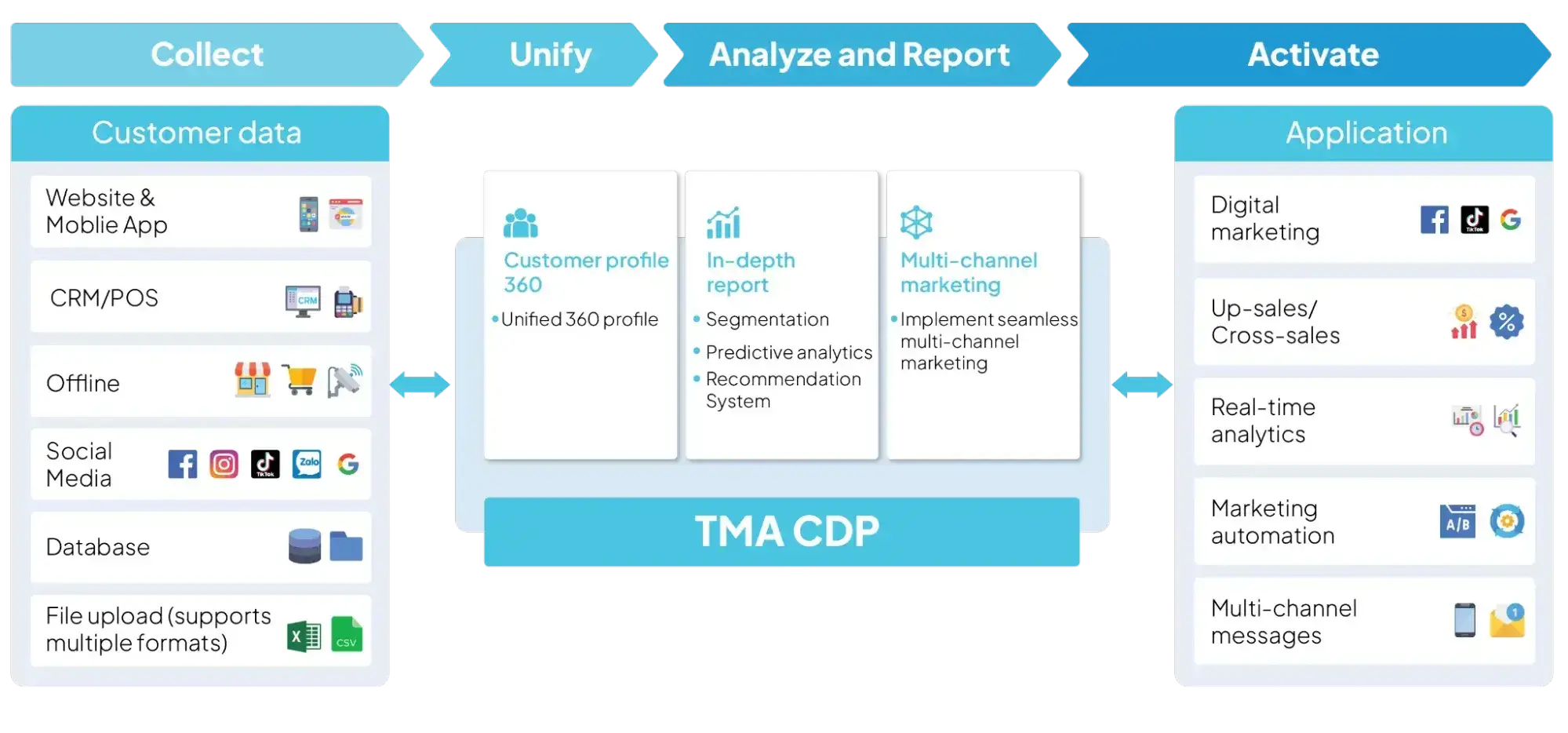
1. Centralized Data Platform for Dynamic Segmentation and Personalized Marketing
Challenge:
A marketing organization needed to unify customer data from multiple channels and systems. Disconnected datasets made it difficult to create accurate customer segments, deliver personalized campaigns, and gain a comprehensive view of customer behavior. Marketing teams often relied on manual data preparation, resulting in slower campaign execution and inconsistent targeting.
Solution:
TMA Solutions developed a centralized data platform that consolidates customer information and enables data-driven marketing strategies.
- Unified Customer Data Platform: Aggregates customer data from multiple sources into a centralized repository.
- Dynamic Segmentation Engine: Automatically groups customers based on behavior, demographics, and engagement patterns.
- Personalized Marketing Framework: Supports targeted campaigns using real-time customer insights and segmentation data.
Business Outcomes:
- Improved customer segmentation accuracy.
- Enabled more personalized marketing campaigns.
- Increased efficiency in campaign planning and execution.
- Enhanced visibility into customer behavior and engagement.
Read more at: Centralized Data Platform for Dynamic Segmentation and Personalized Marketing
2. Optimized E-Commerce and Marketing Integration for Data Management and Synchronization
Challenge:
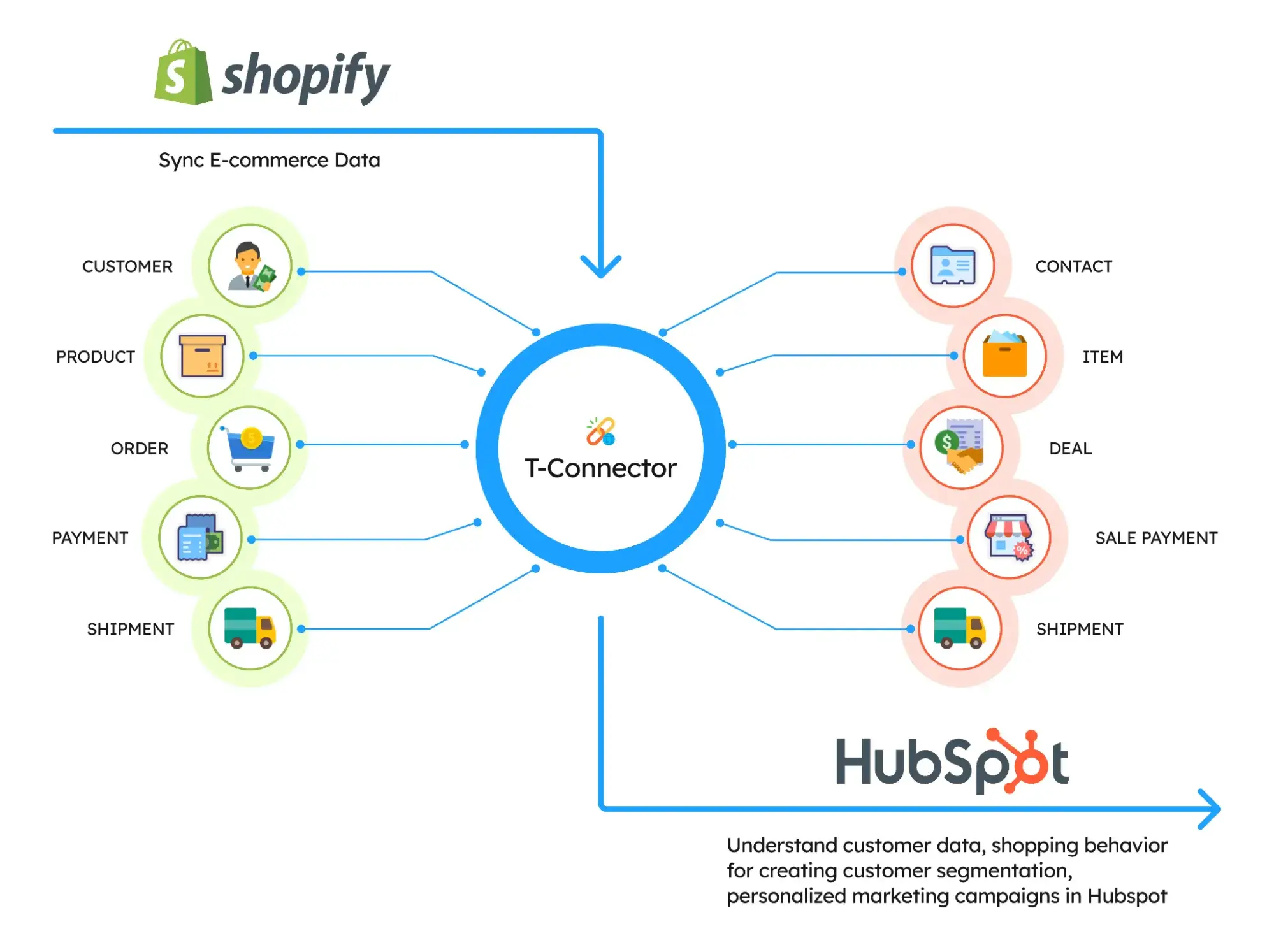
An organization operating across e-commerce and digital marketing channels faced challenges managing customer, product, and campaign data across multiple platforms. Data inconsistencies and synchronization delays affected reporting accuracy, operational efficiency, and marketing effectiveness.
Solution:
TMA Solutions implemented an integrated data management and synchronization platform to streamline information flow between e-commerce and marketing systems.
- Data Synchronization Engine: Automatically synchronizes customer, product, and transaction data across platforms.
- Marketing Integration Layer: Connects e-commerce systems with marketing tools to improve campaign execution and reporting.
- Centralized Data Management: Provides a single source of truth for operational and marketing data.
Business Outcomes:
- Reduced manual data management efforts.
- Improved data consistency across systems.
- Accelerated reporting and decision-making processes.
- Enhanced coordination between e-commerce and marketing operations.
Read more at: Optimized E-Commerce and Marketing Integration for Data Management and Synchronization
Conclusion
The AI-first enterprise represents a fundamental shift in how organizations operate and compete. Rather than simply digitizing existing processes, enterprises are redesigning workflows, applications, and decision-making models around intelligence.
As AI technologies continue to mature, organizations that successfully embed AI into their business processes will be better positioned to improve productivity, accelerate innovation, and adapt to changing market conditions. The future of enterprise transformation is not only digital, it is increasingly AI-first.


.webp_2026-10-01-18-27-07-971.webp)
.webp_2026-10-01-18-17-11-290.webp)
.webp_2026-10-01-18-08-26-854.webp)
.webp_2026-10-01-17-47-32-240.webp)