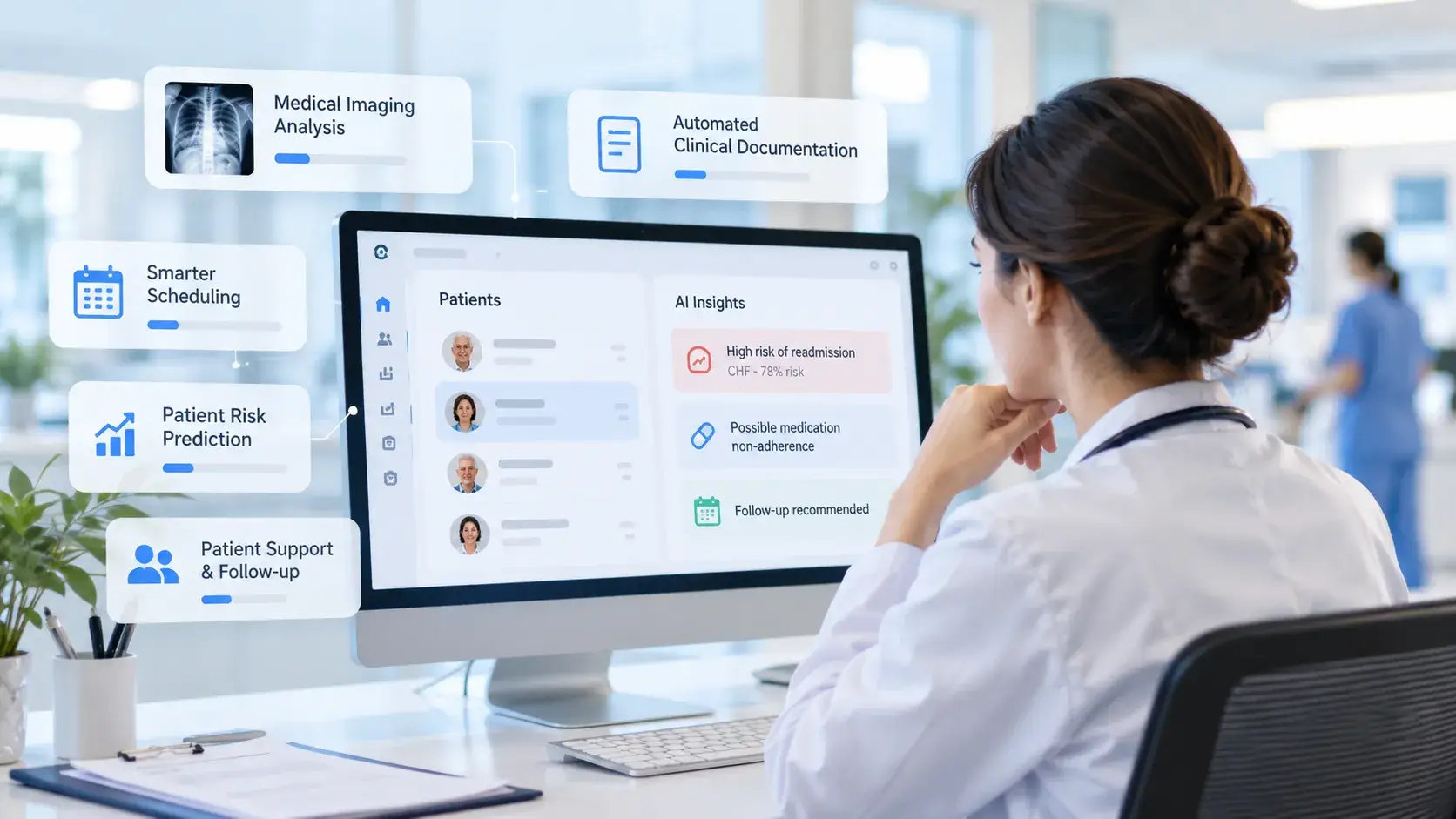
Healthcare organisations are facing increasing pressure to deliver better patient experiences while managing growing administrative complexity, clinician workload, and operational costs. From documentation and appointment coordination to patient communication and clinical decision support, many healthcare workflows still depend heavily on manual processes.
An AI agent for healthcare enables organisations to automate complex healthcare operations by combining conversational AI, data intelligence, and workflow automation while keeping healthcare professionals involved in critical decisions.
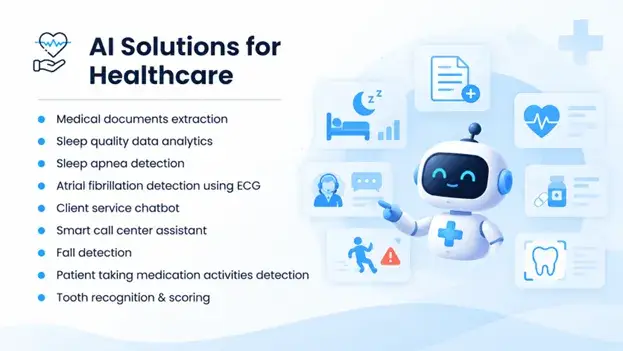
AI-powered healthcare ecosystem transforming clinical workflows and patient care
Unlike traditional automation tools that follow predefined rules, modern healthcare AI agents can understand unstructured information such as clinical conversations, medical documents, patient messages, and device data. This enables healthcare providers to improve workflow efficiency, support clinicians, and create more personalised patient experiences while maintaining appropriate human oversight.
Healthcare Workflow Challenges Driving AI Adoption
Healthcare providers today operate in an environment where clinical teams must balance patient care with significant administrative responsibilities. Physicians and nurses spend substantial time on documentation, patient intake, appointment coordination, insurance processes, and data management instead of direct patient interaction.
Common operational challenges include:
High documentation workload after patient consultations
Delayed response times for patient enquiries and appointment requests
Fragmented healthcare data across EHR, EMR, medical devices, and communication platforms
Manual processing of medical documents and clinical information
Limited capacity for continuous patient monitoring
Traditional automation approaches can improve individual tasks but often struggle with complex healthcare scenarios involving unstructured data, clinical context, and changing patient needs.
Healthcare AI agents address these limitations by combining large language models, retrieval-augmented generation (RAG), workflow orchestration, and healthcare system integrations. Instead of simply executing predefined commands, AI agents can analyse information, recommend next actions, and support healthcare professionals throughout operational workflows.
How AI Agents Transform Healthcare Workflows
Early healthcare chatbots mainly focused on answering frequently asked questions. Modern AI-powered healthcare assistants have evolved into intelligent digital companions that support patients, clinicians, and healthcare organisations across multiple touchpoints.
For patients, AI agents can provide:
24/7 healthcare information support
Appointment scheduling assistance
Patient intake guidance
Follow-up communication
Personalised healthcare recommendations
For healthcare teams, AI agents can support:
Clinical documentation
Patient data summarisation
Workflow coordination
Medical information retrieval
Administrative task automation
TMA has developed AI-enabled healthcare solutions that demonstrate how conversational intelligence can improve patient engagement. In a telehealth knowledge management solution, TMA implemented a retrieval-augmented generation (RAG) architecture with a multi-tenant knowledge base to support patient conversations across digital channels.
The solution enabled healthcare organisations to provide consistent responses, automate appointment-related interactions, and reduce manual workload for healthcare staff.
Similar approaches are also reflected in TMA’s Patient Intake Assistant solution, where AI capabilities help automate patient information collection, reduce administrative effort, and improve the efficiency of healthcare onboarding processes.
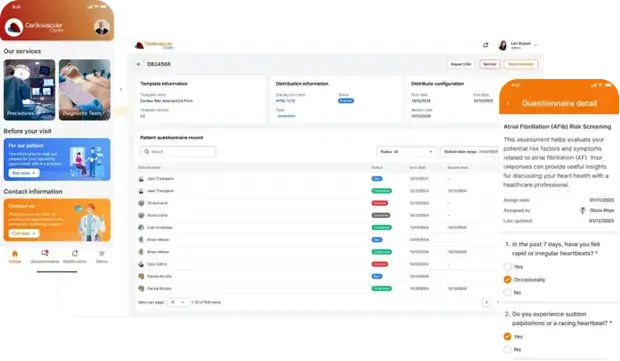
Streamlining patient intake through automated data collection and EMR integration
Supporting Clinical Teams Through AI-Powered Decision Assistance
Clinical workflows require accuracy, reliability, and collaboration between technology and healthcare professionals. Rather than replacing clinicians, AI agents are increasingly designed as digital assistants that help healthcare teams make better-informed decisions. One key application area is clinical documentation.
Physicians often spend significant time converting consultation conversations into structured medical notes. AI clinical assistants can capture conversations, identify relevant information, and generate structured documentation that clinicians can review before finalisation.
TMA’s Clinical Scribe Agent applies this approach by transforming consultation discussions into structured clinical records, helping reduce documentation workload and allowing physicians to focus more on patient interaction.
Healthcare AI agents are also being applied to patient monitoring scenarios. TMA’s Vital Signs Collection & Monitoring Agent collects physiological data from medical devices and wearable technologies, analyses patient trends, and generates alerts when abnormal conditions are detected.
These capabilities support:
Earlier identification of potential health risks
Reduced manual monitoring effort
Faster clinical response
Improved remote care management
Automating Clinical and Administrative Workflows
Many healthcare organisations begin AI adoption with repetitive, data-intensive, and operationally critical workflows, such as medical document processing
Healthcare providers handle large volumes of prescriptions, medical reports, and diagnostic records. Manual data extraction can slow down workflows and increase the risk of data entry errors.
TMA’s Medical Documents and Devices Extraction solution applies AI-based document understanding to extract information from medical documents and connected healthcare devices, including:
Blood pressure monitors
Glucose monitoring devices
Temperature sensors
By converting unstructured healthcare data into structured records, the solution helps reduce manual processing and improve access to accurate, timely information.
Enhancing Patient Engagement Through Intelligent Healthcare Assistants
Patient expectations are changing. Healthcare users increasingly expect convenient digital experiences similar to other industries, including faster communication, easier appointment access, and personalised support.
AI agents help healthcare organisations improve engagement by providing continuous assistance throughout the patient journey. Key applications include:
Appointment discovery and scheduling
Patient onboarding
Healthcare education
Follow-up reminders
Digital care support
TMA’s MateCare AI-enabled Companion for Elderly demonstrates how AI technology can support continuous patient interaction through personalised assistance and companionship capabilities.
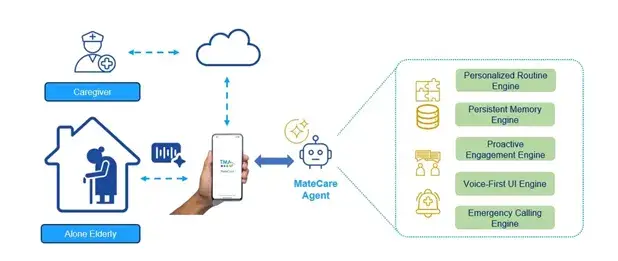
An AI-powered elderly care companion enabling personalised support and proactive assistance
By combining conversational AI with healthcare knowledge and personalised interactions, AI assistants can help improve accessibility and engagement, particularly for elderly care and long-term health management scenarios.
Maintaining Human Oversight in AI-Powered Healthcare Operations
Healthcare requires a careful balance between automation and clinical responsibility. While AI agents can analyse large volumes of healthcare data and automate operational workflows, healthcare professionals remain responsible for reviewing recommendations and making final decisions.
A responsible AI implementation approach includes:
Human-in-the-loop validation for clinical decisions
Transparent AI recommendations
Audit trails for AI-generated outputs
Data privacy and security controls
Continuous performance monitoring
This approach ensures that AI supports healthcare professionals rather than replacing clinical expertise.
The World Health Organization (WHO) highlights the importance of transparency, accountability, and human oversight when implementing AI in healthcare environments. Organisations adopting AI solutions should therefore prioritise governance frameworks alongside technical capabilities.
For healthcare providers, the goal is not simply to automate more tasks. The objective is to create intelligent workflows where AI handles repetitive processes, identifies relevant insights, and enables healthcare professionals to spend more time on complex patient needs.
TMA AI Capabilities for Healthcare Transformation
TMA helps healthcare organisations design and implement AI-powered solutions that improve operational efficiency, enhance patient engagement, and support healthcare professionals. Our AI capabilities include:
AI Healthcare Assistants: Building conversational AI solutions that support patient communication, healthcare information access, appointment assistance, and digital engagement.
Clinical Workflow Automation: Developing AI-powered workflows that reduce administrative workload through intelligent documentation, patient intake automation, and healthcare process optimisation.
Medical Data Intelligence: Applying AI to extract, analyse, and structure information from medical documents, healthcare records, and connected devices.
Healthcare Platform Integration: Connecting AI capabilities with existing healthcare systems, including EHR, EMR, telehealth platforms, and digital health ecosystems.
Responsible AI Implementation: Designing AI solutions with human oversight, security controls, and scalable architectures suitable for healthcare environments.
Through healthcare AI agent development, organisations can move beyond isolated automation initiatives and create intelligent healthcare ecosystems that continuously improve operational efficiency and patient experiences.
Conclusion
Healthcare organisations are entering a new phase where AI is becoming a practical capability for improving clinical operations, patient engagement, and healthcare delivery.
The organisations achieving the greatest impact are not replacing healthcare professionals with AI. Instead, they are using intelligent agents to remove operational barriers, automate repetitive processes, and enable teams to focus on higher-value patient care.
With experience across healthcare platforms, AI solutions, workflow automation, and enterprise system integration, TMA supports healthcare providers in designing and deploying scalable AI solutions tailored to their operational needs.
Explore how TMA’s AI solutions can help transform healthcare workflows, improve patient experiences, and accelerate digital healthcare innovation.