Project implements advanced safety and driver-assistance features, including antilock braking (ABS), conventional/adaptive cruise control, and an engine start-stop system.
A model-based development (MBD) methodology was used, with extensive Model-in-the-Loop (MIL) and Software-in-the-Loop (SIL) simulations enabling rapid prototyping and thorough validation.
TMA provided services of development and full testing on the project.
About Client
Industry:Automotive
Location:Thailand
Client Needs
Client required development of MCU functions for advanced safety and driver assistance:
ABS (Anti-Lock Braking System): Prevent the wheels from locking up during braking to maintain traction and steer ability.
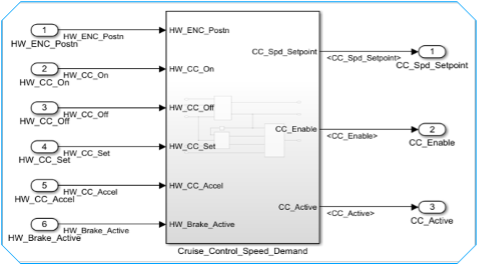
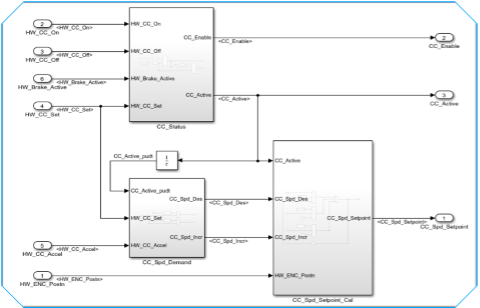
Cruise Control: Maintain a constant, driver-selected speed without manual throttle input.
Dynamic Radar Cruise Control (Adaptive Cruise Control): Maintain a preset safe following distance behind the vehicle ahead, automatically adjusting speed as needed.
Start-Stop System: Automatically shut down the engine when the vehicle is stopped (e.g. at traffic lights) and restart it when needed, reducing idle fuel use.
Solutions
Provide solutions for development and testing of MCU vehicle functions:
Model-Based Design: Designed and implemented the required vehicle functions using a Model-Based Development approach. We built graphical simulation models of each function (ABS, cruise control, etc.) instead of hand-coding from scratch. This allowed rapid prototyping, easier design iteration, and automatic code generation later on.
Model Library Creation: Developed a modular library of reusable vehicle-function models (libraries in Simulink/Matlab), enabling consistent implementation and future reuse of control algorithms across projects.
Code Conversion: Reverse-engineered existing C-code algorithms into equivalent simulation models. The function logic was replicated in model form so that all development and testing could be done on the simulation model.
Unit and Integration Testing: Created unit tests, test harnesses, and functional test cases for each model component. Each function model was subjected to rigorous testing (unit tests for individual blocks, functional tests for complete algorithms, integration tests for combined vehicle behavior) to verify correctness at every stage.
MIL/SIL Simulation: Executed Model-in-the-Loop (MIL) and Software-in-the-Loop (SIL) simulations. In MIL, we ran the control models in a virtual vehicle environment to validate behavior; in SIL, we ran the auto-generated code on the host computer to verify it behaved identically. These “in-the-loop” simulations accelerated design by catching issues early and reducing dependence on physical prototypes.
Technologies:
Tools: Ascet, Matlab-Simulink, SCADE
Language: C
Benefits
Enhanced Safety: The new ABS and cruise control functions improve vehicle safety. ABS prevents wheel lock-up for controlled braking; and cruise control reduces the need for constant throttle and brake modulation on highways, easing driver workload and improving comfort on long drives.
Improved Fuel Economy: The automatic start-stop feature cuts engine idle time, yielding significant fuel savings in stop-and-go traffic. The start-stop systems can improve city fuel economy by roughly 3–10% (up to ~8% in heavy traffic), reducing emissions and operating cost.
Development Efficiency: Using MBD with MIL/SIL testing significantly shortened development time and cut costs. Early simulation and testing caught design issues before hardware was built, so fewer physical prototypes and re-tests were needed. This approach led to faster iteration cycles and a more predictable schedule.
Contact Us
Share with us your challenges. We are here to support.
Our client is a leading company that manufactures automotive components including transmissions, navigation systems, and brake systems. With a global presence, it is committed to quality, innovation, and sustainability, focusing on
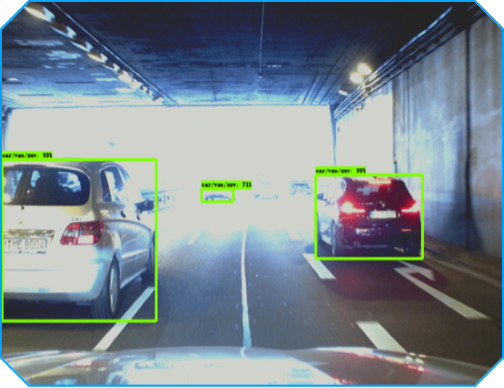
TMA Solutions developed advanced ADAS features using AI-powered camera technology to enhance driver safety through real-time lane and vehicle detection. The solution achieved over 95% accuracy in detection and seamless integration with AV navigation systems for next-generation vehicles.
TMA Solutions developed a feature-rich mobile navigation app for Japan’s automotive sector, integrating real-time routing, POI search, and social trip collaboration. The solution enhanced travel experiences through live sharing, trip planning, and safety features like breadcrumbs and last-known location tracking.